History of Major Pandemics


Disease and illnesses have always been  catastrophe to  humanity since ancient times. The magnitude of the illnesses and death rates have shown a  marked shift. The more civilized humans became – with larger cities, more exotic trade routes, and increased contact with different populations of people, animals, and ecosystems – the more likely pandemics would occur.

Despite the persistence of disease and pandemics throughout,   one trend that has emerged over time is the gradual reduction in the death rate. As the germ theory is discovered and there is a better understanding of the causative agents has led to better control. Healthcare improvements and control of infections have been powerful tools in mitigating their impact.

In many ancient societies, people believed that spirits and gods inflicted disease and destruction upon those that deserved their wrath. This unscientific perception often led to disastrous responses that resulted in the deaths of thousands.

Brief timeline for the major known pandemics :

165  AD  –  Antonine plague-  thought to be small pox or measles  and caused

around   5 million deaths.

735 AD –     Variola major virus–  Japanese smallpox  –     around 1 million deaths

541  AD-     Plague of Justinian – Yersinia pestis/ rat, fleas –   30- 50 million deaths

1347 AD-    Black death (Plague) –- Yersinia pestis/ rat fleas –   200 million  deaths

1520 AD-   Smallpox —                  Variola major virus—                  56 million deaths

1665 AD  Great plague of London–- Yersinia pestis/ rat fleas –     One lac deaths

1629 AD-         Italian plague          Yersinia pestis/ rat fleas –     death 30- 50 million

1817  AD– Cholera pandemic (6) – vibrio cholera: over 100 years-death one million

1850 AD – Third plague     –         Yersinia pestis/ rat fleas –              death –12  million

1880 AD-  Yellow fever –           Viral /     mosquitoes                    death 1 lac to 1.5 lac

1889  AD-        Russian flu-                   H2 N2 (bird)                           deaths    10 million

1918 AD–      Spanish flu  –                 H1 N1 (Pigs)                          deaths 30-50 million

1958 AD  –         -Asian Flu                                  H2 N2                                        1 million

1968 AD  –     Hong Kong flu                        H3 N2                                              1 million

1981 AD- continued -HIV/AIDS               viral/  chimpanzees                     30 -40 million

2002 AD-            SARS–                         corona virus  Civets / Bats-                     770

2009 AD              Swine Flu                        H1N1 – (pigs)                                     200,000

2014 AD –           EBOLA                                 Ebola virus  –                                       11000

2015 AD-            MERS                          Corona virus/ bats, Camel         death count 850

2019 AD           -COVID -19                         Corona virus                            -still continued


#Nurse/doctor/soldier vs Filmy superstar: Reel Heroes or Real Heroes. what does the society Need/deserve?


     In the current era of media domination where media projection shapes the perception and may defy reality.  Media has dominated our lives and can sway the opinion formation of masses.  Written media, television, social media can collectively influence the mass opinion.

   A reel hero who acts like a soldier is famous and richer and than the actual soldier, who dies unnamed and in penury.   Children of today’s times will strive to become, who is worshiped and paid respect by society and therefore will prefer to become the ‘Reel heroes’.

Even a junior doctor saves many lives in a  day in emergencies as compared to the work of a superstar in films.  A teacher, nurse or scientist have a contribution which is more fruitful to our generation. Also, the scientists, who contribute immensely and bring about the real change in our lives. Their contribution is huge to our society and much more than doing just acting on screen. The reel actor merely imitates the real-life lived and actual work done by real heroes like a soldier, doctor or teacher. Someone who only acts and  behaves like one, is respected and paid thousand times or more than the real one. In reality, people need  more than mere entertainment and reel role models and actors in their real lives.

       A  society truly needs the real people, who work and act for them, more than just entertainment. It will need a total change in the attitude of people to deconstruct their perceptions, which are based on mere projections and are away from reality.

21 occupational risk to doctor and nurses

The naivety of masses to perceive the projected character as real one  goes beyond a reasonable thought process and imagination.

These roles played in films are  not  really acts of   inspiration  in real life as the actual purpose accomplished at the end of a movie  is entertainment of society and business for themselves.

   At the best, a particular projected character  (and not individual acting star) may be a  role model. An actor or superstar, is simply doing his work of “acting” in  the end. This work of acting may bring an entertainment of few hours at the most.

One  cannot stray away from the wisdom to  choose between what we consume merely for our entertainment and  what we believe or face in real life. One needs to differentiate between rational truth behind the celebrity gimmicks in the media and exaggerated sensationalism. Sensation created merely for a commercial successful venture should not be allowed to overpower the judgments of real life.


But the problem starts, when these false perceptions created merely   by a projected  glimmer    takes the shimmer  away from the real worthy. The real  professionals and people who are worthy of glory become invisible behind  the glittery mist, a haze, which is unreal and unhelpful in real life.

  Compare the trivial  amount of  remuneration, fame  and respect the real worker  gets  as compared to the film stars, who merely imitate their actions. Reel projection for the purpose  of entertainment is more easier to enact and more profitable  than actual performance  in real life.  It is easier to become a reel hero, as it requires little hard work or just connections to get an opportunity.  Some one can be a reel hero just  by  dynastic factor  easily. Hard work is definitely required but that may or may not be prerequisite.

In present era, real contributions by people, who are saviours of human life and  the real heroes, remain unappreciated. People are so besotted by  fame and money that they fail to appreciate the sacrifices made by real heroes. Filmy super hero  just imitates  a doctor, soldier,  dacoit or a street hooligan and just pretends to be one on the screen.

     But there are  real life heroes that exist around us. Doctors awake at night saving lives every minute or soldier in freezing cold are worthy  of more respect and are real heroes.  And it is up to the society  to look beyond the superficial and reel story, and focus on the real life actors. There has to be an true effort to make, respect and appreciate  real heroes.

Point to  ponder  is that whether society needs people  just  acting like   doctors,  soldiers  and not the  actual and real ones, who saves lives. Does Society need  only  entertainment, because respect  which is paid to someone who is  just  an   actor, is  not extended to real doctors, soldiers or other altruistic professions.

         It is time to recreate and worship real heroes, who have become invisible behind the glittery mist.

Society needs to envisage the bigger real picture, and should not be mistaken for another projected story.                          

The perception of the projection will decide, what does the   society actually  need- or desire-or deserve , “Reel Heroes or Real Heroes”.

Whistle-blower Doctor who informed about Corona-sacked in Kerala


The ease with which doctors can be punished for doing even the right has finished the independence of the medical profession. The harassment of Chinese whistleblower doctor and now  sacking of the doctor who informed authorities about the coronavirus patient in Kerala are just an example of day to day troubles doctors are facing in every day working. These incidents are just the tip of the ice-berg. The evolving systems in the present era have made it difficult to deliver health care in the right way, as a consequence to routine harassment of doctors. Who will be the ultimate sufferer does not need an Einstein brain to predict.


 Kerala: Doctor who informed authorities about patient with coronavirus symptoms sacked by clinic.. Adoctor in Kerala on Tuesday alleged that she was sacked by the management ofthe private clinic she was working with for informing authorities about an NRI patient who reportedly declined to undergo the mandatory check for coronavirus. Dr Shinu Syamalan said the patient had come to the clinic recently with suspected symptoms of the virus. “When he was asked whether he had visited any foreign countries, he said he was coming from Qatar. But he had not reported to the health department about his foreign trip,” she said. When he was directed to inform about his foreign travel to the state health department, which has been monitoring people coming from abroad for the virus, he refused and said he was going back to Qatar, she told reporters. Concerned over the health of the person who had a high fever, Syamalan informed health and police authorities. “Officials who let the patient go abroad do not have any problem, but I have become jobless,” she posted on social media. 3/10/2020 Kerala: Doctor who informed authorities about patients with coronavirus symptoms sacked by the clinic – Times of India https://timesofindia.indiatimes.com/city/kochi/kerala-doctor-who-tipped-authorities-about-patient-with-coronavirus-symptoms-sacked-by-clinic/articleshowprint/74564864.cms 2/2 She alleged she was sacked by the management of the clinic for reporting the matter to police and informing the public about the incident through social media and through television. “The argument of the management is that no one would turn up for treatment in the clinic if they come to know that it was visited by patients with suspected symptoms of Coronavirus,” she said. There was no immediate reaction from the management of the private health clinic. Official sources said the district medical officer (DMO) at Thrissur has complained to the collector against Shinu Syamalan accusing her of defaming health officials. Sources said the DMO informed the collector that health officials had tried to prevent the patient from traveling abroad immediately after getting information from Syamalan.

corona virus unmasks risk to doctor and nurses

21 occupational risk to doctor and nurses

Antibiotic for resistant super bugs discovered by machine learning (AI) for first time


An important breakthrough   towards  discovering new antibiotics, that has potential to change  the ways, new molecules are discovered,  Team at MIT says HALICIN  kills some of the world’s most dangerous strains. Discovery  has been possible using artificial intelligence.  It also signifies the role of artificial intelligence in medicine, in future.

Antibiotic resistance arises when bacteria mutate and evolve to sidestep the mechanisms that antimicrobial drugs use to kill them. Without new antibiotics to tackle resistance, 10 million lives around the world could be at risk each year from infections by 2050.

To find new antibiotics, the researchers first trained a “deep learning” algorithm to identify the sorts of molecules that kill bacteria. To do this, they fed the program information on the atomic and molecular features of nearly 2,500 drugs and natural compounds, and how well or not the substance blocked the growth of the bug E coli.

A powerful antibiotic that kills some of the most dangerous drug-resistant bacteria in the world has been discovered using artificial intelligence.

The drug works in a different way to existing antibacterials and is the first of its kind to be found by setting AI loose on vast digital libraries of pharmaceutical compounds.

Tests showed that the drug wiped out a range of antibiotic-resistant strains of bacteria, including Acinetobacter baumannii and Enterobacteriaceae, two of the three high-priority pathogens that the World Health Organization ranks as “critical” for new antibiotics to target.

“In terms of antibiotic discovery, this is absolutely a first,” said Regina Barzilay, a senior researcher on the project and specialist in machine learning at Massachusetts Institute of Technology (MIT).

“I think this is one of the more powerful antibiotics that has been discovered to date,” added James Collins, a bioengineer on the team at MIT. “It has remarkable activity against a broad range of antibiotic-resistant pathogens.”

Once the algorithm had learned what molecular features made for good antibiotics, the scientists set it working on a library of more than 6,000 compounds under investigation for treating various human diseases. Rather than looking for any potential antimicrobials, the algorithm focused on compounds that looked effective but unlike existing antibiotics. This boosted

the chances that the drugs would work in radical new ways that bugs had yet to develop resistance to.

Jonathan Stokes, the first author of the study, said it took a matter of hours for the algorithm to assess the compounds and come up with some promising antibiotics. One, which the researchers named “halicin” after Hal, the astronaut-bothering AI in the film 2001: A Space Odyssey, looked particularly potent.

Writing in the journal Cell, the researchers describe how they treated numerous drug-resistant infections with halicin, a compound that was originally developed to treat diabetes, but which fell by the wayside before it reached the clinic.

Tests on bacteria collected from patients showed that halicin killed Mycobacterium tuberculosis, the bug that causes TB, and strains of

Enterobacteriaceae that are resistant to carbapenems, a group of antibiotics that are considered the last resort for such infections. Halicin also cleared C difficile and multidrug-resistant Acinetobacter baumannii infections in mice.

To hunt for more new drugs, the team next turned to a massive digital database of about 1.5bn compounds. They set the algorithm working on 107m of these. Three days later, the program returned a shortlist of 23 potential antibiotics, of which two appear to be particularly potent. The scientists now intend to search more of the database.

Stokes said it would have been impossible to screen all 107m compounds by the conventional route of obtaining or making the substances and then testing them in the lab. “Being able to perform these experiments in the computer dramatically reduces the time and cost to look at these compounds,” he said.

Barzilay now wants to use the algorithm to find antibiotics that are more sekills only the bugs causing an infection, and not all the healthy bacteria that live in the gut. More ambitiously, the scientists aim to use the algorithm to design potent new antibiotics from scratch.

“The work really is remarkable,” said Jacob Durrant, who works on computer-aided drug design at the University of Pittsburgh. “Their approach highlights the power of computer-aided drug discovery. It would be impossible to physically test over 100m compounds for antibiotic activity.”

“Given typical drug-development costs, in terms of both time and money, any method that can speed early-stage drug discovery has the potential to make a big impact,” he added.

Antibiotic resistance


Reverberations of the slap #CMRI-hospital-Kolkata;whether to choose medical profession?


The consequence and reverberations of the slap landed on the doctor, subsequent to the death of patient in CMRI hospital  Kolkata,    are  more than  routine.  Media and celebrities usually   have proudly  projected on screen and television that doctors can be beaten and assaulted, in case there are unexpected results or in case of dissatisfaction. But the news is viewed by medical community anxiously and is definitely a poor advertisement for younger generation to take medicine as profession. As incidents are widely publicized and masses following their “Reel Heroes” depicting violence against the doctor is seen as a routine and looked as an   easily do-able  adventure  due to  non-willingness of  authorities to take stringent action.

doctor assault is like corona virus

In such cases, everybody seems to get falsely satisfaction  by the fact that the doctor must have been the culprit, who was   unable to save the patient. Medical community becomes anxious as the fear of more brazen attacks as the incidents can trigger   many more. As patients will continue to get treatment in hospitals and few cannot be saved, so every death declaration may be a harbinger to such attacks in future.

Doctors will be scared and avoid risky patients   or difficult surgeries may be avoided.

There can be complications or genuine poor prognosis. Even mistakes and errors are part of treatment.  The problem is that soft skills, deep knowledge and polite behavior is now been taken as weakness of doctors and not helping them   anymore. A notion  that   assaulting a doctor under emotional  outburst is taken as normal and should not be punished.

Brutality against doctors reveals a deep prejudice and lawlessness, merely on the basis of perceived negligence. Government is either unwilling to act and establish a strong culture of deterrence, so justice been elusive for medical professionals.

Even murderous assaults on doctors are not enough to shake administrators, courts  and doctors’ body out of slumber.  Definitely such violence, if unabated will be   poor advertisement for   next generation to take medical profession as a first choice.

female doctor assault 

#Choosing-to-be-doctor in lawless society: A self inflicted disaster #uncivilized-society #Govt-apathy serving an uncivilized society

21 occupational  risk to doctor and nurses

Novel Coronavirus (2019-nCoV); diagnosis, DO’s and DON’Ts, prevention


2019 Novel Coronavirus (2019-nCoV)-  WHO reported that a novel virus was identified by the Chinese authorities. It is a contagious virus, can transfer from human to human. WHO advisory

The virus is associated with an outbreak of pneumonia in Wuhan City, Hubei Province, China.


Clinical Features
Fever

Tightness of chest

Running nose

symptoms of lower respiratory illness

cough, difficulty breathing

Headache

Feeling unwell

Pneumonia

Kidney failure

Incubation period: 14 days


Mode of Transmission – Human coronaviruses most commonly spread from an infected person to others through

  • the air by coughing and sneezing
  • close personal contact, such as touching or shaking hands
  • touching an object or surface with the virus on it, then touching your mouth, nose, or eyes before washing your hands
  • rarely, faecal contamination

Prevention- How to reduce risk

How to protect yourself

There are currently no vaccines available to protect you against human coronavirus infection. You may be able to reduce your risk of infection by doing the following

  • wash your hands often with soap and water for at least 20 seconds
  • avoid touching your eyes, nose, or mouth with unwashed hands
  • avoid close contact with people who are sick

How to protect others

If you have cold-like symptoms, you can help protect others by doing the following

  • stay home while you are sick
  • avoid close contact with others
  • cover your mouth and nose with a tissue when you cough or sneeze, then throw the tissue in the trash and wash your hands
  • clean and disinfect objects and surfaces


Treatment

There are no specific treatments for illnesses caused by human coronaviruses. Most people with common human coronavirus illness will recover on their own. However, you can do some things to relieve your symptoms

  • take pain and fever medications (Caution: do not give Aspirin to children)
  • use a room humidifier or take a hot shower to help ease a sore throat and cough

If you are mildly sick, you should

  • drink plenty of liquids
  • stay home and rest

If you are concerned about your symptoms, you should see your healthcare provider.


DO’s and DON’Ts

DO’s:

  •   avoid close contact with others
  • cover your mouth and nose with a tissue when you cough or sneeze, then throw the tissue in the trash.
  • wash your hands and clean and disinfect objects and surfaces
  • take pain and fever medications (Caution: do not give Aspirin to children)
  • use a room humidifier or take a hot shower to help ease a sore throat and cough
  • drink plenty of liquids
  • stay home and rest- avoid crowded areas
  • consult a doctor

DON’Ts

-touching eyes, nose and mouth with unwashed hands

-Hugging, kissing, shaking hands while greeting

-spitting in public places

-taking medicines without consulting doctor

-excessive physical exercise

-disposal of used napkins or tissue papers in open areas

-touching surfaces usually used by public (railing, gates, etc)

-smoking in public places

-unnecessary testing.


For doctors and nurses

 CORONAVIRUS – DO’s in case of suspicion 

Obtain a detailed travel history for patients with fever and respiratory symptoms.

Is there a history of travel from Wuhan City, China on or after December 1, 2019?

Are there any Symptoms like runny nose, headache, cough, sore throat, fever and difficulty in breathing?

If yes to any or both questions above, then such patients to wear a surgical mask as soon as they are identified.

Healthcare professionals including doctors, nurses and others to conduct their evaluation in a private room with the door closed, ideally an airborne infection isolation room.

Personnel entering the room should use standard precautions, contact precautions, and airborne precautions and use eye protection (goggles or a face shield).


Recommendations for Reporting, Testing, and Specimen Collection

Interim Guidelines for Collecting, Handling, and Testing Clinical Specimens from Patients Under Investigation (PUIs) for 2019 Novel Coronavirus (2019-nCoV)

Healthcare providers should immediately notify both infection control personnel and administration at their healthcare facility and their local or state health department in the event of a PUI for 2019-nCoV.

To increase the likelihood of detecting 2019-nCoV infection, collection of three specimen types, lower respiratory, upper respiratory and serum specimens for testing is recommended. Additional specimen types (e.g., stool, urine) may be collected and stored. Specimens should be collected as soon as possible once a PUI is identified regardless of time of symptom onset.

For biosafety reasons, it is not recommended to perform virus isolation in cell culture or initial characterization of viral agents recovered in cultures of specimens from a PUI for 2019-nCoV.

For further details on Guidelines for Collecting, Handling, and Testing and Laboratory Biosafety Guidelines refer – Information for Laboratories (https://www.cdc.gov/coronavirus/2019-nCoV/guidance-laboratories.html) This page includes interim guidance for laboratory professionals working with specimens from patients under investigation for human infections with 2019 novel coronavirus (2019-nCoV).


Infection Prevention and Control Recommendations for Patients Under Investigation

Airborne infection isolation

For additional infection control guidance you can visit CDC’s Infection Control webpage.

nurses and doctor at risk from mutated viruses

administrators prefer to refrain from  the risk to health workers

21 occupational risk to doctor and nurses
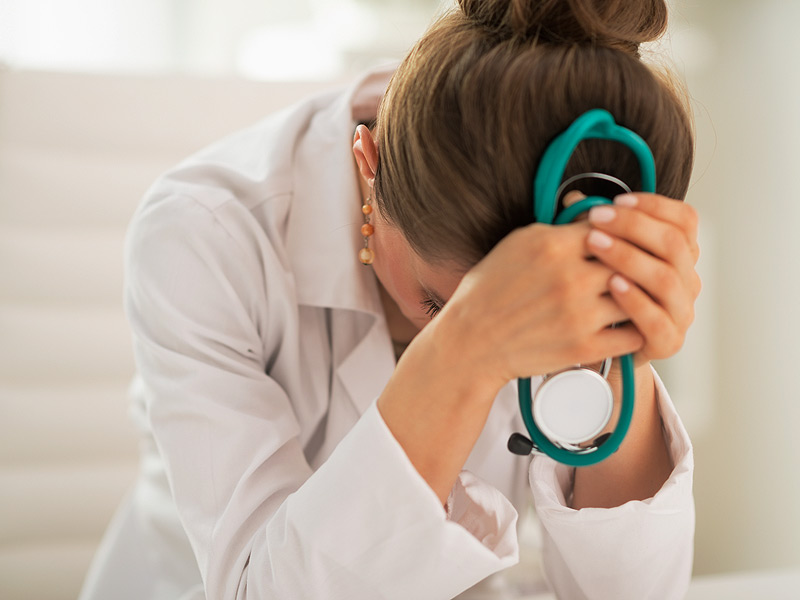
Corona Virus unmasks danger to nurses and doctors, which administrators prefer to refrain or oppress


Working of a doctor and nurses has never free from risk to themselves. The risk is generally underestimated, although it often involves major  risk  to their  life. Problem is that  majority of people, society, governing bodies  and even doctors themselves do not perceive or acknowledge  many times  the risks seriously.  Deadly Corona virus has unmasked and unveiled the danger to nurses and doctors,  the topic often suppressed, shunned by administrators and those who govern.

    An extreme example is the Chinese doctor, who was reprimanded, humiliated and made to apologize for doing right.  But this one example  is tip of the iceberg, for the Global phenomenon, where risk to front line workers is ignored routinely. They are just taken as  the routine workers, who have consented to be sacrificed. Chinese doctor Li Wenliang, one of the eight whistle-blowers who warned other medics of the coronavirus outbreak but were reprimanded by the police, died of the epidemic on Thursday,


  As per reports, 40 staff members of Wuhan hospital are  infected with Virus.

    Administrators and regulators refrain to study data that would establish and quantify the occupational hazards of being a doctor and nurses. Some of these hazards may be known, but there is no comprehensive analysis of workplace risk for physicians and nurses, like those that have been done for other professions. As physicians, we have a sense of the risk, and yet we remain engaged, continuing to care for our patients as we know  “these things” happen. Perhaps society prefers to remain blissfully ignorant of the sacrifice and risk their doctors  and nurses take on, comforted by the fantasy of the serene  hospital. Perhaps we  all despise to let reality and data shatter the illusion.

   But since  these risks are increasing exponentially every day, because of unknown and mutated germs (bacteria and viruses),  awareness is needed.  There are lesser set procedures, lack of awareness, not protective equipment or supportive society, governance and  laws, at most of  the places globally.  doctors  and nurses continue to work  in danger zones. These risks can be of varied types and contracting the diseases is just one of them.

Patients carrying specially unknown germs are  handled by doctor and nurses, who have no clue, what they are dealing with.   Time gap in such  patients coming to the  hospital  and  the exact diagnosis of finding a dreaded disease, may be  quite dangerous to doctors and nurses. To add to the problem, In  large number of patients, exact viruses cannot be diagnosed or even suspected. In many cases of ARDS, the causative organism cannot be  isolated or identified.  It is important for  doctors and nurses  to take universal precautions at every level. There can be many more viruses or germs which are yet to be discovered or mutated ones that  are unknown.

H1N1, Zika,  Ebola,  SARS  are few examples,  just to imagine that they existed and handled by health workers as unknown germs, till they were discovered.

Worst part is that our systems are not defined to prevent, treat or compensate or even acknowledge for these big disasters, if it happens to healers. These problems are not known to students, when they decide to take medicine, nor they are taught in medical school. Most of the time they have to fend for themselves, if problems occur.

Everyday globally, the doctors and the nurses  greet the new day and return to their work of taking care of their patients, knowing well the risk  involved.

Maybe it is time that we are little more aware  and acknowledge that even doing everything in best manner and honestly, they are in a  conflict zone and  are all in harm’s way. Just be careful and be mindful that  doctors, nurses, and healthcare workers,  may get  sickened, injured, disabled even  as they care for their patients in best manner.

21 occupational hazards to nurses and doctors

Corona outbreak Whistle-blower Chinese doctor was harassed; dies of infection


Chinese doctor Li Wenliang, one of the eight whistle-blowers who warned other medicsof the coronavirus outbreak but were reprimanded by the police, died of the epidemic on Thursday, official media reported. Li, a 34-year-old doctor who tried to warn other medics of the epidemic, died of coronavirus on Thursday in Wuhan, the state-run Global Times reported. He was the first to report about the virus way back in December last year when it first emerged in Wuhan, the provincial capital of China’s central Hubei province. He dropped a bombshell in his medical school alumni group on the popular Chinese messaging app WeChat that seven patients from a local seafood market had been diagnosed with a SARS-like illness and quarantined in his hospital. Li explained that, according to a test he had seen, the illness was a coronavirus — a large family of viruses that includes severe acute respiratory syndrome (SARS) which led to 800 death in China and the world in 2003. Li told his friends to warn their loved ones privately. But within hours screenshots of his messages had gone viral – without his name being blurred. 2/6/2020 Chinese doctor who first warned about coronavirus outbreak dies . When I saw them circulating online, I realised that it was out of my control and I would probably be punished,” Li was quoted as saying CNN recently. Soon after he posted the message, Li was accused of rumour-mongering by the Wuhan police. He was one of several medics targeted by the police for trying to blow the whistle on the deadly virus in the early weeks of the outbreak. Overall 564 people have died in China due to the virus and 28,018 confirmed cases have been reported from 31 provincial level regions, the National Health Commission reported on Thursday.

corona virus

doctor nurses at risk from mutated virus

21 occupational risk to doctor and nurses

30 hours baby born to a Wuhan Coronavirus patient infected; possible vertical transmission


30 hours baby born to a Wuhan Coronavirus patient infected; possible vertical transmission https://extinctdoctorgood.com/2020/02/05/30-hours-baby-born-to-a-wuhan-coronavirus-patient-infected-possible-vertical-transmission/

30 hours baby born to a Wuhan Coronavirus patient infected; possible vertical transmission


The child was born in Wuhan on Sunday and tested positive 30 hours later .

Medics were monitoring the baby closely, but said its condition was stable 

  • Doctors warned the virus might be passed from mothers to unborn babies
  • Another 17-day-old baby in Wuhan was also found to be infected by the virus
  • Coronavirus death toll continues to soar as at least 493 people have been killed 
  • A Chinese baby born to a Wuhan coronavirus patient has been diagnosed with the deadly disease 30 hours after being delivered.Doctors in China. The child was born in Wuhan on Sunday and tested positive 30 hours later .
    Medics were monitoring the baby closely, but said its condition was stable
    • Doctors warned the virus might be passed from mothers to unborn babies
    • Another 17-day-old baby in Wuhan was also found to be infected by the virus
    • Coronavirus death toll continues to soar as at least 493 people have been killed
    • A Chinese baby born to a Wuhan coronavirus patient has been diagnosed with the deadly disease 30 hours after being delivered.Doctors in China are now fearing that the infection could be passed from mothers to their babies in the womb.The news came after experts claimed that the virus might also be spread by faeces. The infected child, whose gender has not been revealed, was born in Wuhan on Sunday. Its mother had been confirmed to have the coronavirus before going into labour.
    • Medics gave the baby a test 30 hours later and the result turned out to be positive. The baby was then transferred to the Wuhan Children’s Hospital, which has been appointed by the government to treat all infected children.The three-day-old baby’s condition was stable and it was being closely monitored, the hospital announced through a post on its official social media account today.’This reminds us to pay attention to a potential new transmission route of the coronavirus – vertical transmission from mothers to babies,’ said Dr Zeng Lingkong, chief physician from the hospital’s Department of Neonatal Medicine.
    • he newborn is one of the two babies that have been found to carry the coronavirus by Wuhan Children’s Hospital. Another 17-day-old baby was found to be sickened after being born healthy on January 13. The hospital said its family hired a wet nurse to look after it on January 22, but the wet nurse was diagnosed with the disease shortly after.The baby’s mother was found to have the coronavirus on January 26 and the baby started to cough and develop a fever three days later. The child was diagnosed with the virus on January 31 after doctors gave it a series of medical checks.
    • Medics are yet to confirm if the baby had caught the virus from its mother or its wet nurse.On Saturday, doctors and nurses wearing hazmat suits and goggles delivered a 7lb 14oz boy in Wuhan Union Hospital.
    a
    are now fearing that the infection could be passed from mothers to their babies in the womb.The news came after experts claimed that the virus might also be spread by faeces.The infected child, whose gender has not been revealed, was born in Wuhan on Sunday. Its mother had been confirmed to have the coronavirus before going into labour.
  • Medics gave the baby a test 30 hours later and the result turned out to be positive. The baby was then transferred to the Wuhan Children’s Hospital, which has been appointed by the government to treat all infected children.The three-day-old baby’s condition was stable and it was being closely monitored, the hospital announced through a post on its official social media account today.’This reminds us to pay attention to a potential new transmission route of the coronavirus – vertical transmission from mothers to babies,’ said Dr Zeng Lingkong, chief physician from the hospital’s Department of Neonatal Medicine.
  • he newborn is one of the two babies that have been found to carry the coronavirus by Wuhan Children’s Hospital. Another 17-day-old baby was found to be sickened after being born healthy on January 13. The hospital said its family hired a wet nurse to look after it on January 22, but the wet nurse was diagnosed with the disease shortly after.The baby’s mother was found to have the coronavirus on January 26 and the baby started to cough and develop a fever three days later. The child was diagnosed with the virus on January 31 after doctors gave it a series of medical checks.
  • Medics are yet to confirm if the baby had caught the virus from its mother or its wet nurse.On Saturday, doctors and nurses wearing hazmat suits and goggles delivered a 7lb 14oz boy in Wuhan Union Hospital.
  • corona virus
  • risk to doctor and nurses from mutated virus

Blog at WordPress.com.

Up ↑