Noble doctor-Ignoble death #Chennai doctor death #Covid-19


Chennai Locals Pelt Stones at Ambulance Carrying Body of Popular Doctor Who Died Due to Covid-19.

Hercules, who ran the New Hope private hospital in Chetpet, battled against the disease for 15 days at the Apollo Hospital in Chennai before succumbing to it.


Chennai: Locals at an upmarket locality in Chennai pelted stones at an ambulance ferrying the body of popular doctor and medical entrepreneur Simon Hercules who died due to coronavirus after a 15-day struggle with the disease.

Hercules, who ran the New Hope private hospital in Chetpet, battled against the disease for 15 days at the Apollo Hospital in Chennai before succumbing to it.

The ambulance driver and a sanitation worker were wounded in the attack that happened late on Sunday night. Police sources confirm that 20 people have been arrested.

According to a relative of Hercules, locals opposed their attempt to bury the body despite the fact that permission was granted. “They refused to allow the cremation of the body. I make this teary-eyed post to all you that a sincere doctor who died treating Covid-19 patients does not have the space for a decent burial,” said Dr Bakiaraj.

This is the second incident of a doctor being disallowed a decent burial in Chennai. Recently, in Ambattur, a doctor from Apollo Vanagaram was not allowed space for burial by locals.


The incident at Chennai is not only disheartening for doctors but dissuades others to carry out the noble work and discourages many to take responsibilities of medical care. This brings forth the narrow-minded nature of public, without realizing their own loss.  Doctors are not  God and are simply human beings. They may become victims of the diseases, while they try to save the patients while putting their own life at risk. This incident not only unmasks their vulnerability to catch diseases, the adverse circumstances they have to work, but sadly victims of underserving public wrath.

If such is the behavior of the public towards doctors, why children should become doctors at all? Why doctors should put themselves at risk while in pursuit to save lives?

21 occupational risk to doctor and nurses

Altruistic professions not respected in the present era

What is plasma therapy for Covid-19


As the world is suffering from pandemic by Covid-19, the effort to find an effective treatment is on a war footing.  Few drugs like HCQS, Remdesvir, and Tocilizumab are being tested, vaccines are being developed. A vaccine may be a mainstay in the future , but till that time, how to control mortality.  Convalescent plasma therapy has been found to be useful in China.

Convalescent plasma is an antibody-rich plasma product prepared from the blood donated by the patients, who have recovered from Covid-19 infection recently. These patients are tested twice negative and ELISA can also be done to check for antibodies. The antibodies are proteins with the capability to fight infection in the body and are important component of the immune system

  Antibody rich plasma can be taken after two weeks after  the patient has recovered. The plasma of such patients has the potential to treat or lessen the severity of Covid -19. Plasma taken from one patient may help three to four patients. A donor can again donate after one week. The subsets of patients who may benefit are sick patients in ICU, on the ventilator and are having a risk of death.

The plasma therapy was used for diphtheria and tetanus  about 120 years ago and  used for viral infections like EBOLA

ICMR has permitted  for clinical  trials  of plasma therapy for Covid -19

FDA  has also permitted to pool the donor volunteers.

Story of the fight inside COVID ward #Indian express


At this time, where  CELEBRITIES and REEL HEROES are fighting the war on Television to prove their real worth in CORONA-TIMES as if they are of some use to society; entertain.  Trying to prove as if the name, fame and wealth  showered on REEL HEROES was not an overhype, INDIAN EXPRESS has been wise enough to publish the real fight in the wards and plight of REAL   HEROES. As the stories of the real plight remains confined to medical groups only.  This article has appeared on 12 April Sunday.  Now the time has come to worship the  REAL HEROES and not use them as sacrificial lambs, otherwise in next pandemic only REEL HEROES will be available for good dialogues, and not the saviors.

      The hazmat suit can get oppressive, the separation from loved ones painful, and fear of the virus paralyzing. The Indian Express recounts 24 hours in the life of four doctors and nurses on the frontlines of the battle against coronavirus in the Capital, armed with a few PPE kits, bottles of sanitizers, and — when the stress gets unbearable — Mohammad Rafi songs

Soaked in sweat after a grueling shift, every night, she returns to the Dental Block of her hospital to sleep.The goggles and mask stretched across her face all day leave bruises; the heat, she says, has set off pimples. Her limbs ache from wearing a PPE suit a size too small. What she craves then is a bath, but dreads it too.

“My room is not a dormitory, it’s a laboratory. There are three toilets, no bathroom… I use the jet spray to take a shower. Then I wash my clothes near the toilet and hang them on a railing where clothes of 17 other nurses — all of them exposed to  COVID 19 patients all day — are also left for drying. That’s the moment I break down every day,” says the 50-year-old nurse who was assigned to the special ward of a dedicated COVID-19 hospital. “Dar lagta hai, rona aata hai (I feel scared, I feel like crying)… But I just take a painkiller and sleep.”


In another part of the city, a 25-year-old doctor, who has been working in the COVID-19 ICU of a Delhi government tertiary care hospital since March 26, is relying on a pill to stay safe. “I have been taking a dose of  HCQS,  I went to 15 shops to get it, but it was not available anywhere. I finally had to borrow from a friend.

Its effectiveness in treating COVID-19 has not been proven but it’s recommended. I know it can have serious side effects. I read that a doctor in Guwahati died after consuming it. But I am taking my chances,” he says.
On a continuous 14-day shift in the COVID-19 ward before he gets a break for a fortnight of quarantine, the post-graduate resident doctor from the internal medicine department says he loves his job, but fears putting the lives of his elderly parents in danger. “The ICU is the most infectious zone. I have to insert tubes through the patient’s mouth into his airways, put food tubes, catheter, if needed… I am constantly exposed to their body fluids,” he says, adding, “My parents are very paranoid, and insisted on taking the hydroxychloroquine tablets too. But I didn’t let them.”

As the country remains in lockdown, with people barred from stepping out of their homes, a large army of doctors and nurses have been making their way to COVID wards each day and night, treating patients even as they fight their own fears. With the novel coronavirus cases in India crossing 6,000, the burden of treatment has largely fallen on the country’s creaking government healthcare system and its over-worked staff. In Delhi, with over 20 virus hotspots and 14 deaths, at least six hospitals/blocks have been dedicated to the treatment of nearly 1,000 COVID-19 patients, and thousands of suspected cases.


the six floors of my hospital are brimming with people, there’s hardly any social distancing that happens. Ambulances are dropping off family after family, all suspects. I am not in a PPE kit all the time, so when I first come in contact with suspected cases, I usually have only a surgical gown and a three-layered mask for protection. If any of them coughs, I shudder… At times such as these, I simply plug in my headphones, listen to Mohammed Rafi songs for a few minutes, calm down, and return to the job,” says the 50-year-old nurse.

Before the shift

These days, the 25-year-old doctor begins his day with a WhatsApp video call to his parents. Since the Cardiac Care Unit at his hospital was transformed into a COVID-19 ICU, he has moved to a separate floor of his house.

“I tell them to prepare my food and leave it at the door. I was given the option of staying at a hotel, but my family got extremely worried and insisted that I stay at home,” he says. He also makes calls to a few friends, mostly doctors, across the country, to catch up with them. “They have been my support. I have to admit that I have been calling them more than usual,” he says. The post-graduate resident doctor, who is now three years into his job, has been working in three shifts — 9 am to 3 pm, 3 pm to 9 pm, and the night shift every third day, from 9 pm to 9 am, after which he gets a day off.

Given the infectious nature of the disease, separation from family is a reality for many doctors across the country, like for a 40-year-old cardiac surgeon from a Delhi government hospital who has also been staying on a separate floor of his house.

“In the mornings, my daughters, 5 and 8, come out in the balcony and we shout out and talk to each other. They have also invented a game — they have named me corona and pretend like they are out to catch me,” says the doctor, who volunteered for a position in the COVID-19 ward in early March.


“The distance was necessary because my father, in his 70s, has both a lung and heart condition… I have worked in tuberculosis wards earlier, so my family is used to me taking precautions. But this time it’s a pandemic and so the stress levels are higher,” he smiles.

For the 50-year-old nurse, a diabetic mother and a 10-year-old son at home made her opt for the hostel facility at her hospital. “I have been in the profession for 22 years. I married late to focus on my career. My shifts have usually been long, but this is the first time that I have been away from home for this long,” says the nurse who hails from Goa

So now she spends her mornings talking to her child and husband, often “hiding my worries”. “They read about the staff at the Delhi State Cancer Institute getting infected, they ask me all kinds of things. I just say everything is fine. I have also told them that I don’t have a phone with me, so don’t call me till 10 pm. But I have one; I just don’t want them to call me when I am busy with the patients or when I am too stressed,” she says. “Since it’s Lent season, I also pray for the safety of my family before leaving for work. I have bought some dry fruits and fruits from outside which I eat to strengthen my immunity,” she says.


As she enters the toilet in the Dental Block to freshen up, she says, she cringes at the sight of the bucket, mug and towel. “They were used by the staff here before us. I don’t know if they have been disinfected,” she says.
But she is relieved that she does not have to go back home after the shift. “Two nurses at the hospital have been travelling from Noida every day. Their families are exposed to the virus. Once my 14-day duty ends, I hope they test me before sending me home. The 50 nurses who worked before us were not tested, just sent for 14-day quarantine.”

Inside the ward

As per norms, and accounts by doctors and nurses that The Sunday Express spoke to, the COVID-19 wards in the Capital are “well-ventilated spaces with beds placed at least six feet apart and no extra furniture”. They are disinfected with sodium hypochlorite several times a day. Separate toilets would be ideal, but at most places, at least three to six patients share a facility.

“The rooms cannot have air-conditioners because that would lead to stagnant air, an ideal environment for the virus to thrive. This also means that a doctor or nurse can’t wear a PPE suit for more than two hours, because it gets very uncomfortable in this weather. It is easier in colder countries,” says the 40-year-old doctor, whose first challenge upon arriving at the hospital is ensuring social distancing among the large groups of patients who arrive at the reception every morning. The 450-bed hospital he works in has 200 COVID-19 patients now.

“I take two rounds of the wards in the day. I use the stethoscope for auscultation, I have to come in contact with positive patients and suspected cases,” he says.

Around seven people, including nurses, security and cleaning staff, are present in the hospital’s COVID ward at any given time. When not in the ward — there are six COVID wards at the hospital, including the ICU and Flu Clinic — the doctor works from a ‘COVID-19 office’ that has been set up at the hospital recently.

“Recently, a man who had returned from Thailand and had COVID-19 symptoms kept holding his little son in his arms. I had to counsel him for long before he agreed to let him go,” he says. Patients with fever, cough and sore throat first arrive at the hospital’s Flu Clinic to get tested. At least 50 patients have been testing positive at the hospital every day.


“I then move on to take stock of PPE, about 15 of which are used in each shift, and then go through patient files, and finally brief all my staff — nurses, ward boys, cleaners — on how to deal with COVID-19 patients. I can also easily tell when one of them is scared, it’s on their faces. I try to be jovial with them, that helps,” says the doctor.

For the Goa nurse, the “fear” is mostly a sinking feeling as she slips into the pink kurta-pyjama uniform at her hospital every day. “It’s washed with clothes of all other nurses. I rub a lot of sanitiser over it,” she says. Her hospital has 600 active and suspected COVID-19 cases, while her ward has six positive patients.

“We are four nurses on a shift, and only the one who goes into the ward gets a PPE kit. The rest are in surgical gowns and masks. But suspected cases are walking into the hospital all day long,” she says. She is part of a group of 120 nurses working at the hospital in three shifts — 7 am to 2.30 pm, 2.30 pm to 10 pm and 10 pm to 7 am.
For a 32-year-old nurse, who is now at home after completing her 14-day shift, it was the “donning and doffing of the PPE that left me anxious… We didn’t have a separate room for changing, about six of us did it together. I washed my hand after removing each part of the equipment,” says the nurse who hails from Kerala and has been working at a Delhi government hospital for the past six years.

A single parent who lives with her elderly mother and child, she says she stays in a separate room at her house, uses a different toilet, and pours Dettol all over her shoes and clothes every day. “Unlike doctors, nurses are not tested after the 14-day shift ends. There was no thermal screening facility at my hospital either. So I am continuing with the precautions,” she says. However, she says, she is relieved that she doesn’t have to wear gloves until her next 14-day shift. “I am allergic to latex powder that is used while wearing gloves. My hands would remain itchy all day. I would wash them all the time.”

Washing his hands 20-25 times is also among the many precautions that the 25-year-old doctor takes every day as he begins duty. “Even in the 20 minutes that it takes to wear the PPE, I wash my hands five-six times. I then head to the ICU, where I have four patients now,” he says.

His three years in the job have seen him being posted in infectious wards before and he is “not scared of the work anymore”. “I once got pricked by a needle used for a suspected HIV patient. It was 3 am and I rushed to get a test. It took six hours for the results to come. Fortunately, it was negative. Such incidents will happen, you can’t avoid it,” he says. He will be tested for the virus when his 14-day duty ends.

With no family attendants for the patients, doctors and nurses end up doing a lot more work. “Changing diapers of elderly patients, emptying urine bags… all of this carries chances of infection.”

And then there are the “VIP patients”. “Some of these patients are frustrated at not having found a place at private hospitals. Food complaints are a constant,” he says.


VIP patients have made the 50-year-old Goa nurse’s “life difficult” too. “They all have mobile phones, and they keep calling the landlines and our mobile phones, asking for chai, juice, their reports. Once, a patient accused me of hiding his reports… They complain about the cleaner, electrician, ward boy, and they blame nurses for everything. Hum kisko bolein (Who do we complain to)?” she says.

She serves food to patients three times a day in disposable plates and glasses. “It comes from the hospital kitchen — roti-sabzi, dal-chawal. If a patient is diabetic or has any other underlying condition, the diet is changed accordingly,” she explains.

The 40-year-old doctor says it’s normal for patients to be frustrated.

“They are away from their family, there is no emotional support. For a significant part of my shift, I double up as a counsellor. Recently, a young patient sat on the window sill, flung his legs out and threatened to jump. I had to pull him in. I later realised he was a drug addict and was experiencing withdrawals,” he says.

As for his own mental health, says the 40-year-old doctor, “Knowing the science behind the spread of the virus, and not relying on ‘WhatsApp and Facebook science’ keeps me sane. I have been following reports from Wuhan and Italy. It’s going to be a long journey. We can’t lose steam this early. My thoughts are similar to that of any soldier.”
To keep his staff healthy, the 40-year-old doctor also ensures that they eat on time.

“I get my food from home,” he says, adding that the staff takes turns to eat, and ensure social distancing.
The 50-year-old nurse says food is one thing they don’t worry about. “We recently got meals from Taj Hotel. It was very tasty,” she says. However, she has been taking care not to drink too much water so as to avoid using the toilet. “We have to remove the entire suit to use the toilet, and then disinfect. Plus, going to the toilet, which the other nurses have also used, only adds to my stress. COVID shift mein physical se zyaada mental stress hai (There’s more mental than physical stress while in COVID shift).”

So what does she do to fight it? “Apart from listening to old Hindi songs, I lean on my friend of 22 years. We started out together as nurses. We share our concerns and motivate each other,” she says. “I like to take care of people and that is why I became a nurse. But we need some care too.”

After the shift

After a long day at the hospital — that can range between six and 14 hours — the 25-year-old doctor begins his “return home routine”. “I first take a shower at the hospital and inform my parents that I am leaving so that they can leave my food outside my room. There is a sanitiser in my bag, in my car, at entrance of my house, at the door of my room and in my bathroom. I use them all. I keep the used plates and my clothes in a polythene bag outside my room. There is a separate bathroom for washing these,” he says. “My parents often ask me if the risk is worth it. I think it is.”

How often does the fear of contracting the virus cross his mind? “I have thought about it many times. If that happens, I will get admitted at Max or Medanta Hospital,” says the 25-year-old.

As for the 50-year-old nurse, when she returned to the Dental Block on Thursday night, she was filled with hope. “There was a protest by off-duty nurses for accommodation. The doctors are being put up at five-star hotels, why not us? Today we were told that some of us will be shifted to a new place, where there will be two nurses per room and an attached toilet,” she says. “I want to take a proper bath.”

Till then, the painkiller and Mohd Rafi melodies will keep her company for another night.


Strengthen hands of medical staff

Over 150 healthcare workers, including doctors and nurses, have tested positive for coronavirus so far. On the frontlines of the battle against COVID-19, the country’s health professionals have so far flagged issues such as shortage of personal protective equipment and lack of accommodation, besides being stigmatised as carriers of the virus.

 For the government, this then is the time to acknowledge some of these concerns and strengthen the hands of the medical fraternity. The ordering of 1.7 crore PPEs in the past week is a step in that direction.


Inside the COVID ward- Indian Express
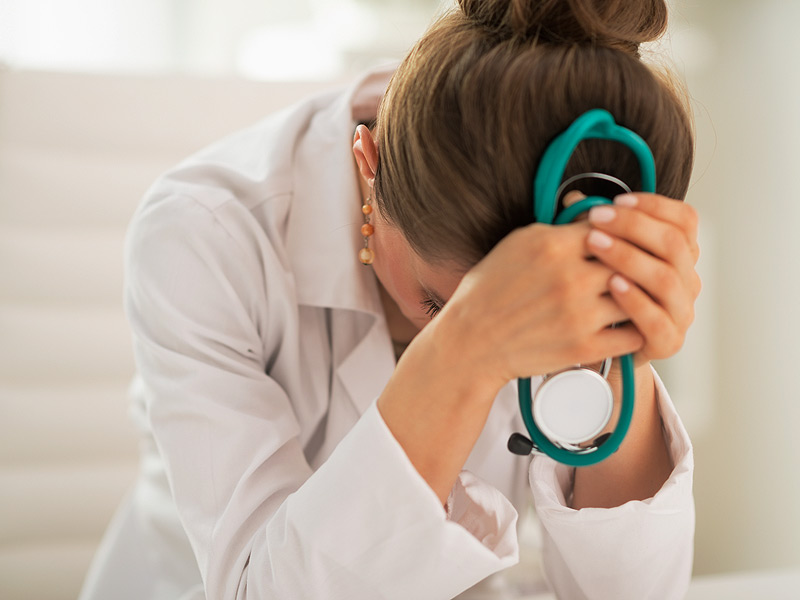
Reel Hero vs Real Hero

21 occupational risk to doctor and nurses

Reclaim of Lost Territory by Mighty Nature #COVID-19


         For thousands of years, humans have achieved tremendous progress and evolution, which was reflected in advancement and modern science. The evolution was used to acquire natural wealth and the environment to the materialistic advantage of mankind. From butchering animals to control sea waters and skies, humans tried to control everything around. Modern medicine was discovered to attack the germs, bacteria, and viruses in a pursuit to prolong life and interfered severely in natural processes of nature without knowing the bigger picture. A sense of holding masterly gained by possessing superior intelligence prevailed in the modern world.  Except for humans, everything living or non-living was being considered as a captive resource to be exploited and consumed. Animals and birds were farmed, tormented and mercilessly killed in uncountable numbers.

        In a few weeks of invasion by COVID-19, the world looked changed. Greener plants, no air pollution, transparent waters, and clear sky looked, no traffic on roads, as if nature claiming back the lost territory without being even seen.

         All living and non-living elements form an ecosystem. Birds, animals, plants, sea life, the environment on earth, non-visible germs and bacteria form an ecosystem and form a balance. How we have affected this balance, that is still unknown.  Germs have been there before humans and are armed with strange powers to mutate and attack humans if balance is disrupted. The real barriers between deadly nano predators and human beings are still undiscovered. When we pollute and destroy the hills and jungles, deserts and oceans, icy glaciers and lush rain forests, use antibiotics to kill micro- and nano-life for our evolved requirements, we force the barriers to be broken.

     The rapidly recurrent coming pandemics may be warning for the behavior of the human race, and point towards a need for more sustainable evolution. The mighty nature deserves more respect to be kind to humans.

     Human beings need to prove that they are truly evolved. Considering that the current invasion by COVID -19 is not the last one that befell us, there can be many more in future, we need to check our pattern of choices to suit the nature and not vice-versa.

21 occupational risk to doctor and nurses

reel heroes vs real heroes

Russian Doctor arrested for Challenging Virus data. Administrator’s refrain


The police held overnight an outspoken Russian doctor, Anastasia Vasilieva, who was trying to deliver masks to an impoverished rural town.

MOSCOW — Russian authorities detained the leader of an independent doctors’ union, an outspoken critic of the Kremlin who has dismissed as “lies” the country’s low official numbers for coronavirus infections.

Anastasia Vasilieva, the head of the Alliance of Doctors, was stopped by the police on Thursday and held overnight while traveling from Moscow to an impoverished rural town to deliver masks, gloves and other supplies to a local hospital, a colleague who was traveling with her said.

Earlier a Chinese doctor Li Wenliang, one of the eight whistle-blowerswho warned other medics of the coronavirus outbreak but were reprimanded by the police, died of the epidemic on Thursday, official media reported. Li, a 34-year-old doctor who tried to warn other medics of the epidemic, died of coronavirus.

       Administrators and regulators refrain to study data that would establish and quantify the occupational hazards of being a doctor and nurses. Some of these hazards may be known, but there is no comprehensive analysis of workplace risk for physicians and nurses, like those that have been done for other professions. Perhaps society prefers to remain blissfully ignorant of the sacrifice and risk their doctors  and nurses take on.  Perhaps we  all despise to let reality and data shatter the illusion

The detention of Dr. Vasilieva, an eye specialist who has been highly critical of Russia’s response to the pandemic, added fuel to already widespread skepticism, particularly among Kremlin critics, about the accuracy of official figures showing relatively few cases of the virus in Russia. Her detention also increased skepticism about the readiness of Russia’s health care system to cope with the pandemic.

A group of doctors at a hospital in St. Petersburg, Russia’s second biggest city, released a video on Friday appealing to the public for help in obtaining the protective equipment they said they needed to treat coronavirus patients.

Maria Bakhldina, the head doctor at the hospital, speaking to Fontanka, a news site in the city, dismissed the doctors complaints as “untrue.”

Views on how far the virus has really spread in Russia and how prepared the country is have been largely determined by political leanings. The general public, which mostly supports President Vladimir V. Putin, has voiced little concern while many of the Kremlin’s opponents suspect a cover-up.

Aleksei A. Navalny, Russia’s most prominent opposition leader, recently accused the authorities of lying about the number of tests carried out and suggested that, as a result, the number of cases could be much higher than reported.

Russia has sharply stepped up testing and now says it has conducted more than 575,000 tests, but this includes cases of multiple tests on the same person, lowering the head count.

In an address to the nation on Thursday, President Putin, holed up for most of the past week in his country residence outside Moscow, praised health workers for “holding the line of defense against the advancing epidemic” but acknowledged the worst is yet to come.

Dr. Vasilieva, the detained physician, set up the Alliance of Doctors last year in part to counter the Kremlin’s claims of dramatic improvements in funding and other support for hospitals. She has treated Mr. Navalny as a patient and affiliated her group with his. The authorities arrested her last year for rallying opposition to the closure of a tuberculosis clinic in a poor region of southern Russia.

Mr. Putin’s approval rating, according to a recent survey by the Levada Center, a respected Russian polling organization, fell from 69 percent in February to 63 percent in March, near to what it was in 2014 before a surge in the president’s popularity after Russia’s seizure of Crimea from Ukraine.

In his last public outing early last week, Mr. Putin visited a new state-of-the-art infectious diseases center, Hospital No. 40 in Moscow, escorted by its head doctor, who this week tested positive for the virus. The Kremlin said that Mr. Putin has been tested regularly and that “everything is O.K.”

Russia on Friday reported 601 new infections, down from 771 new cases reported on Thursday, bringing the total number to 4,419. This is a fourfold increase over the past week but still far fewer than the more than 245,000 cases reported in the United States and nearly 118,000 in Spain and 115,000 in Italy.

Critics of the Kremlin, however, have questioned the official figures. Dr. Vasilieva, the detained doctors’ union head, said in a video late last month that authorities were lying about the true number of infections, accusing them of deliberately misclassifying people who had developed the disease as victims of ordinary pneumonia.

A few days later, she said she had been called in for questioning over her comments, declaring defiantly in another video that “You can send whomever you want to get me — the Federal Security Service, the fire service — but the truth will not change.” The real number of coronavirus cases, she said, “is much higher than the authorities say.” She provided no evidence of any cover-up.

Her medical workers’ union, warning that Russian hospitals were desperately short of masks and other protective equipment, recently started a fund-raising drive online to raise money from the public to buy supplies for hospitals and clinics.

The government, too, seems worried that it may need to do more to control the virus. On Friday, it suspended the last remaining flights into the country, halting even special flights bringing Russians home from abroad, the Interfax news agency reported. All land borders have already been closed.

Moscow, St. Petersburg and many Russian regions this week ordered residents not to leave their homes except to buy food and medicine or walk their dogs close to their residence.

Dr. Vasilieva was stopped by police officers on Thursday while attempting to deliver supplies by car to a hospital in Okulovka, northwest of Moscow, according to Natalia Kolosova, a colleague who was traveling with her. “They were clearly waiting for us,” Ms. Kolosova said, noting that police officers had set up a check point at the entry to Okulovka but stopped no other vehicles.

Dr. Vasilieva appeared in court on Friday charged with disobeying police orders and violating quarantine restrictions. She was released on Friday evening after being ordered to pay a small fine.

Natalia Zviagina, director for Amnesty International in Russia, condemned the detention, saying in a statement that: “It is staggering that the Russian authorities appear to fear criticism more than the deadly Covid-19 pandemic” caused by coronavirus. By detaining Dr. Vasilieva, she added, the authorities show “they are willing to punish health professionals who dare contradict the official Russian narrative and expose flaws in the public health system.”

Okulovka hospital’s head surgeon, Yuri I. Korvin, also a critic of the authorities, had been ordered to stay away from the hospital and self-isolate for two weeks because he had had contact with Dr. Vasilieva, Mr. Sokolov said. Police officers involved in her detention, however, were allowed to keep working, he added.

Mr. Sokolov said “nobody knows the real number of infections” and added that residents in Okulovka were alarmed by a recent flood of people arriving from Moscow and St. Petersburg. Fleeing quarantine restriction and high infection rates in their home cities, urban residents have been fleeing to rural towns like Okulovka to take shelter at country homes.

“None of us know where these people have been or whether they have been tested,” he said.

reel heroes vs real heroes

21 occupational risk to doctor and nurses

administrators refrain to study  risk to doctor and nurses

Lock-down essential to prevent knock-down


Imagine what would have happened if religious functions, social functions, conferences, marriages and birthday functions,  social gatherings or normal transport would have continued for many more days.

Social distancing is the key element to prevent the Coronavirus spread.  But not everyone among the masses has the ability to understand the urgency from the very beginning and own up responsibility for social distancing. It is the responsibility of each and every human being to prevent the spread. But a significant number of people failed to do it from the time that was crucial. The time for basic understanding and wisdom to prevent at individual level varies from person to person.

Social distancing to be successful has to be strict and imposed in a totality. Police patrolling, drone surveillance, camera surveillance may be needed for a longer duration in view of the current crucial phase that may lead to community transmission.

Online consultation or teleconsultations need to be strengthened to avoid unnecessary contact.

Doctors and nurses need to be protected as they can be crucial links for treatment.

As it is a totally preventable disease, so lock-down has to be more complete and strict. It cannot be left to individual wish to quarantine. Once it happens, doctors can not treat it, whereas people can prevent it from happening.

So strict Lock-down is much needed to prevent Knock-down from community spread.

How to implement strict lockdown

Global clap-doctor and nurses

Global clap for Doctors-Nurses; ‘God in only Corona-times’==Looks opportunistic & temporary


In times of Corona- war, what doctor and nurses really wish and need is uniform applause all times, genuine legal regulations,  freedom from industrial enslavement and sensible or true projection from media. Much needed are PPE’s,  good protective gear and an environment, where the voice of “every worker with patients” is heard.

An applause or clap for a specific and short time under the shadow of Corona looks opportunistic and temporary. The continued attacks on doctors, even on the doctors looking after Corona patients, just indicate, how deeply disrespect and hatred for saviours have been encrypted in the minds of people, especially by insensible statements from media and celebrities. The hatred and instigation had come from the people, who have not treated a single patient in their lifetime.

Before Corona episode exploded, doctors and nurses continued to work with the burden of mistrust, legal complexities and hurt. They were working and saving lives before as well. Despite doing good they were on receiving end of imposed consumerism, battling legalities, subject of public violence without much support from any quarter. The insult and assault on doctors were considered business as usual. The ridiculous attitude and beating of doctors were thought of as natural reactions of emotional mobs.

Most of Media and Celebrities earned applause, fame, money,  for themselves by spewing venom and citing stray incidents as generalization against the medical community.   Hence instigating and turning the opinion of masses against health workers.

Although it was good to see an overnight change in the attitude of people and media, as Corona-war was declared. But at the same time, continued episodes of violence against doctors gave an indication that it may be a temporary satisfaction for doctors and claps or applause may live only till Corona fear.

If it was a true applause, why it was not done before Corona exploded. After all,  doctors were doing their work before as well.   Sudden applause comes now in view of the risk to their life as a professional obligation, without proper PPE’s and deficiencies in protective gear.

Doctors and nurses just need PPE’s, good protective gears and a  safe environment.  Children of today, who inspire to be doctors, are watching with anxiety, the treatment given to saviors. An opportunistic or temporary applause without any concrete support will  not inspire good doctors or nurses in the future.


Reel Hero vs Real Hero

Blaming  doctors for the death of coronavirus patient family members attacked them Hyderabad 

Myths about medical-Ventilator; Corona may help to burst


Unfortunately, celebrities and media have most of the time fuelled the myths and common allegations against the medical profession and ventilator. The myths have been propagated rather than disseminating the truth. This is no truth in such projected and perceived hearsay.

Someone who is drowning, a small boat can save his life, till sea storm settles or the victim reaches a safe land. The boat will not settle the sea storm, but enough to save a person from catastrophe. In reality, a ventilator is the invention, which should be worshiped. But contrarily, due to wrong projections and misguided perceptions, it has been hated despite saving lives.

Although doctors and ventilators are in a similar situation, projected in the wrong way, hated in spite of doing good work and saving lives. They are hated and despised, despite the only ones of help in life and death situations. The following are a few myths and facts about the ventilator.

  1. Myth: Once on a ventilator, patients do not survive: the common myth is that once the patient is placed on a ventilator, he will not survive. The human body, when it gets severely diseased or under stress, heart and lungs need to be supported for saving the life, till ailment So, when the battle for saving a life is ongoing, almost all the patients will have to be placed on the ventilator. It is a last-ditch attempt made to save the patient’s life. However when the patients do not survive people feel that it’s the ventilator that has caused death, rather than a rational thought about the severe disease as a cause.

In reality, it is the severity of disease and the possibility of death, when the ventilator is required. It is necessary to support life.

  1. Myth: Ventilator is a modality for the mere prolongation of life: every disease has a spectrum. Every disease can progress from a reversible to an irreversible state. As an effort is ongoing while waiting to reverse the process, the patient will need ventilator to sustain life. Unless the disease reaches a stage of irreversibility, the ventilator is indispensable for an absolute need to maintain life. Since in serious condition, it is an uncertain prognosis. In retrospect, combined with the application of average wisdom, the time of uncertainty and institution of the ventilator can be interpreted as a mistake. As the whole exercise is labeled as futile and expensive by relatives. it’s a grey area and the negative thoughts are fuelled because of retrospective wisdom in hindsight. The real prognosis cannot be predicted in real-time.

In reality, Ventilator is a machine which just supports respiration and not responsible for heart beating. Therefore it buys time for healing and treatment of primary disease.

  1. Myth: Ventilator will cause death:

one can understand this simple logic on the basis that patients are placed on dialysis when kidneys fail. Patients are placed in the cast when bones are fractured for a fixed predefined period of time. Similarly, patient is placed on a ventilator when the lungs fail. The ventilator is used till the time lungs recover and become fully functional.

In reality; Risk is because of disease, which needs ventilator and not vice versa. Ventilator is a friendly machine which helps people who have failed lungs.

  1. Myth : Doctors and hospitals keep dead patients on ventilator for financial gains

Fact: placing patient on ventilator is a very critical decision, taken in best interest of patient to buy time, to so as to treat the disease. A patient needing on ventilator is actually so sick, that not instituting ventilator will risk the patient’s life. Knowing all these facts, doctors take a decision to keep the patients on a ventilator.

Once the patient is on ventilator, it is a stress for the doctor to take the patient off the ventilator. As such ventilator is a SANCTUM SANCTORUM lifesaving machine, to be used only in life and death situations.

  1. Myth : Its a miracle if the patient placed on ventilator survives.

Given the fact that placing the patient on ventilator on scientific facts. There are clear indications for putting the patient on ventilator. A much larger patients put on ventilator are actually saved and go home.

Fact: Everyday thousands of patients are placed on ventilator and sent home to lead a normal life: Any patient who is given general anesthesia is placed on ventilator in the operation theater and then taken off the ventilator at the end of the surgery. In these cases patients are placed on ventilator so as patient can be put to deep sleep (called anesthesia) during which surgery on desired part can be carried out. Soon after the surgery patient are taken off the ventilator and soon thereafter discharged for home after few days of healing.

  1. Myth :Doctors place patients on ventilator at their own will:

Fact: there are scientific parameters which decide when the patient should be placed on the ventilator and when the patient should be taken off the ventilator. So the decision to place the patient is scientific and based on objective parameters.

Contrary to this popular myth, it is a compulsion for the doctor to put patient on ventilator to prevent death in serious situations. Doctors are usually thinking several steps ahead of lay person about medical science.

  1. Myth :All patients placed on ventilator are unconscious:

Fact: this is not necessary. Usually patients are sedated for their comfort. they can be made to walk, write and even perform small tasks when on ventilator, depending upon their lung condition.

Patients are also put on ventilator in case of airway failure when unable to protect their airway for various reasons. Another reason why patients are placed on ventilator is inability of the patients to protect his or her airway. Conscious and alert patients can swallow normally formed mouth secretions. When patients consciousness level is dulled the ability of the patient to protect his airway is lost or compromised. This causes secretions from mouth to enter into the lungs through the airway i.e. trachea causing infections in the lungs. The only way to prevent this and protect the patient’s lungs is to place a tube in his airway and then place them on the ventilator.

  1. Myth: Patients can be kept alive by placing on the ventilator:

General masses have a feeling that patient can be kept alive by keeping them on the ventilator. Even a dead person can be kept alive by placing on the ventilator, which is not true.

In reality: It is machine used only for breathing and not heart and brain.

  1. Myth : Ventilating the dead patients:

this is a common allegation on medical profession. This is no truth in this projected and perceived hearsay.

Facts: Assumptions are based on thoughts of lay persons. Patients on ventilator, may look like dead, because of the disease, sedation and paralyzed by drugs. But their heart and brain are working, so they cannot be declared dead.

If there is some incident, it needs to be proved by medical personnel. In reality, it can be a very rare and remote exception. These untrue projection are creating lots of mistrust about life saving machine.

The problem is about correct projection and majority of people without knowledge of medical science do not even know the large number of lives been saved by the ventilators.

In nutshell: serious conditions and life threatening situations need higher technical interventions, to save a life. If correct projections are made, ventilators are lifesaving machines.

About ventilator

History of ventilator

How to achieve “Effective Lock-Down” to prevent community spread @Corona pandemic


  To identify communities at  risk

“Battle of Corona” Only people can win this war, not doctors or Governments

         Preventing Community spread at this time  is the key to  control  the  Corona pandemic.  Strict  Lock down needs to be effective to achieve the desired objectives. Therefore it is necessary to identify the communities at  risk, where lock-down is not complete and hence these may be need to identify the weak points to achieve effective lock-down.

   These communities can be:

  1.    Surveillance in high population density zones: India  and specially large cities have areas with thick population density.  There is a tendency to come out of houses for  informal chatting.  People need to understand that effective lockdown is more than just not attending to the office work.  Such collections of people can be  prevented by strict enforcement:

A.   Police patrolling in thickly populated residential or good administrative control.

B.   Drone surveillance

C.   Camera surveillance and administrative control

  • Medical needs: people may come out of houses for medical needs. This can be minimized by
  1. Online consultations
  2. Telephonic consultations

These tele-consultations to be used  to differentiate whether it is an emergency or not. The emergencies should be guided to attend hospital, that may be different from Covid 19. So these consultations will help to segregate these patients from  Covid patients.

3.Strengthening of Ambulance service- Network of ambulances can be used to assess at homes and hence  the need for hospitalization may be minimized.  Besides it may help in preventing gathering of relatives and guiding the patient  to appropriate hospital.

4. Providing PPE’s to doctors to prevent loss of work force.

  • Need for essentials: System for community delivery  or   decongestion at market places need to be checked and gathering to be discouraged.

                   Effective Lock-down  can be a key  for winning the “Battle of Corona”. Only people can win this war, and not doctors or Governments.

“Battle of Corona”-Win or loss in People’s hand: not doctors or Governments


This is a disease that people can prevent, but doctors cannot treat.

Prevention is better than cure

In this era with knowledge of modern medicine, we know how to prevent the infection from Coronavirus. This is a completely preventable infection and everyone has enough knowledge about it. Heads of Governments requesting people to follow rules of prevention. Strangely these rules are not difficult. Hon’ble Prime minister Mr. Modi has himself requested people to follow simple precautions. Imagine if just by following simple rules can prevent a catastrophe in countries, world and families,  there should be no reason to not follow them.  If it happens, it shows the sheer carelessness and irresponsible attitude of people.  The success or failure or winning the battle against Coronavirus will not be of doctors, but people themselves.

This is a disease that people can prevent, but doctors cannot treat.

India Ahead News Video

Blog at WordPress.com.

Up ↑