Saif-Ali- Khan transported in auto- Primitive Ambulance retrieval system
An index case can be made, and important conclusions can be drawn of the analysis regarding Mr Saif Ali Khan case- A celebrity icon– resident of big city Mumbai- got near fatal trauma. Important point to ponder is that How he was transported to hospital? A servant went and arranged for an auto-rickshaw. He was lucky enough as he did not required oxygen or his vitals were stable. If a person like Mr Saif could not arrange or did not opt for life saving Ambulance, what can a common person expect- to be transported especially in smaller cities or remote areas. Night emergencies like heart attack, stroke, pneumonias or even severe trauma permit few minutes and need interventions at the earliest. Such situations are life-threatening and unforgiving. Not all problems of the health care can be neglected by just passing the buck to doctors. Health care delivery requires much more efficient systems, that common man can trust in time of need. Even if the retrieval system exists in Mumbai, why family of Mr saif could not depend upon that?
Whatever the situation, calling an Ambulance was not considered as first responder in this case. Ambulances are not merely transport vehicles. They are equipped with oxygen, ventilators or lifesaving drugs and more importantly with a doctor or paramedic who can actually save life in those critical moments.
As systems in our country come out of slumber only after a celebrity or VIP is involved, it is an opportunity to look at the retrieval aspect and improve upon availability of the timely safe transport of critically unwell patients. A lot of improvement can be made by making Mr Saif’s as an index case.
The issue of patient safety has been gaining increased traction year on year and the issue is in right direction. Hospitals, doctors and administration need to vigorously address shortcomings and strive toward minimum errors and desired goals of safety. Patient safety is of paramount importance; therefore, it is a serious issue. It should be achieved by good groundwork and not by sensationalizing and mischaracterizing the real basic issues, transparent safety culture, adequate number of staff and resources.
There is a recurrent old argument and temptation to ask about why healthcare can’t be as safe as airline travel. There can be many apt comparisons that may be possible between aviation and health care especially taking into account the risk involved. But the doctors who treat critical emergencies, have insight looking at life and death situations directly, know that comparing both would be just an oversimplification of the real basic issues.
At most of the points, the comparison is a complete fallacy; and like comparing apples to muskmelons.
It is beyond doubt that air-industry maintains truly an impressive system which is well-designed to achieve the safety results that it does. But, the kind of comparison that some health care safety leaders make in which they compare the mortality data of acute hospital care and airline fatal accident rates is more of a word play and not so appropriate. This comparison is dangerous because it misses the key points for improvement. Such comparisons merely present over-simplified and convenient tool for the health quality experts, who themselves have never been a front-line health worker at any point of time, but still pretend to pioneer the quality in health industry. For the quality improvement the leaders need to be grounded in the reality of emergency front line medicine to be effective.
Aircrafts are engineered to be in the best possible shape before they fly. Patients, on the other hand, patients are in the worst shape when they enter the emergency of the hospital.
Medicine is by nature, a much more risky work than flying along with vulnerability to death always.
The aircrafts are required to regularly demonstrate that the performance of their critical systems meets or exceeds strict standards. If systems are not operating well the plane will not be allowed to fly.
But all the patients, (aeroplane metaphor) are already sick; doctors are expected to fly such aeroplanes, who are in crashed condition universally. Doctors do not have the luxury to replace any part. For example, when doctors treat an elderly with heart failure, chronic kidney failure and pneumonia, they try to keep them “flying” despite multiple sub optimally functioning critical systems.
In other words, doctors have to fly crashed planes always on every day basis, something that never happens even once in aviation industry.
Has any Pilot ever tried to fly a plane in which engine power is only 25 percent of normal with other systems are functioning sub-optimally and the fuel tank is leaking? What will be standard procedure (SOP) for Pilot to fly this plane? But everyday doctors try to fly such planes and they have to fly it no matter how many systems are non-functional. Moreover, doctors can be sued on some flimsy grounds in case they fail or an accident happens in an effort to keep this plane in the air. Treating a critical illness is like an effort to keep such planes in air with suboptimal functioning systems.
Obviously the comparison is a bit overzealous.
What would be chances that a fully checked plane with a trained pilot will crash after flight takes off. Now compare the chances of patient who lands in emergency, and treatment is started.
By a simple common sense, are two situations comparable?
Former has no chance (almost Zero percent) of crash whereas in a critical emergency patient, the chances of crash are 100 % to start with.
Communication of passengers to the pilot about what he should do and what he should not while flying the plane is nil. Whereas doctors are continuously bombarded with google knowledge of patients and interference by relatives and questioned about every action.
Doctors are expected to make future prediction about what can happen, how he will be able to keep the crashed plane in the air and take consent, based on few assumptions. Doctors can be harassed and dragged to courts if such predictions fail.
Airlines will always have full staff to serve promptly during a flight. The pilot will be totally dedicated to flying the plane, and will not fly without the co-pilot and crew. On the other hand, front line healthcare workers know it well the fact that patient safety incidents and errors tend to occur when they are struggling with staffing levels and feel grossly overworked.
Fatigue and overwork is too common scenario among front line healthcare staff in clinical settings.
A pilot is also only ever going to fly one plane at a time. It is not realistic for a doctor or nurse to be allocated to just one patient, but the workflow is very different, with healthcare tasks frequently interrupted with new clinical issues and emergency situations. Consequently, insufficient staffing can have an acute effect on outcomes and the ability to perform safely.
Aviation industry is too predictable and on the contrary, health care is combination of uncountable unpredictable risk factors, be it allocation of staff or risk of death or resource prediction and complexity of communication.
Aviation is more of mechanical milieu, whereas health care deals with emotion and compassion. The two industries are vastly heterogeneous, and to say that safety in medicine should follow in the path of flying airplanes, grossly oversimplifies a complex problem.
Last but not the least; health care involves lot of financial uncertainties and arrangements. Needless to say, doctors carry the blame for financial hardship of the patients, even if they are not responsible for costs. The mammoth industry remains hidden and doctors are blamed as they are the only front man visible.
Basic difference lies in the fact that patients are real living people, whereas airplanes are simply machines, whose codes and protocols are well defined and limited to within human capabilities. The importance of human contact, empathy, compassion, interact and listen to concerns, and the ability to spend adequate time with patients, should be always be the first pillar of promoting a culture of safety.
Exhortations by armchair preachers to learn oversimplified improvement examples from aviation can provoke considerable frustration and skepticism among clinicians exposed to the unique challenges, difficult working conditions and everyday complexities. Patients are not aeroplanes, and hospitals are not production lines.
Most unfortunate part is the assumption that every sick person who dies in a hospital from an adverse event is an example of a truly preventable death rather than clinicians trying their best to keep someone alive and eventually failing.
Checklists and documentation to improve systems are wonderful in mechanical areas like operative care and inserting central lines, but have limited role and can only go so far without the most important virtues of being a doctor or nurse. It means more than mechanically following protocols and doing paper work in real sense.
In health care merely providing check list and doing extra- paper work may be counterproductive for many reasons. Increase in time for voluminous documentations will consume time and forces health care workers to focus on paper work and takes them away from patient’s real issues.
Completed paper work and excessive documentation provides a false assurance of quality work, which may or may not reflect true picture of patient care. Even after full documentation, still it will be required to be carried out in a diligent manner, a task which is different from mechanical task of mere check list of other industries . Learning from other industries seems to offer a simple shortcut to anyone trying to improve healthcare, but its utility is limited only for documentation purposes and not real quality. Caring for patients is radically different from flying aeroplanes. Healthcare is unique in the intimacy, complexity, and sensitivity of the services it provides as well as the trust, compassion, and empathy that underpin it.
Merely completing protocols mechanically and excessive documentation will result in decline in quality actually. Simply importing and applying a ready-made tool will lead to situation, where quality will exist only on papers and merely reduced to a number to the satisfaction of so called ‘pioneers’ of quality.
In the absence of strict Government control, all kinds of dubious assertions are available about curing all types of ailments. These alleged remedies, and the belief systems, are based on the facts that can neither be proved nor disapproved. They are dangerous to life of patients, which is why it is necessary to fight them and refute them. But who should fight? Patients themselves are blinded by a projected faith and false belief about definite cure.
While pharmaceuticals and scientific drugs are regulated to some extent, but side effects and harms associated with various health products worth billions of market remain untested and unregulated.
It has become a common practice to advertise health products (especially alternate medicine) that claim to be panacea for all ailments, enhance immunity, to increase power and health by creating an impression on minds on various platforms. Instead of producing scientific evidence, such products and therapies are sold under disguise of natural therapies or alternate medicines. The objective evidence or global neutral trial for the claimed efficacy or about real side effects is always missing.
No one can deny that the knowledge circulated through various media plays an important role in reframing the narrative in patient’s or people’s mind. These can be in form of advertisements in television or articles in newspapers. The subjectivity of such advertisements creating new impressions and replacing previous ones, right or wrong cannot be denied.
A frightening scenario is emerging as there seems to be an epidemic about fake or substandard medicines, spurious drugs and heightened belief in marketed therapies by advertisements. An epidemic of ignorance that causes people to believe in pseudoscience or merely in projected promise of cure. A hope of miracle is flashed to patients, who have been given a ‘no hope’ by scientific medicine. Such patients are an easy prey for such fraudsters. It is not uncommon that lethal substances like steroids, hormones and heavy metals are given in dangerous doses.
Synopsis Cyberabad police raided a kirana store in Petbasheerabad, seizing ganja-infused chocolates marketed as ayurvedic medicine. The chocolates contained 14 grams of cannabis per 100 grams and claimed to treat indigestion. The Telangana anti-narcotics bureau has notified UP and Rajasthan police about manufacturers in these states producing similar drug-laced products. In an emerging trend, ganja-laced chocolates made in Uttar Pradesh guised as ayurvedic medicine are making becoming popular in Hyderabad. Wrapped in attractive packaging, the chocolates come with ‘Ayurvedic Aushadh’ printed on wrappers, reported ToI. On Sunday, Cyberabad police seized a substantial shipment of drug-infused chocolates from a kirana store in Petbasheerabad. The packaging of the seized chocolates indicated that each 100 grams contained 14 grams of cannabis.
Additionally, the label suggested that the chocolates could be consumed twice daily to alleviate indigestion and other stomach-related problems when mixed with water.
The chocolate cover also mentions that it can be consumed twice a day to treat indigestion and other stomach-related issues, is also used as a medication for diabetes. Meanwhile, Telangana anti-narcotics bureau has identified several private players in UP and Rajasthan manufacturing ganja-laced chocolates and has alerted the respective state police departments.
“Look at the profit margins of these companies — they’re hundreds of billions of dollars,” Biden said. “It’s not like they’re getting hurt.”
The Indianapolis drugmaker’s price cuts and discounts for insulin come as federal and state lawmakers and patient advocates pressure drug companies and health insurers to improve affordability for the lifesaving medication used by millions of Americans. The move follows criticism from federal lawmakers and advocacy groups.
The noise level in the news regarding expensive medical costs is high. So who’s to blame? Frequently buck stops at naming the doctors without really doing proper root cause analysis, not infrequently hiding the real culprits. It is easy to point the finger at calling the medical professionals greedy to keep the veil over mammoth medical and pharmaceutical industry. But there is a whole system of unregulated medical business associated with large and various health care industries: for example pharma industry, biomedical, equipment, consumables etc. These industries although play important part in medicine, cost, sale and purchase, but are largely remain unregulated and remain hidden to the patient.
Pharmaceutical Companies associated with the production and pricing of the drugs have contributed to the problem and has negatively affected the patient’s expense, directly and indirectly.
When it comes to prescription drugs, rampant inflation has been the norm for decades. Drugmakers fearlessly increase prices on hundreds of medications every year because each of their products has no or few competitors. If the cost of a medication are kept high, that would increase directly influences the cost of health care for individuals.
Drug giant Eli Lilly said Wednesday it will slash the cost of its top-selling insulin drugs by 70% as Congress remains stalled on capping prices on the medication vital to millions of Americans who suffer from diabetes.
The Indianapolis-based drugmaker also will lower the price of its Lispro insulin injection to $25 a vial and expand its insulin value program so that an existing $35 cap on some insulins will now apply in about 85% of US pharmacies.
The move comes as President Biden has pushed to extend to most Americans the $35 cap on out-of-pocket insulin costs available to recipients of the government’s Medicare health program, a move some lawmakers have also said they would support with legislation.
“While we could wait for Congress to act or the healthcare system in general to apply that standard, we’re just applying it ourselves,” Chief Executive Dave Ricks told CNN in an interview.
The changes could help around 2 million people pay for the life-sustaining drug. Although many people, including some 3.3 million on Medicare, already pay $35 a month or less for insulin, about 1-in-5 with private insurance and the 17% of insulin users who are uninsured stand to benefit.
Eli Lilly, along with Sanofi and Novo Nordisk make up 90% of the US market for insulin. Lilly shares were up 1.3% at $315.30.
Some analysts have suggested the company was trying to get out ahead of lawmakers. “It certainly appears they were reacting to the growing chances that Congress is going to cap insulin prices,” said Brian Gardner, chief Washington policy strategist at Stifel investment firm.
The insulin products currently cost hundreds of dollars a month. Humalog reportedly has a list price of $530 for a five-pack of injection pens and $274 for a vial, though the company said it only costs less than $95 a month for patients with commercial insurance and Medicare. List prices for drugs often differ from what patients actually pay, including after insurance and other assistance programs.
While the $35 price is only available in pharmacies participating in the company’s insulin value program, Ricks said patients using other pharmacies can receive a rebate through the drugmaker’s website.
These price cuts “should be the new standard in America,” Ricks said, and he called on other companies and stakeholders “to meet us at this point.”
Around 8.4 million of the 37 million people in the United States with diabetes use insulin, according to the American Diabetes Association. Ricks said the company’s insulin price cuts had been planned for some time and were accounted for in Eli Lilly’s December financial forecast, which projected 2023 revenue of at least $30.3 billion.
Diabetes is the seventh leading cause of death in America. Those needed the medication spend an average of $16,752 a year, The Post reported.
In addition to substantial price reduction, Eli Lilly said it would launch on April 1 a new insulin product called Rezvoglar — a copycat version of Sanofi’s Lantus insulin. It will sell its version for $92 for a five-pack of injection pens, a 78% discount to the list price for Lantus.
While pharmaceuticals and scientific drugs are regulated to some extent, side effects and harms associated with various health products worth billions of market remain untested and unregulated.
It has become a common practice to advertise health products that claim to be panacea for all ailments, enhance immunity, to increase power and health by creating an impression on minds on various platforms. Instead of producing scientific evidence, such products and therapies are sold under disguise of natural therapies or alternate medicines. Needless to say, the objective evidence or global neutral trial for the claimed efficacy or about real side effects is always missing.
No one can deny that the knowledge circulated through various media plays an important role in reframing the narrative in patient’s or people’s mind. These can be in form of advertisements in television or articles in newspapers. The subjectivity of such advertisements creating new impressions and replacing previous ones, right or wrong cannot be denied.
Companies have created huge fortunes based on circulation of such pedagogic narratives and social knowledge. But in real sense, these are actually chemical and have biological actions and reactions. Chemical derived from natural sources can have side effects and contain impurities. Global neutral trials to validate effects and side effects remain an urgent need of the hour for all health products.
A frightening scenario is emerging as there seems to be an epidemic about fake or substandard medicines, spurious drugs and heightened belief in marketed therapies by advertisements. An epidemic of ignorance that causes people to believe in pseudoscience or merely in projected promise of cure. A hope of miracle is flashed to patients, who have been given a ‘no hope’ by scientific medicine. Such patients are an easy prey for such fraudsters. It is not uncommon that lethal substances like steroids, hormones and heavy metals are given in dangerous doses.
In the absence of strict Government control, all kinds of dubious assertions are available about curing all types of ailments. These alleged remedies, and the belief systems they are based on, are based on the facts that can neither be proved nor disapproved. They are dangerous to life of patients, which is why it is necessary to fight them and refute them. But who should fight? Patients themselves are blinded by a projected faith and false belief about definite cure.
NEW DELHI: A youth with a history of taking excessive gym supplements and protein powder was brought to the emergency ward of Hospital in south Delhi in a comatose and critical condition. Doctors said the unconscious 22-year-old youth had extremely low oxygen levels, necessitating ventilatory support. He was immediately shifted to intensive care, where he stayed for almost a week. The patient was eventually discharged with no neurological deficit of any kind, said doctors at the hospital.
Citing the youth’s case, doctors caution against excessive use of fitness supplements and said that this can cause serious neurological damages besides proving fatal in some cases. He was found to be suffering from multiple severe metabolic derangement, including very high level of muscle enzymes, creatine phosphokinase, suggesting breakdown of muscle tissue. Further investigations revealed extremely low calcium levels which were also responsible for his deteriorating state. The patient was diagnosed as having toxic encephalopathy (brain dysfunction caused by toxic exposure) and rhabdomyolysis (a serious medical condition that can be fatal or result in permanent disability) which, occurred after excessive consumption of gym supplements. After stabilising the patient in the ICU, the youth was treated for correction of these medical issues, leading eventually to his recovery. The patient had no history of substance abuse and the toxicology screening of his urine also returned negative. After regaining consciousness after two days, the 22-year-old confessed to excessive intake of gym supplements and various types of protein powders. The case highlighted the hazards of use of body-building supplements, which could have catastrophic consequences. There was a strong possibility that significant muscle breakdown resulted in depletion of calcium levels which manifested with convulsions and altered level of consciousness. This can be labelled as toxic encephalopathy.
In another example of Medical Industry exploiting masses by false projection of Modern Medicine, the formula milk industry uses poor science to suggest, with little supporting evidence, that their products are solutions to common infant health and developmental challenges.
The CMF industry generates revenues of about $55 billion annually, with about $3 billion spent on marketing activities every year,” stated a Lancet editorial. The series details how marketing practices in violation of the voluntary Code of Marketing of Breast-milk Substitutes, developed by the World Health Assembly in 1981, have continued in nearly 100 countries and in every region of the world since the adoption of the code more than forty years ago.
A Lancet series on breastfeeding details strategies used by commercial formula manufacturers to undermine breastfeeding to turn the feeding of infants and young children into a multibillion-dollar business generating revenues of about $55 billion each year.
Lancet has issued an urgent call to protect breastfeeding. Formula milk marketing tactics are exploitative, and regulations need to be urgently strengthened and properly implemented, the three-paper series argued. The authors of the series argue that apart from influencing political organisations, formula milk companies also draw on credibility of science by sponsoring professional organisations, publishing sponsored articles in scientific journals, and inviting leaders in public health onto advisory boards and committees, leading to unacceptable conflicts of interest.
“The formula milk industry uses poor science to suggest, with little supporting evidence, that their products are solutions to common infant health and developmental challenges. Adverts claim specialised formulas alleviate fussiness, help with colic, prolong night-time sleep, and even encourage superior intelligence. Labels use words like ‘brain’, ‘neuro’ and ‘IQ’ with images highlighting early development, but studies show no benefit of these product ingredients on academic performance or long-term cognition,” stated Professor Linda Richter, Wits University, South Africa. “Breastfeeding has proven health benefits across high-income and low-income settings alike: it reduces childhood infectious diseases, mortality, and malnutrition, and the risk of later obesity; mothers who breastfeed have decreased risk of breast and ovarian cancers, type 2 diabetes, and cardiovascular disease. However, less than 50% of babies worldwide are breastfed according to the WHO recommendations, resulting in economic losses of nearly US$350 billion each year. Meanwhile, the CMF industry generates revenues of about $55 billion annually, with about $3 billion spent on marketing activities every year,” stated a Lancet editorial. The series details how marketing practices in violation of the voluntary Code of Marketing of Breast-milk Substitutes, developed by the World Health Assembly in 1981, have continued in nearly 100 countries and in every region of the world since the adoption of the code more than forty years ago. The series says that voluntary uptake of the Code is not enough and calls for an international legal treaty on the commercial marketing of food products for babies to protect the health and wellbeing of mothers and families. “Only 32 countries have legal measures that substantially align with the Code. A further 41 countries have legislation that moderately aligns with the Code and 50 have no legal measures at all. As a result, the Code is regularly flouted without penalty,” pointed out the editorial. An analysis in the series describes how profits made by the formula milk industry benefit companies located in high-income countries while the social, economic and environmental harms are widely distributed and most harmful in low and middle income countries. The authors stress that breastfeeding is a collective responsibility of society and call for more effective promotion, support and protection for breastfeeding, including a much better trained healthcare workforce and an international legal treaty to end exploitative formula milk marketing and prohibit political lobbying.
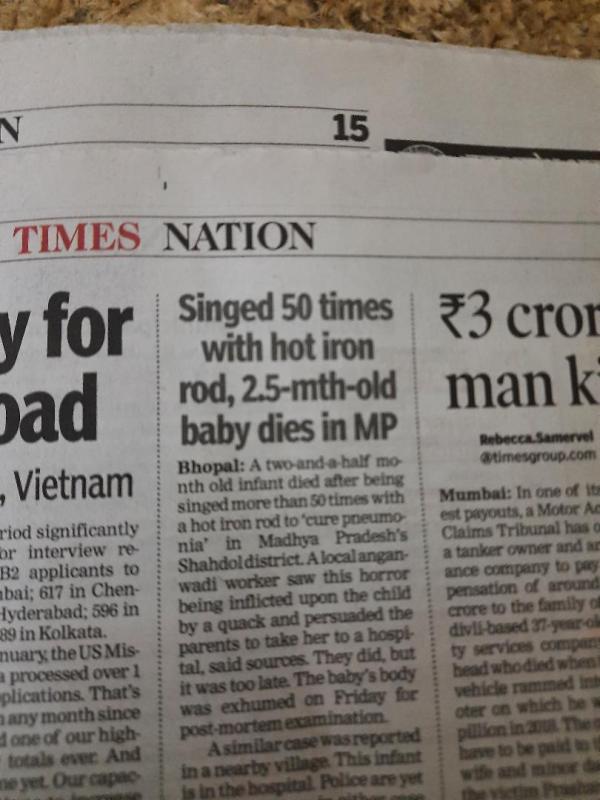
In a heart wrenching and unfortunate incident from Bhopal (Madhya Pradesh), a 2.5 month child was singed with hot iron 50 times by a quack for treatment of pneumonia. He died and the incident appeared in newspapers, but similar kind of treatments must be going on at many places and gullible patients keep on suffering .The suffering is of two types; one, that they are deprived of correct treatment and other is the tremendous suffering because of such nature of cruel practices in the garb of treatment.
That brings to the fore the basic question; why such type of treatments are being practiced and allowed to be conducted in 21th century. Why people allow and consent for such treatments by quacks?
These incidents simply reflect that the health system has not been able to travel the last mile and has failed to touch the last man.
Most important reason for such disparity is illogical distribution of health care. Corporatization of health care has projected medicine as a purchasable commodity and consequently resulted in an Illogical distribution of health care
People, who can afford, spend millions in the last few days of their life, just to have only a few more days to live. Resources spent in such a futile quest are equivalent to thousands of times the money for food and medicines for the poor who lose lives for fraction of that expense.
It seems humanity has legalized the hoarding of medical care; give it to the rich, bundled with consumerism though not necessarily the needy. It is the same as hoarding of the food that is sold to rich, letting the poor die somewhere in the world without food, which remains invisible to all.
Another worrisome aspect of the incident is that avoidance of people to seek treatment from appropriate clinics and hospitals. Anganwadi worker was there in the village, so it was possible to seek help from the health system. Is the mistrust and malice generated by media towards doctors and medical professionals is the reason to avoid seeking help from them?
BHOPAL: A newborn has died after being singed more than 50 times with a red hot iron rod in a bizarre ritual to ‘cure pneumonia’ in MP’s Shahdol district. A local anganwadi worker saw this horror being inflicted upon the child by a quack and persuaded the parents to take her to a hospital, say sources. They did, but it was too late. The baby’s body was exhumed on Friday evening for post-mortem examination. Even as police were grappling with this horror, a similar case was reported in a nearby village. This infant is in hospital. Police are yet to arrest anyone in either case and it’s not yet known if the same quack, a woman, was behind singeing both babies. The Child Welfare Committee has written to police to take action under section 75 of Juvenile Justice Act, but nothing has been done. When TOI spoke with Singhpur police, they said they were taking legal opinion on how to proceed with the case. An officer said they are waiting for the autopsy report to see what charges can be pressed. The baby who died was two and a half months old and suffering from pneumonia. Her parents live in Kathotiya village, around 520km from Bhopal and close to Chhattisgarh. “The infant was ‘torched’ as a method of ‘treatment’ on January 10.” Singhpur police station in charge, MP Ahirwar told TOI. The second incident happened in Samtapur villagee. The baby’s parents deny they put the girl through the burning ritual.
Whether it is better to buy fish for years or provide people with fishing net? This applies to public health care system in India. Times of India analysis points out the need to build and strengthen the public health care system. Building of infrastructure for massive population requires funds, but ultimately the investment will bring down the cost of treatment and better delivery of health care to the country.
NEW DELHI: The health budget is good news for the private health sector as there has been a substantial increase in allocation for health insurance schemes such as the Central Government Health Scheme (CGHS), treatment for CGHS pensioners and the Ayushman Bharat scheme. Government’s own data has shown that the private health sector corners the bulk of the spending under these schemes, which saw a nearly 22% jump in allocation in the 2023-24 budget.
In contrast, the allocation for schemes aimed at improvement in public health infrastructure has declined when adjusted for inflation. These include the National Health Mission (NHM), Pradhan Mantri Ayushman Bharat Health Infrastructure Mission (PMABHIM), human resources for health and medical education and Pradhan Mantri Swasthya Suraksha Yojana (PMSSY).
The overall allocation for health after rising during Covid, has come down in real terms though it seems like an increase in nominal terms from Rs 83,000 in the budget estimates (BE) for the current year to Rs 86, 175 crore in BE 2023-24. The revised estimates (RE) for the current year indicate a 9% decline from the BE to Rs 76,370 crore. The allocation for insurance schemes, however increased substantially in RE 2022-23; more than 75% hike in allocation for CGHS pensioners from Rs 2,645 crore to Rs 4,640 crore and for the first time since the launch of Ayushman Bharat scheme, the RE is the same as the BE at Rs 6,400 crore. In the past, only about half the budgeted amount for Ayushman was getting spent. However, the allocation for all the public infrastructure schemes put together has been slashed by 16% in the RE for the current year. In comparison to the Rs 13,266 crore allocated for insurance schemes, which cover only a section of the population, about Rs 30,000 crore has been allocated for the National Health Mission and a separate Rs 6,500 crore for human resources for health and medical education, which was earlier part of the NHM budget.
Most of the allocation for the insurance schemes usually ends up in the coffers of the private sector. Despite private hospitals accounting for only 46% of empanelled hospitals under Ayushman Bharat, for instance, they accounted for 54% of hospitals admissions and since private healthcare is more expensive, that could account for a much higher proportion of the money spent. Most CGHS beneficiaries too go to private hospitals as noted by Dr Rakesh Sarwal, who was advisor health in Niti Aayog, in a study of the scheme. Dr Sarwal stated that CGHS had a higher cost of service because of its greater reliance on private facilities. Incidentally, though the finance minister announced a mission to eliminate sickle cell anaemia, there is no separate budget line for it. Thus even the money for a totally new scheme might have to come from within the NHM budget, further eating into the allocation. The tertiary care programme, which provides for transfer to states for implementing national programmes on control of blindness, tobacco control, capacity building for trauma centres and for prevention and control of non-communicable diseases such as cancer, diabetes, cardiovascular diseases and stroke, has had its allocation slashed to just Rs 290 crore, less than the actual spending of Rs 300 crore in 2020-21, and 42% less than the allocation of Rs 500 in the last budget.
The budget for the establishment and strengthening of the branches of the National Centre for Disease Control and for preparation and control of zoonotic and other neglected tropical diseases and for diseases surveillance, which had gone up during Covid, has been slashed from Rs 71.6 crore to just Rs 55.6 crore, despite the WHO asking countries to prepare for future pandemics by strengthening surveillance. Even the budget for the Indian Council for Medical Research, which played a crucial role during Covid, has been slashed along with a cut in the overall allocation for health research.
The issue of patient safety has been gaining increased traction year on year and the issue is in right direction. Hospitals, doctors and administration need to vigorously address shortcomings and strive toward minimum errors and desired goals of safety. Patient safety is of paramount importance; therefore it is an serious issue. It should be achieved by good ground work and not by sensationalizing and mischaracterizing the real basic issues, transparent safety culture, adequate number of staff and resources.
There is a recurrent old argument and temptation to ask about why healthcare can’t be as safe as airline travel. There can be many apt comparisons that may be possible between aviation and health care especially taking into account the risk involved. But the doctors who treat critical emergencies, have insight looking at life and death situations directly, know that comparing both would be just an oversimplification of the real basic issues.
At most of the points, the comparison is a complete fallacy; and like comparing apples to musk-melons.
It is beyond doubt that air-industry maintains truly an impressive system which is well-designed to achieve the safety results that it does. But , the kind of comparison that some health care safety leaders make in which they compare the mortality data of acute hospital care and airline fatal accident rates is more of a word play and not so appropriate. This comparison is dangerous because it misses the key points for improvement. Such comparisons merely present over-simplified and convenient tool for the health quality experts, who themselves have never been a front line health workers at any point of time, but still pretend to pioneer the quality in health industry. For the quality improvement the leaders need to be grounded in the reality of emergency front line medicine to be really effective.
Aircrafts are engineered to be in the best possible shape before they fly. Patients, on the other hand, patients are in the worst shape when they enter the emergency of the hospital.
Medicine is by nature, a much more risky work than flying along with vulnerability to death always.
The aircrafts are required to regularly demonstrate that the performance of their critical systems meets or exceeds strict standards. If systems are not operating well the plane will not be allowed to fly.
But all the patients, (aeroplane metaphor) are already sick; doctors are expected to fly such aeroplanes, who are in crashed condition universally. Doctors do not have the luxury to replace any part. For example, when doctors treat an elderly with heart failure, chronic kidney failure and pneumonia, they try to keep them “flying” despite multiple sub optimally functioning critical systems.
In other words, doctors have to fly crashed planes always on every day basis,something that never happens even once in aviation industry.
Has any Pilot ever tried to fly a plane in which engine power is only 25 percent of normal with other systems are functioning sub optimally and the fuel tank is leaking? What will be standard procedure (SOP) for Pilot to fly this plane? But everyday doctors try to fly such planes and they have to fly it no matter how many systems are non-functional. Moreover, doctors can be sued on some flimsy grounds in case they fail or an accident happens in an effort to keep this plane in the air. Treating a critical illness is like an effort to keep such planes in air with suboptimal functioning systems.
Obviously the comparison is a bit overzealous.
What would be chances that a fully checked plane with a trained pilot will crash after flight takes off. Now compare the chances of patient who lands in emergency, and treatment is started.
By a simple common sense, are two situations comparable?
Former has no chance (almost Zero percent) of crash whereas in a critical emergency patient, the chances of crash are 100 % to start with.
Communication of passengers to the pilot about what he should do and what he should not while flying the plane is nil. Whereas doctors are continuously bombarded with google knowledge of patients and interference by relatives and questioned about every action.
Doctors are expected to make future prediction about what can happen, how he will be able to keep the crashed plane in the air and take consent, based on few assumptions. Doctors can be harassed and dragged to courts if such predictions fail.
Airlines will always have full staff to serve promptly during a flight. The pilot will be totally dedicated to flying the plane, and will not fly without the co-pilot and crew. On the other hand, front line healthcare workers know it well the fact that patient safety incidents and errors tend to occur when they are struggling with staffing levels and feel grossly overworked.
Fatigue and overwork is too common scenario among front line healthcare staff in clinical settings.
A pilot is also only ever going to fly one plane at a time. It is not realistic for a doctor or nurse to be allocated to just one patient, but the workflow is very different, with healthcare tasks frequently interrupted with new clinical issues and emergency situations. Consequently, insufficient staffing can have an acute effect on outcomes and the ability to perform safely.
Aviation industry is too predictable and on the contrary, health care is combination of uncountable unpredictable risk factors, be it allocation of staff or risk of death or resource prediction and complexity of communication.
Aviation is more of mechanical milieu, whereas health care deals with emotion and compassion. The two industries are vastly heterogeneous, and to say that safety in medicine should follow in the path of flying airplanes, grossly oversimplifies a complex problem.
Last but not the least; health care involves lot of financial uncertainties and arrangements. Needless to say, doctors carry the blame for financial hardship of the patients, even if they are not responsible for costs. The mammoth industry remains hidden and doctors are blamed as they are the only front man visible.
Basic difference lies in the fact that patients are real living people, whereas airplanes are simply machines, whose codes and protocols are well defined and limited to within human capabilities. The importance of human contact, empathy, compassion, interact and listen to concerns, and the ability to spend adequate time with patients, should be always be the first pillar of promoting a culture of safety.
Exhortations by armchair preachers to learn oversimplified improvement examples from aviation can provoke considerable frustration and skepticism among clinicians exposed to the unique challenges, difficult working conditions and everyday complexities. Patients are not aeroplanes, and hospitals are not production lines.
Most unfortunate part is the assumption that every sick person who dies in a hospital from an adverse event is an example of a truly preventable death rather than clinicians trying their best to keep someone alive and eventually failing.
Checklists and documentation to improve systems are wonderful in mechanical areas like operative care and inserting central lines, but have limited role and can only go so far without the most important virtues of being a doctor or nurse. It means more than mechanically following protocols and doing paper work in real sense.
In health care merely providing check list and doing extra- paper work may be counterproductive for many reasons. Increase in time for voluminous documentations will consume time and forces health care workers to focus on paper work and takes them away from patient’s real issues.
Completed paper work and excessive documentation provides a false assurance of quality work, which may or may not reflect true picture of patient care. Even after full documentation, still it will be required to be carried out in a diligent manner, a task which is different from mechanical task of mere check list of other industries . Learning from other industries seems to offer a simple shortcut to anyone trying to improve healthcare, but its utility is limited only for documentation purposes and not real quality. Caring for patients is radically different from flying aeroplanes. Healthcare is unique in the intimacy, complexity, and sensitivity of the services it provides as well as the trust, compassion, and empathy that underpin it.
Merely completing protocols mechanically and excessive documentation will result in decline in quality actually. Simply importing and applying a ready-made tool will lead to situation, where quality will exist only on papers and merely reduced to a number to the satisfaction of so called ‘pioneers’ of quality.
A frightening scenario is emerging as there seems to be an epidemic about fake or substandard medicines, spurious drugs and heightened belief in marketed therapies by advertisements. An epidemic of ignorance that causes people to believe in pseudoscience or merely in projected promise of cure. A hope of miracle is flashed to patients, who have been given a ‘no hope’ by scientific medicine. Such patients are an easy prey for such fraudsters. It is not uncommon that lethal substances like steroids, hormones and heavy metals are given in dangerous doses.
In the absence of strict Government control, all kinds of dubious assertions are available about curing all types of ailments. These alleged remedies, and the belief systems they are based on, are based on the facts that can neither be proved nor disapproved. They are dangerous to life of patients, which is why it is necessary to fight them and refute them. But who should fight? Patients themselves are blinded by a projected faith and false belief about definite cure.
New Delhi: In its latest drug safety alert, the apex drug regulatory body, Central Drugs Standard Control Organization (CDSCO) has flagged 50 medicine batches for failing to qualify for a random drug sample test for the month of October,2022.
These drugs samples which are declared not of standard quality include Levocetirizine tablets manufactured by Hindustan antibiotics, Onkam (ondansetron Oral solution) manufactured by Gujarat Pharmalab, Pantop-DSR (Pantoprazole Sodium Gastro-resistant & Domperidone Prolonged release Capsules IP) manufactured by Aristo pharmaceuticals, Diacowin-plus Capsules (prebiotic & probiotics capsules) manufactured by Zee Laboratories and others.
In addition, other popular drug sample that is declared not of standard quality include Montek LC (Montelukast Sodium & Levocetirizine Hydrochloride Tablets IP) manufactured by Sun pharma laboratories due to failure of Identification and assay of Montelukast.
This came after analysis and tests conducted by the CDSCO, Drugs Control Department on 1280 samples. Out of these, 1230 samples were found to be of standard quality while 50 of them were declared as Not of Standard Quality (NSQ).
A few of the reasons why the drug samples tested failed were the failure of the assay, failure of the disintegration test, failure of the dissolution test, failure of sterility test, etc. The samples collected were tested in five laboratories, namely CDL Kolkata, CDTL Mumbai, RDTL Chandigarh, RDTL Guwahati, and CDTL Hyderabad.
The rise in “falsified and substandard medicines” has become a “public health emergency”. A surge in counterfeit and poor quality medicines means that thousands of patient a year are thought to die after receiving shoddy or outright fake drugs intended to treat ailments. Most of the deaths are in countries where a high demand for drugs combines with poor surveillance, quality control and regulations to make it easy for criminal gangs and cartels to infiltrate the market.
More are thought to die from poor or counterfeit vaccines and antibiotics used to treat or prevent acute infections and diseases. Beyond the fakes that are made and sold by criminal gangs are poor-quality medicines that lack sufficient active ingredients to work properly, or fail to dissolve correctly when taken. Sloppy manufacturing is often to blame, but others are sold past their shelf life or have degraded in poor storage conditions.
There is an urgent need for effort to combat a “pandemic of bad drugs” that is thought to kill hundreds of thousands of people globally every year.










 Evolution of Medical profession-Extinction of good doctors