14 of world’s 15 most polluted cities in India : is crime and pollution related?


The WHO report said 14 of world’s 15 most polluted cities were in India which includes Delhi, Kanpur and Varanasi.  This will need  soul searching  and introspection by every one including policy makers.

Air pollution is related to lung diseases like asthma, emphysema or COPD.  It can have effects on pregnant women, Heart patients and outdoor workers etc.  but another aspect of relationship  of pollution with crime is also coming up, which concerns the psychological aspect.

There is a study  in London which relates pollution and crime rate. Although it appears strange but it gives some thing to ponder. If proved correct it may be dangerous environment to the people living in polluted cities.

A new report by researchers at the London School of Economics (LSE) suggests that crime in the capital is being driven by air pollution.

Their results show more polluted areas will see spikes in crime, particularly for less serious offences.

While the study relies on observational data and therefore cannot make definitive conclusions, it adds to a small but growing body of evidence linking pollution and crime.

Previous experiments have shown that increased levels of particulate matter in the air lead to increased blood levels of stress hormones such as cortisol.

The authors therefore suggest that behavioural changes resulting from increased stress hormone levels may in turn lead to an increased likelihood a person will commit a crime.

This means is that pollution can have a negative effect on people’s ways of thinking, including decision making and the way they think about future punishment.

Higher levels of pollution mean higher levels of cortisol. Higher levels of cortisol affect the way that punishment is being perceived by criminals.

Though the paper has yet to be peer reviewed and published in an academic journal, it has undergone internal peer review at LSE’s Grantham Research Institute on Climate Change and the Environment.

The research is not the first to explore links between air pollution levels and crime.

Glenmark Pharmaceuticals under regulatory scrutiny for alleged misconduct


Glenmark Pharmaceuticals Ltd is under regulatory scrutiny for alleged misconduct in carrying out clinical trials recently in Jaipur.

The Central Drugs Standard Control Organisation (CDSCO) has allegedly found that fake identities were used in clinical trials, as well as evidence of substantial departures from good clinical practice (GCP), in what could be the latest blow for India’s drug-testing industry, which has run into a series of problems with international regulators in recent years.

The alleged misconduct on the part of the company has triggered a tough response from India’s apex drug regulatory authority, which has sent a show cause notice to the company for failing to ensure that clinical trial was conducted in accordance with the Drug and Cosmetics Act, 1940 and Rules 1945, GCP guidelines. The regulatory body has sought an explanation about the alleged irregularities within 10 days. Glenmark has, however, denied any wrongdoing.

The company came under the scanner following reports that several people were deceived into participating in an ongoing trial for pain medication to treat osteoarthritis at a  Multispeciality Hospital in Jaipur. A total of 38 kits were supplied by the company, of which only three were issued to the enrolled patients on April 6. Glenmark has suspended the trials.

CDSCO, which had initiated the inquiry and sent a team from its head office on 22 April to the site, found inadequate and inconsistent patient identification. According to the investigations, the enrolment of subjects was “falsified” and “cannot be relied upon”.

The team also found that out of three patients mentioned in the informed consent form (ICF), two were related to each other and did not visit the hospital in the last six months.


Death of radio executive TANIA: result of misplaced priorities of media in civic negligence: hundreds healthy deaths vs one in hospital due to disease


        Just Compare the media  projection, burden of negligence and accountability of  hundreds of healthy deaths by civic negligence   with one hospital death by disease. In fact the burden of   negligence here in healthy deaths is massive and  these deaths are unpardonable. But reality is opposite. It is just to compare how  a naked “negligence  in deaths of healthy people” in such cases   to the  “alleged and perceived negligence ( with no proof and no investigation )  in death of someone already having disease  and death in hospital”  during treatment  is projected by our society and  media. 

An unfortunate incident   of untimely death of a young and talented person happened yesterday due to civic negligence.  The family lost their dear daughter due to an incident which was totally preventable . Another recent incident was of unlicensed school vans being driven rashly, again leading to  entirely preventable loss of lives. These incidents bring fore to my mind the misplaced priorities of media and society  which too have  contributed to  some extent to these unabated ongoing preventable   deaths  of  hundreds of  healthy people.

An open drain and a poorly lit road claimed the life of a young executive in Noida in the early hours of Wednesday. The victim, Tania Khanna was driving  car that plunged into the eight-foot-wide drain. Such a huge drain has been left uncovered and there is no proper mechanism of streets lights in the area. There is also no CCTV camera installed there. Noida Authority officials did not respond to requests for a comment.

An open drain next to a road with no barrier or signage and not even street lighting is a recipe for disaster. No civilized part of the world would allow such a situation to exist. That this particular area is still in the process of being developed is beside the point. Whether an area is fully developed or is being developed, there should either be no open drain or if there is one that has not yet been covered, it must be clearly separated from the road and pavements by barriers. There should also be clear signs warning people of the potential danger and lighting to ensure they can see it. That this is not done amounts to negligence by the civic authorities, for which individual accountability must be fixed and action taken.

Multiple  Deaths  in healthy people by civic negligence :

Large numbers of death and morbidity happen amongst absolutely healthy population due to preventable causes like open manholes, drains, live electric wires, water contamination, dengue, malaria, recurring floods  etc. Which somehow are never made as headlines or breaking news by media due to lack of sensational substance. These deaths  of people are in thousands, and are almost entirely of healthy people, who otherwise were not at risk of death. In fact the burden of   negligence here is massive and  these deaths are unpardonable.  It’s time media took it upon itself to bring to fore these issues so that many innocent lives of  many more healthy people like Tania can be saved.


       Single  Death in Hospital due to disease:

The  media has always, instead, focused on the stray  and occasional incidents of perceived alleged negligence  in hospital deaths which could have occurred due to critical medical condition of patient. However an impression is created as if the doctors have killed a healthy person. It is assumed without any investigation that it was doctor’s fault.  Media has been responsible for  creating a misunderstanding about the whole process of treatment . The patient coming to hospital already is diseased and some are critical and have a finite percent chance of death. The doctor tries his best to treat him but  may not always succeed. Making an issue out of a hospital death of a sick patient despite the doctors’ best efforts may get some high viewership to the paper but is it right?  No. They have ignored other important things like civic negligence and has instead trained their entire energy in  blaming the doctors  in an effort  to get something sensational out of nothing.

The whole blame  is cleverly put  on doctors. Even after doing everything possible, doctor may be running for his life, trying to save himself from goons. He may be an object for revenge. He may be running after lawyers, if a medical lawsuit is filed. He may have to stand like a culprit in front of relatives of deceased, who can abuse or threaten him in the language they choose, in garb of emotional outburst. Doctors are advised in such situations to be calm and suffer silently or just apologize, as it is thought to be correct in front of relatives stuck with grief. Even if court give the judgement after decades in favor of doctor, harassment of the doctor is permanent and irreversible damage is  done  to doctor. He is already punished.

Here it will be seen later, whether some one can be punished or not.

Point to ponder-Misplaced priorities:

Who is to be  blamed for  the deaths of healthy people which occur because of civic negligence? Here relatives may be helpless and  the vital questions  may go unanswered or taken as a routine.  There are no punching bags like doctor  for revenge. Any stray incident of death of an already ill patient is blown out of proportion by media forgetting the fact that thousands of patients are saved everyday by  doctors. But media instead chose to defame medical profession by igniting the emotions of people by sensationalising death of diseased and ill,  who probably were already at risk of death and did not give due importance to highlighting prevention of healthy  and absolutely 100% preventable deaths.

      Is  it due to a misplaced priorities of  the media or in an effort to create sensational news? Had media made an appropriate noise about right  issues and scratched the right pole for  preventing  death of healthy people , Tania might have been alive today and thousands more.
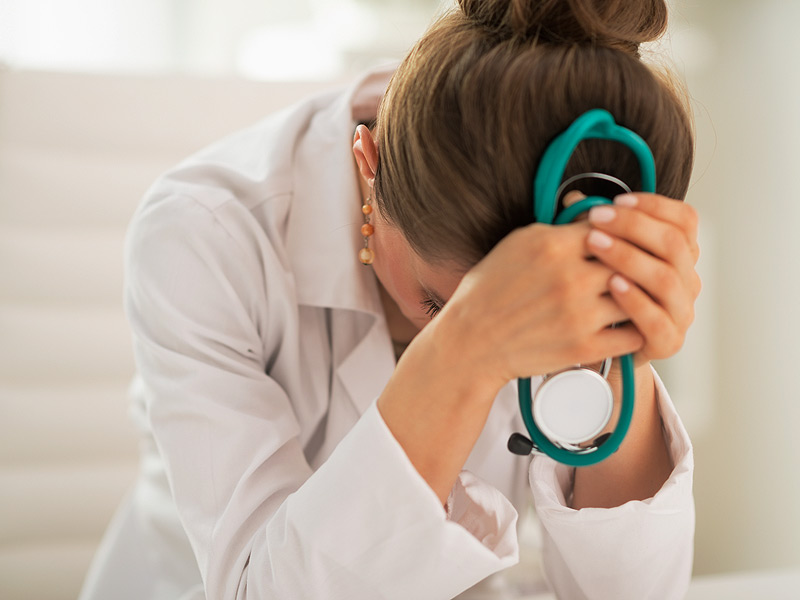
Hospital, Doctors fined for unfair trade practices: Doctors “ be clinically and legally correct so as to save themselves”


Since Hannurabi times  1750BC, medical profession or health care has been regulated. For thousands of years, attempts  have  been made, laws enacted  to regulate or control medical treatments or doctors. It has never been perfect.  In today’s time, where medico-legal issues have become as important as much as treatment, it is strange to find such practices, where transplant was done without valid license. More importantly, it was done in a well known hospital in Delhi and not in unknown location.

Going by the news item,  Jaipur Golden Hospital New Delhi conducted renal transplant without having a valid license for the same in 2006. It could have gone unnoticed, in case  everything had gone well. But  in today’s scenario, no one accepts even small and routine  complications. So doing a procedure like transplant without license  is asking for trouble.

Medical fraternity is clear that there are no treatments without complications.  Even simple procedures can get complicated. Therefore, doing anything which is   legally not correct, can be a blunder.  Consequences of even little mistakes can be disastrous in current environment, which is not very supportive to doctors.  Temptation  for  doing procedures without being legally correct  can be many, like holding  a license previously, or just to maintain a continuity of performing a special surgery. Money generated may  or may not be a great incentive in such circumstances . Reason can be as simple as to continue doing procedure while license is awaited and take  temporary invalidity of licensing requirements lightly.

Legalities should be taken in correct perspective always.  Doctors can save themselves by just following well laid protocols and  legal requirements. This is not right  for doctors   doing  procedures against the law or without legal permissions. Because  no one, including patient will not support the doctor in adverse circumstances.

Doctors  can save themselves by   doing procedures, which are clinically and legally correct.

Expensive Medical college education (NEET) & poor health system: systematic root rot


Imagine, an opportunity is available to a patient, to decide the doctor as based on his route or marks for entry into medical college. Whether patient will like to get treated by a doctor, who   secured 20% marks, 30 % marks or 60% marks or 80% marks for medical college.  Even   an illiterate person can answer that well. But strangely for selection of doctors, rules were framed so as to dilute the merit to the minimum possible. So that a candidate who scores 20 -25 % marks also becomes eligible to become a doctor. What is the need to dilute and shortlist around half a million for few thousand seats. Answer to that is simple.  To select and find only those students from millions, who can pay millions to become doctors.  

      Although the whole effort and huge expenditure to become doctors in this way may be really worthless in today’s scenario, considering the difficult times and vulnerability of medical profession. By allowing a intentional dilution of quality  can be advantageous only to  few and detrimental to others.

  • Beneficiaries are rich candidates, medical colleges who collecting fee and may be public who will get numbers of doctors. Surplus of doctors is thought to be an advantage to society. But here quality is least of the consideration.
  • Disadvantage to students, who are meritorious but can’t pay, and possibly society in long run, who is deprived of good quality doctors.


Dilution of Merit :

  • Before NEET was made mandatory in 2016, the cut-offs for admission were 50% marks for the general category, and 40% for the reserved categories. From the 2016 admission year, these were changed to 50th and 40th percentile, respectively, opening the doors to candidates with just 18-20% marks in the NEET aggregate. Thereby candidates securing 5% marks (physics) and 20% in  biology are also eligible to be doctors (times of India).
  • The student with the highest NEET marks among those admitted into the private university had lower marks than the last student admitted to the open category in each of the government colleges.
  • In the private university, the fees for the MBBS course are Rs 64 lakh compared to just Rs 4 lakh in the government colleges.
  • when NEET was introduced, many private colleges increased their tuition fees many fold.  This  ensured that meritorious students without money would never get admission. The tuition fee is fixed arbitrarily to cater to only rich or super rich students. (times of India)         System of medical business and  medical education is created based on willful dilution of merit.   Quite a few successful candidates may eventually feel that the money spent and the hard work may not be worth it especially those candidates who may have invested in heavy fees or bought a seat in medical colleges with hefty amount. Some of them, who invested millions for becoming doctors, will be even probably unable to recover their investments. The students with strong financial backgrounds may be more benefited as they can become health  investors or health managers. But for others, it could be a dream turning into a nightmare.

    If the society continues to accept such below par practices, it has to introspect, whether it actually deserves to get good doctors. Paying the irrational fee of medical colleges may be unwise idea for the candidates, who are not from strong financial backgrounds. But at the same time unfortunately, it may be a compulsion and entrapment for students, who have entered the profession and there is no way  forward.  So children have to be careful while choosing medical careers from the beginning.

    A famous axiom “as you sow so shall you reap” has an application to health system in this scenario, so people should not rue scarcity of good doctors.  

Real story of a female doctor assault: serving an uncivilized society


Few words here can’t describe the plight of a female doctor, who was brutally assaulted by a mob at her residence, for no fault of hers. This incidence happened about a year back, about 200 KM away from Delhi.

It was an evening time and a boy had an accident with a bus. He was brought to a community health centre.  Female medical officer who had her residence inside the hospital in staff quarters examined the patient and found that he was already dead. She explained the situation to the family members with due sensitivity, did all the paper work and returned to her residence in about an hour. Mob kept on gathering and after half an hour, they barged into the house of the lady medical officer.

They dragged her by hair in front of her teenage daughter. Mob started assaulting her with fists and legs along with a rod. Her daughter cried and shouted for help.   Mob even tried to set her on fire. This brutal and devilish assault continued till neighbours from other staff quarters saved her with great difficulty and took her away. Mob continued rampage in her house and hospital, trying to break everything.

She sustained severe head injuries and was admitted in a hospital for about ten days. What was her fault and why mob did this to her? Is being a doctor and working in remote area her fault? Everybody knew that the reason for death of the boy was what happened outside the hospital.  There was an errant bus driver, who was responsible.  Then why was she made a punching bag for venting out emotions of the bereaved relatives. Nothing and really nothing can justify this barbaric act. Emotions should not be allowed to take such a demonic form.

This is simply jungle raj, goonism and  expression of a most  uncivilized kind of society, which simply cannot be excused by any sort of reasoning. The incident was protested by the professional bodies as is the routine and after few day things normalized for everybody else except that terrorised family. The said lady medical officer took posting elsewhere and as is usual, nothing much happened to the accused.

Woman doctor assault : Era worse than MAHABHARATA for female doctors

There was again same silence and little concern shown by our media, courts, prominent people, celebrities, human right commission, woman right activists and women commission. This again brings forth the hypocrisy of these people and organizations, who otherwise cry about woman rights and empowerment.  Whenever a female is assaulted, there is an outrage but the same support is not extended to a female if she is a doctor. Such bestiality should create havoc in minds of civilized people but this apathy to such incidents clearly indicates otherwise. Have we become so uncivilized that an incident such as this just remains as a small news item in a local paper? Can’t we see that such incidents are harbinger of many more in future? It is important to realize that this is the time to unify and condemn such episodes vehemently and prominently so that the miscreants realize that they cannot get away with it.

Doctors in remote area, where there are minimal medical facilities, doctors are  at more risk  than ever. In larger institutions and cities, doctors still gather and have some support. But at remote places,  they are at mercy of local goons with no protection.

Beti bachao Beti padhao vs Violence against female doctors

Violence against female doctors: Silence of human and  woman right commissions

Advantages-Disadvantage of being a doctor

25 factors- why health care is expensive

     REEL Heroes Vs Real Heroes

     21 occupational risks to doctors and nurses

     Covid paradox: salary cut for doctors other paid at home

   Medical-Consumer protection Act- Pros and Cons

Expensive Medical College  seat- Is it worth it?

NEET- Not so Neat- percentile system 

The  Myth  of  cost of  spending  on  medical  education needs to be made  transparent.

Lifestyle causes Fatty liver disease in children


Children are being diagnosed with fatty liver disease, a result of too much junk food and too little exercise. Often, there are no symptoms. In advanced stages, damage is similar to that caused by excessive alcohol.

A  survey of high school students in Delhi has found that over a fifth have non-alcoholic fatty liver disease (NAFLD) because they’re eating too much junk food and getting too little exercise. NAFLD is the inflammation of the liver because of excessive fat deposits. It can lead to scarring of the liver, cirrhosis and liver failure. The damage it does is similar to that caused by excessive consumption of alcohol.

In the early stages, corrective lifestyle changes can reverse the damage. But since the only symptom is abdominal pain, the percentage of non-alcoholic fatty liver disease cases that progress to cirrhosis is almost the same as the percentage in cases caused by alcohol in adults.

The study of Delhi students was conducted recently. Of the 961 children aged 5 to 10 surveyed, from across 13 private schools, over 22% of the children in the normal weight range had non-alcoholic fatty liver disease. Of the overweight children, 45.6% had NAFLD.

The numbers for obese children are even higher. In a survey of 218 children aged 10 to 16 with a high body-mass index, 62.5 tested positive for NAFLD.

Meanwhile, the number of Indian children fighting obesity is rising steadily — up from 16.3% between 2001 and 2005 to 19.3% in 2010, according to a 2016 analysis of 52 studies conducted in 16 Indian states and published in The Indian Journal of Medical Research.

In non-obese children, a warning sign to watch out for is excessive central fat in the waist and abdominal region.

High waist circumference and waist-to hip ratio are markers for children at risk.

A handy tip: waist circumference should ideally be less than half of a person’s height.

Unexplained fatigue can be a symptom.

NAFLD is a lifestyle disease, so the best way to control and even reverse it is to fix what’s wrong with the child’s lifestyle. Avoid sugary beverages, including juices and glucose drinks.  Enforce a diet where most meals are balanced, home-cooked fare.

The fact that it is a lifestyle disease also makes it hard to treat. There is no pill to pop for NAFLD. Usually no obvious signs to show, that it’s getting worse.

To  treat a child with the condition as it requires dietary restrictions and a lifestyle change and that has to start at home. The empty calories have to be cut. Candy, chocolate, meat and fries removed from the diet.

The correct method  is to encourage healthy eating and physical activity from early childhood.

source hindustan times

Apollo Hospital fined 5 lakh: “Doc, Talk less, write more”.Doctor save yourself by “documenting the communication”


Doctors are trained to treat patients and  that is they keep on  doing. But in today’s era that is not enough. They are expected to examine, investigate, diagnosis , treat correctly   and communicate to the family or patient. Everything should be speedy and  financially suitable to the patient’s expectations. Even if that is done, the things do not end here. Doctor need to document, what has been  communicated to the family.  It is hard to believe that  doctor at a hospital like Apollo,  who really did well to diagnose a disease like SLE and still did not communicate. Yes, news item mentions that in file that  there was no evidence of communication. Doctors still behave like doctors and do not treat patient as consumer. Usually , doctor trust their patients  and there is lot of verbal communication takes place. Verbally they sympathize, communicate  and  tell many things which are not documented as a routine.

The Delhi State Consumer Commission, in its judgment, made it essential for a hospital to disclose to the patients or their attendants, the line of treatment and the potential risks involved in it.
The judgment came in connection with the death of a 23-year-old student, who died during a treatment at  Indraprastha Apollo Hospital in 2004.

Many times patients are sincere enough to admit to  verbal  communication. But sometimes when  during ongoing  medico legal lawsuits, a feeling  of revenge prevails  or as guided by lawyers, patient  may not admit  to the verbal communication.  Specially if verbal communication is not documented in file.

How to  save yourself  by  “documenting  the communication”

  • examine, investigate, diagnosis , treat correctly and communicate
  • Make a note of plan of treatment and prognosis, and communicate to patient or attendants.
  • Sign yourself and ask the patient or nearest relative to sign.
  • It is not uncommon that relative will refuse to sign. In that case just write a note and mention that attendant refuses to sign.
  • It is also a common issue that after listening to everything, relative will say that he does not understand or will ask his uncle or aunt. These are difficult moments and commonly happen. Just make a note of everything. Besides it wastes crucial time.
  • Can use camera for communication in difficult cases.
  • Never rely on verbal communication. It has little value.  Commonly people refuse to admit verbal communication, and will say that they were not told anything.

As time for everything is limited in life, be it treatment, communication, consent or documentation. So message is clear for doctors. “Talk less and write more”. You will be judged by documents after many years. Therefore,  do save the patient, but save yourself also.


Two doctors from Fortis Hospital arrested – How doctors may save themselves by learning from such cases.


Doctor,  do save the patient but save yourself also.

Doctors continue to treat and save  many patients in the years they work. But present law and regulatory system does not take into account those years of  good and hard work. It does  treat doctor as a petty criminal for some single mistake or unfortunate incident. Law just deals with it in a harshest possible manner.  Patient may have died because of disease, but when in side the hospital, it is very easy to relate death with actions or inaction of doctors.  Specially because inquiries are always done  with  retrospective analysis, with wisdom of hindsight. Although there is a feeling among doctors that what is really happening these days, something may not be very appropriate, but there is no room  for leniency here.

News of this kind brings tsunami of fear in minds of doctors all over. It can be anyone in such situation, where  it is just   that a particular doctor did not have that eye for danger in that moment. The  doctor did  not realize or anticipate the gravity of  the consequence and outcome of the patient in real time. It may be difficult to pick up or just not take the situation very seriously. That can simply be poor training or working without good application of mind. But  looking retrospectively, situation becomes clear.

Two senior doctors of Fortis Hospital in Haryana’s Gurgaon were arrested on Friday for a “delay in administration of emergency medicines” to a 51-year-old woman, who died of cardiac arrest last year, police said.


      Lessons to be learnt:  What options doctors have at present? Because they are at receiving end always. They have to learn from such cases and do something in their routine to prevent disasters. How can they save themselves?

  1. All patients to be seen by primary consultants or someone from concerned unit at the earliest. It is important as emergency doctor may  not be equipped to deal with specialty  problem.  Prompt diagnosis by specialty doctor and written findings are important.
  2. Initial assessment should be quick and with in minimum time.
  3. Good communication and documentation of the problem.
  4. Assess the patient and make a note of treatment to be given.
  5. Document the plan of action, that is investigation and management.
  6. Avoid phone call consultations and leaving treatment loosely. Well thought documented plan should be in place.
  7. Situation may be different for smaller nursing homes. Treatment of an emergency will remain same, whether patient goes to bigger or smaller hospital.   Nursing homes may not be equipped for all the emergencies. So challenge before the smaller hospitals will be to identify the problem and diagnose them quickly  and  if required send them to proper  hospital, rather risking themselves in today’s times.
  8. Aspiring doctors can have a cue about what they are getting into. So as to adapt to prevalent adverse circumstances for doctors, if they aspire to be one.


Doctor, do save the patient but save yourself also.


NEET: Buying an expensive medical college seat & want to be doctor.  Worthless and unfair


At a time when students, parents and even doctors are uncertain whether opting for medical college along with the vulnerability and risk associated with   becoming a doctor is worth it or not, some are naive enough to pay millions as fee for medical education and for securing a seat  in medical college. The noble intentions of NEET were to minimize wastage of seats due to multiple admission procedures running concurrently and to do away with the variable criteria for selection used for admissions. But  there has been unregulated steep increase in fees of private medical colleges. So in the end, seats remain unfilled and may be a kind of auction, whosoever can pay millions, takes the seat.

        Going by selection of candidates as doctors, If given a choice, by whom  a patient will like to get treated? A candidate who scored 30 % marks or a person getting 60% or 80%  marks.   NEET eligibility getting lower and  a  candidate getting around 30 % of marks  may be able to secure a degree to treat patients.  What will be the deciding factor? The criteria as to why a person with 60%  marks will  not be given a seat and with 30% marks will be able to secure. It will depend upon, whether  a student  is able to pay the exorbitant fee or not. Present system and mechanism of admission permit and accept such huge  variation! That strange equation is acceptable in lieu of money paid!

It is ironical that the medical profession is regulated, but medical business or medical education is not.  Such business of producing doctors based on their paying capacity should be clearly trounced for the benefit of public. Foundations of healthcare should be on touchstone of merit, ethics and character and not based on business deals. Therefore meritorious students, especially from average backgrounds, who opt to become doctors feel cheated when they pay massive fee to buy a seat. It is an insult to the very virtue of merit which should have been the sole criteria for these admissions.

Quite a few successful candidates may eventually feel that the money spent and the hard work may not be worth it especially those candidates who may have invested in heavy fees or bought a seat in medical colleges with hefty amount. Some of them, who invested millions for becoming doctors, will be even probably unable to recover their investments. The students with strong financial backgrounds may be more benefited as they can become investors or health managers. But for others, it could be a dream turning into a nightmare.

   Buying a seat may be a compulsion for many as a  result of entrapment into a system. Once aspiring child  decides to be a doctor  and there may not be any other way forward.

A famous axiom “as you sow so shall you reap “  has an application to health system. As NEET has been implemented and there has been some effort to find out information about  admissions to medical colleges, at least tip of the  iceberg is getting visible.  More you know or read the news items about NEET, more one is convinced that industry  selling medical college seats has been quite powerful and practically, every technique to sell seats is prevalent to by pass the merit and deny seat to deserving candidates. These meritorious children, who are denied seats could have been   good doctors and   real custodian for the health of people.  But if for some reason, business prevails and government fails to prevent this cruel and corrupt selling of medical seats, an Einstein brain is not required to  guess the whole malaise prevalent in health system.  Foundation  of  medical system is suffused with sand rather than touch stone of merit.

Astronomical and unreasonable fee of medical colleges without proper facilities and medical education can be born only by investors and not good candidates.   It is the people and society, who will be the real sufferers in future. Therefore resentment to such system should come from the society.

If every one is happy by the arrangement, then one has to introspect, whether  society really deserve  kind of  doctors, they wish.

Blog at WordPress.com.

Up ↑