Medical Consumer Protection Act: A Loss making deal for patients too?


       With the evolving medical science and health care getting intertwined with business, braided changes in medical regulation and law are not an unexpected development. New models of medical regulation, business and law in health care have emerged and progressed in last few decades.  Despite a wish to govern and regulate medical profession strictly, the laws and regulations still have to go a long way to provide real justice to everyone.   No one really knows how to regulate this difficult area,  which encompasses life and death, deals with extremes of poverty and riches, mortality and morbidity, pain and  relief , sadness and happiness, smiles and sorrow and other uncountable emotions, all intertwined with financial aspects.But the wish of administrators to govern medical profession strictly with punishments is not new.  Hammurabi (5000 years back) at the start of civilization believed that doctors needed to be punished in case there was a poor outcome. Strangely it was at a time, when no one understood the complexity of human body and the limitations of medical science; even basic anatomy and physiology of body was not discovered.  

      Considering the limitations of medical science along with uncertainties and complexities of human body, regulation of medical profession and system of punishments still remains somewhat unfair to doctors, even after 5000 years.  It is still based on principles of revenge and retributions rather than developing a robust system by learning from mistakes. By application of an average wisdom, doctors can be easily blamed for poor outcomes, as they are always and universal a common visible link between treatment and poor outcome. 

           One of the examples of easy punishments for doctors is Medical consumer protection act that was implemented in 1995 for medical services. Patients were defined as consumers and hence doctors were converted to service providers in lieu of some money.  Consequently the changed definitions altered the doctor-patient relationship in an irreversible way.   

    The reality is that neither doctors, nor patients are ready for such a legal relationship. More-over   the system is not robust enough for such a change.   To work with weak infrastructure, non-uniform medical education, poor numbers of support staff, inept health system along with legal complexities has pushed doctors into a shell and predisposed them to harassment. 

          Rather than   developing a system to promote   good doctor-patient relationship, Medical Consumer Protection Act has created a situation of ‘us versus them syndrome’. It caused erosion of doctor-patient relationship and escalated cost of care.   Propagation of stray and occasional incidents about negligence case in court or their outcomes are given disproportionate wide publicity in media. The patients are unable to understand the correct application of such stray incidents to themselves. Such cases may be frivolous,  just one in million or a rarity, but people always try to imagine themselves being in the hospital chaos due to the   scenario projected.  It gives a negative projection about medical services and enhances patients’ fear to seek treatment at right time.

    There is a growing mutual mistrust; doctors too have started looking at every patient as a potential litigant. Especially while dealing with very sick ones, practice of defensive medicine is a natural consequence. This may manifest as excessive investigations, more use of drugs, antibiotics and even reluctance or refusal to treat very sick patients. 

    With the mandate to practise evidence based medicine, doctors need to document everything and to offer everything possible, leading to skyrocketing medical costs.  To save themselves, doctors have to do mammoth paper work, leading to consumption of time that was meant for real deliberations for the benefit of patients.

           Consequently insurance companies, medical industry and lawyers have become indispensable and have positioned themselves in between doctor and patients. Besides creating a rift between doctor and patient, they charge heavily from both sides; from patients (medical insurance, lawyer fee) and doctors (indemnity insurance, lawyer’s fee) alike. The vicious cycle of rising costs, need for insurance, medicolegal suits, and high lawyer fee (for patients and doctors) goes on unabated. All these contribute significantly to overall inflated cost of health care.

       Not uncommonly doctors are used as scape goats to have a concession on the patient’s treatment from administrators.  

       Medical consumer protection act has increased the anxiety and insecurity among   medical professionals.   Doctors can be dragged to courts for trivial reasons, for example the sense of revenge, simply for non-satisfaction, to extract money or simply for avoiding paying for services.  In an era where family members, brothers and sisters fight for money, it will be naïve to think that idea of making money from doctors does not exist. These money-making ideas are further stoked by the much publicized incidents of high compensations granted by courts.

     Medical lawsuits and complaints (right or wrong) are breaking medical professionals from within, not to mention the toll it takes on their confidence and belief, which takes a lifetime to build.

     Whenever there is adverse outcome in any patient, all the doctors involved start looking for whom to blame among themselves. Due to legal pressure they try to pinpoint each other’s mistakes.  Mutual understanding takes a back seat and the teamwork is spoiled permanently. Administrators in a bid to be safe, encourage putting doctor’s concerns against each other,  creating a strange sense of enmity among medical professionals.

    The ease with which doctors can be harassed has led to rampant misuse of medical consumer protection act and it has instilled a sense of deep fear and insecurity in the mind of medical professionals. The act has been used as a whip against the  doctors by all, including  medical industry, law industry and administrators.  Only doctors are visible as those who deliver care, so they remain at receiving end for poor outcomes and all these industries remain invisible.    The industry has used the protective systems against medicolegal cases to gain  maximum benefits  out of doctors’ hard work.   

      In court cases, a certain element of doubt always remains in mind of a doctor whether he will get justice in the long run, or will end up being  a victim of sympathy towards patient or clever lawyering.  So taking medical decisions in critical situations is becoming more difficult  in view of the future uncertainty of disease.

             Windfall profits for lawyers is a strong  incentive   for  law industry to promote   instigation  of patients by against doctors .  One can see zero fee and fixed commission advertisements on television by lawyers in health systems even in developed countries. They lure and instigate patients to file law suits and promise them hefty reimbursements on ‘sharing and commission basis’. There is no dearth of such relatives and lawyers who are ready to try their luck sometimes in vengeance and sometimes for the lure of money received in compensations. 

       Consequently doctors are now an easily punishable human link for poor outcomes.  Medical professionals work with continuous negative publicity, poor infrastructure, and preoccupied negative beliefs of society and burden of mistrust.

  Strangely  Medical Consumer Protection Act applies  only to doctors, that too selectively. All  other professions and services  are   out of it, not even other constituents of health services. Selective application is what is  demoralizing the doctors.  Considering the uncertainty and kind of work done by  medical professionals, actually it should be other way around.Mistakes are always easy to be picked with retrospective analysis and with lawyers pondering over it for years. In such situations, doctors are sitting ducks for any kind of blackmail.

            Nothing else has ever distracted doctors more than medico-legal cases and punishments. In certain circumstances, saving themselves becomes more important than saving a patient. Decision making also becomes difficult  by uncertainty of prognosis,  grave emergencies, split second lifesaving and risky decisions that may later be proved wrong by retrospective analysis with wisdom of hindsight with luxury of time and fault-finding approach.  The possibility of complex medico-legal situations in doctor’s  mind are enough to distract doctors from their primary point of intentions ‘the treatment’.

          Therefore increasingly, financially secure doctors are staying away from the riskier jobs. No wise person will like to face medicolegal complexities in older age. Taken to court for a genuine decision is enough to spoil and tarnish health, wealth and fame that was earned by  slogging  the  entire  life.     

     Patients can have poor outcomes for many reasons. It can be severe disease, poor prognosis, rare or genuine complications or even unintentional mistake or human errors, system errors or deficiency. Whatever court decides,  while consuming years, the harassment of doctor is full and permanent. Even if court decides in favour of the doctor, there is no compensation possible for the sufferings and agony spanning over years.  Therefore, a single mistake can undo all the good work of past, and the illustrious future work that could have been accomplished.

        If the decision to decide or act or help someone in an emergency situation, puts one’s own life and career at risk, why would anyone put himself in that difficult  position?  

         Medical Consumer Protection Act  has become a tool to harass doctors and money making tool for lawyers, medical industry or administrators. But  it would be naïve to assume that by whipping doctors and regulating them in such a harsh manner will be helpful to patients in long run.  The consequent insecurity among doctors, practise of defensive medicine, enhanced costs, excessive documentation and the distraction from the primary point of intention (treatment)  are few of the  side effects, which will  definitely be passed on to the patients inadvertently.  After all doctors have to save themselves as well. As a result,  now the battle of life and death will be fought with less zeal, with subdued and demoralized soldiers.

          Patients are unable to realize their loss for punishing their saviours. For doctors, no rewards if you win, but sword hanging if one loses.  Fear factors on doctors and impact of present legal complexities is already at par with that of Hammurabi’s era. Consequently being consumer may be overall a loss making deal for the patients.

     Advantages-Disadvantage of being a doctor

     25 factors- why health care is expensive

     REEL Heroes Vs Real Heroes

     21 occupational risks to doctors and nurses

     Covid paradox: salary cut for doctors other paid at home

   Medical-Consumer protection Act- Pros and Cons

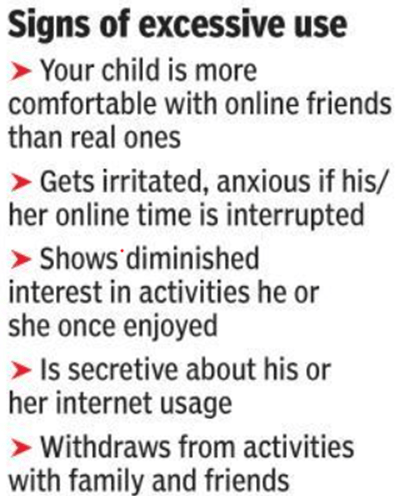
How to Deal with Online Internet Addiction?


NEW DELHI: Has the Covid-19 pandemic worsened addiction to the internet among children? The footfall at psychiatric out-patient departments in hospitals, especially those offering help to kids hooked to the net, be it for online gaming, chatting with friends or sharing videos, offers a glimpse of the problem. At AIIMS, the number of parents seeking help for their children, among them the most being those addicted to online gaming, has increased significantly after the pandemic. The special clinic was inundated with requests from parents seeking help, nearly 80% of them are related to online gaming, 15% about excessive use of social media and the remaining 5% related to problems like pornography”.

Times of India carries an article about the problem of  increased online addiction  during the pandemic.

The parents of a Class XI student — name withheld on request — approached AIIMS because their son was gaming online for hours, and wasn’t willing to give up the habit. The son even hit his father when the latter tried to take away the laptop. In another case, a Class IX student hooked to online gambling spent Rs 75,000 in a single week on his parent’s credit card.  Children have developed mental and emotional issues due to addiction to online streaming services. The girl would stay awake all night to finish the TV series and sleep during the day. It continued for six to seven months. She developed insomnia and began hallucinating, which is when the parents panicked and brought her to hospital. We had to put her on psychiatric medications and counselling. During the pandemic, however, the problem increased multiple times. The schools were closed and classes were being held online. This increased the children’s access to digital technologies. Secondly, social interactions shifted online due to restricted physical movement forced by Covid.  They Spend more time online led to the addiction. As for online gaming, doctors said these activities were designed to attract young people and were addictive in nature. Online gaming causes the same kind of craving and withdrawal that you see with any other addiction such as substance abuse.

        What is the solution to this?  Internet use is one of the important pillars of learning and growth in today’s time and, therefore, it may not be advisable to prevent school children from using it.  It may be prudent to promote safe usage of the internet. Very importantly, parents should be aware of the warning signs in their children, for example behavioural changes, reduced interaction with family members, children spending most of their time in their rooms, irregular sleeping or eating habits and mood changes that may signal troublesome usage of the technologies. If the habit persists and worsens, it may be advisable to seek expert help. The problem of internet addiction isn’t limited to children belonging to particular social strata, the doctors said. “We need to have more cyber addiction clinics in government hospitals so even those who cannot afford private treatment can seek timely help,” said one senior medico. “It can help prevent serious mental health issues in children and even save lives.” The doctor added that most children suffering from internet addiction improved with behavioural therapy and counselling. It was only in rare cases that medical management became necessary, he added.

     Advantages-Disadvantage of being a doctor

     25 factors- why health care is expensive

     REEL Heroes Vs Real Heroes

     21 occupational risks to doctors and nurses

     Covid paradox: salary cut for doctors other paid at home

   Medical-Consumer protection Act- Pros and Cons

Mother blames & sues social media addiction (Instagram and Snapchat) for   daughter’s suicide


Social media has helped people communicate more and instantly. The use of social media among children has increased tremendously. But without doubt, it has great addictive potential and one such case as mentioned is reflecting just the tip of the iceberg.  The side effects can be manifold, like psychiatric illness, loss of education, disconnection from the reality and loss of time are only a few, which are evident.  

Connecticut mother sues Meta and Snap, alleging they contributed to suicide of 11-year-old daughter who had ‘extreme addiction’ to social media

  • A woman in Connecticut is suing Meta and Snap, alleging their platforms played a role in her 11-year-old’s suicide.
  • Tammy Rodriguez claims her daughter killed herself in July after “struggling with the harmful effects of social media.”

A Connecticut mother is suing Meta, the company formerly known as Facebook, and Snap, alleging their “dangerous and defective social media products” played a role in her 11-year-old daughter’s suicide.

The complaint, filed by Tammy Rodriguez in San Francisco federal court earlier this week, claims Selena Rodriguez suffered from depression, sleep deprivation, eating disorders, and self-harm tied to her use of Instagram and Snapchat.

According to the filing, Selena began using social media roughly two years before her death by suicide in July 2021, during which time she developed “an extreme addiction to Instagram and Snapchat.” The filing also claims the 11-year-old missed school multiple times because of her social media use and that she was asked to send sexually explicit content by male users on both platforms.

Rodriguez wrote in the filing that she attempted to get her daughter mental health treatment several times, with one outpatient therapist saying she had “never seen a patient as addicted to social media as Selena.” At one point, Selena was hospitalized for emergency psychiatric care, according to the complaint.

In a statement, Snap said it couldn’t comment on the specifics of an active case but told Insider “nothing is more important to us than the wellbeing of our community.”

“We are devastated to hear of Selena’s passing and our hearts go out to her family,” a Snap spokesperson told Insider. “Snapchat helps people communicate with their real friends, without some of the public pressure and social comparison features of traditional social media platforms, and intentionally makes it hard for strangers to contact young people.”

The spokesperson continued: “We work closely with many mental health organizations to provide in-app tools and resources for Snapchatters as part of our ongoing work to keep our community safe.”

Meta and lawyers for Rodriguez did not respond to requests for comment.

Internal Facebook documents leaked to The Wall Street Journal last year revealed the company is aware Instagram can be harmful to the mental health of teenagers, with one document stating that “32% of teen girls said that when they felt bad about their bodies, Instagram made them feel worse.”

Karina Newton, Instagram’s head of public policy, wrote in a September blog post that the Journal’s story “focuses on a limited set of findings and casts them in a negative light.”

In other documents retrieved by Facebook whistleblower Frances Haugen, the company found 13.5% of teen girls said Instagram makes thoughts of suicide worse, while 17% of teen girls said Instagram exacerbates eating disorders.

After Haugen gave an interview with “60 Minutes” about the findings, Facebook previously issued this response: “It is not accurate that leaked internal research demonstrates Instagram is ‘toxic’ for teen girls. The research actually demonstrated that many teens we heard from feel that using Instagram helps them when they are struggling with the kinds of hard moments and issues teenagers have always faced. This research, like external research on these issues, found teens report having both positive and negative experiences with social media.”

Earlier this month, Angela Underwood Jacobs, the sister of a federal officer killed last year, sued Meta, alleging the company “knowingly promoting extremist content” that contributed to her brother’s death.

     Advantages-Disadvantage of being a doctor

     25 factors- why health care is expensive

     REEL Heroes Vs Real Heroes

     21 occupational risks to doctors and nurses

     Covid paradox: salary cut for doctors other paid at home

   Medical-Consumer protection Act- Pros and Cons
NEET-PG-Counselling: A larger public emergency issue due to Pandemic


        NEET PG Post-Graduation after MBBS is an entrance qualification exam, one of toughest and important exam not only for medical students but for medical colleges and hospitals. As this exam will decide and form the back bone of the health care system in the whole country. Ultimately this exam will be the check gate to supply specialist doctors to medical colleges, hospitals and private health institutions in all the states.  Post graduate trainees form the bulk load of doctors performing the duties.  Needless to say these doctors form the back bone of the total health system across the country. For last two years, these junior doctors were at the forefront of the fighting the pandemic. 

       Since NEET PG was to be conducted in Jan 2021, but due to pandemic got postponed to Sept 2021 and result were declared few months back.

      NEET PG counselling is not only issue for doctors but an actually a larger public health issue and kind of emergency due to pandemic, which will decide the availability of doctors to public.

         Actually it is in patient’s interest to have early counselling.

         It is a sad situation, when the world is preparing to tackle the wave of pandemic due to Omicron Variant, other countries are ramping up their health care infrastructure and manpower, and Indian doctors are being dragged on roads by police instead of employing them in hospitals.

       Its importance assumes an emergency situation in face of looming pandemic. If the administrators had perceived it as merely a trivial doctors’ issue and remained complacent, it had been a grave mistake.

     What was the emergency to change and frame new rules when a pandemic of such a large proportion was going on?

    A delay in academic counselling means a wasted year for the NEET PG aspirants. It also means that 50000 doctors are missing from the medical system and  the health care force because of bureaucratic delays, at a time when health care staff is overworked and in desperate need of more hands.

      Point to ponder here is that is it the doctors who desperately need help? More precisely and in reality it is the patients and public who need doctors desperately. An early counselling is in public interest actually, the point administrators have failed to understand.

       But sadly, it is up to the wisdom of administrators that decides “what is emergency and what is not” rather than medical wisdom, a case of misplaced priorities.

     Advantages-Disadvantage of being a doctor

     25 factors- why health care is expensive

     REEL Heroes Vs Real Heroes

     21 occupational risks to doctors and nurses

     Covid paradox: salary cut for doctors other paid at home

   Medical-Consumer protection Act- Pros and Cons

Want to be a Doctor: Expect No Justice


        Medical students or aspiring doctors should be carefully watching the behaviour and cruelty by which doctors are governed, regulated and treated by administrators. Mere few words of respect and false lip service during Covid-pandemic  should not mask the real face of administrators, indifference of courts and harshness of Government towards medical profession. Choosing medical careers can land anyone into the situations, which are unimaginable in a civilized world.

At a time when Political groups, terrorists, drug addicts, celebrities commit crimes and get a priority hearing by courts and speedy relief (whether deserve or not worthy), doctors pleadings even for their rightful issues and routine problems are paid deaf and indifferent ears. It is disheartening to see that they receive apathetic attitude and dealt with stick or false assurances even for the issues which should have been solved automatically in routine even by average application of governance.

             It is discouraging for the whole medical fraternity to see that even the rightful is not being given what to expect the gratitude and respect.

          The barbaric response of Police towards peacefully demanding doctors has unmasked the real indifferent attitude of Government and administrators as well as apathy of courts towards medical profession. The cruel behaviour has also unveiled the approach of  tokenism such as ‘mere lip service’  showing respect to corona warriors.

      The strong political and legal will is absent to solve Doctors’ problems.

      It also shows the scant  concern of the Government to provide a real good health care system despite showing a verbal concern for medical services. It also explains why successive Governments irrespective of political moorings  have terribly failed to provide healthcare to its people.  Why patients fail to get a bed, oxygen, doctors or nurse is consequence to the misplaced priorities of administrators.

    Who would be the worst sufferer of the apathetic attitude of the Government? Doctors will suffer initially till they continue to choose medical profession. Once they also become apathetic like administrators, it would be the patients.

Delhi: AIIMS, FAIMA doctors join protest after police crackdown

A day after resident doctors protesting delays in NEET-PG counselling alleged that they were assaulted by the police, doctors from the All India Institute of Medical Sciences (AIIMS) as well as those associated with the Federation of All India Medical Association (FAIMA) have decided to join the stir.

Doctors from AIIMS, one of the only big tertiary-care government medical college hospitals that had stayed away from the protest, in a letter to the Union health minister, said that they would withdraw from all non-emergency work on Tuesday if no concrete steps are taken.

“It’s high time for the government to release a report of what has been done till date, and what are the government’s plans moving forward for expediting NEET-PG counselling. If no adequate response from the government is received within 24 hours, AIIMS RDA shall proceed with a token strike on 29/12/21 including shutdown of all non-emergency services,” the letter read.

This would hamper patient care in the city further. With emergency departments of big hospitals like Safdarjung and Lok Nayak affected by the strike, patients were being referred to the AIIMS for treatment.

.

In addition, FAIMA called for its resident doctors’ association to withdraw from all work, including emergency services, after Monday’s incident. The protest began with withdrawal from outpatient department (OPD) services in November end by two national organisations – the Federation of Resident Doctors’ Association (FORDA) and FAIMA.

The protest slowly intensified with doctors boycotting even emergency work, following which on the insistence of the government the strike was paused for one week.

The strike resumed on December 17 as FORDA members withdrew from all services.

     Advantages-Disadvantage of being a doctor

     25 factors- why health care is expensive

     REEL Heroes Vs Real Heroes

     21 occupational risks to doctors and nurses

     Covid paradox: salary cut for doctors other paid at home

   Medical-Consumer protection Act- Pros and Cons

Highly Contagious – Low Virulence?  Omicron-Covid-Variant


    If the initial data is correct, the Omicron-Variant of Covid is proving to  be of Highly Contagious –  Low Virulence.

     The Omicron variant is less likely to lead to less severe disease in people who have taken vaccines or had Covid-19 in the past, two studies from the UK have said.

Taken together with findings from South Africa – all three studies were released on Wednesday – there is now sound scientific basis to conclude the variant is less virulent than others, especially Delta, which caused a devastating outbreak in India last summer and sparked new waves in other countries.

The findings are the first encouraging scientific evidence linked to the variant of concern (VOC) discovered last month when it started tearing through parts of South Africa at a rate not seen with any other Sars-Cov-2 variant. Scientists soon discovered it was also the most resistant configuration of the coronavirus, leading to higher odds of repeat and vaccine breakthrough infections.

If the Omicron variant was to be as virulent, or more, than Delta, the implications would have been dire, although its high transmissibility and resistance still pose a threat.

“Our analysis shows evidence of a moderate reduction in the risk of hospitalisation associated with the Omicron variant compared with the Delta variant. However, this appears to be offset by the reduced efficacy of vaccines against infection with the Omicron variant. Given the high transmissibility of the Omicron virus, there remains the potential for health services to face increasing demand if Omicron cases continue to grow at the rate that has been seen in recent weeks,” said professor Neil Ferguson of Imperial College London, which released the analysis of Omicron and Delta cases in England.

Two UK studies, similar severity findings

The Imperial College study included all RT-PCR-confirmed Covid-19 cases recorded between December 1-14 in England. It found that Omicron cases have, on average, a 15-20% reduced risk of needing to visit a hospital (the lowest level of severity) and an approximately 40-45% reduced risk of a hospitalisation resulting in a stay of one or more nights.

It also found that a past infection offered approximately a 50-70% reduction in hospitalisation risk compared. All of these comparisons were made against risks of hospitalisation seen with the Delta variant.

The researchers estimate that in unvaccinated people being infected for the first time, the risk of hospitalisation may be lowered by 0-30%, suggesting the severity in completely immune-naive people may not be very different from those who had a Delta infection for the first time, without any vaccine.

The other UK study was from Scotland. Although based on a small number of hospitalisations, the study made similar findings: those with Omicron infections were 68% less likely to need hospitalisation compared to people infected with the Delta variant.

Both reports, as well as the South African study, are yet to be peer-reviewed.

The Imperial College researchers also said in their study that Omicron infections in people with vaccination may be even less likely to require ICU admission or lead to death when compared to Delta variant, “given that remaining immune protection against more severe outcomes of infection are expected to be much higher than those against milder endpoints”.

Need for vaccines, boosters

The detailed findings corroborate lab studies that show people with booster doses have a more adequate immune response to counter the Omicron variant. In their real-world analysis, the Scotland report found a 57% reduction in the risk of symptomatic infection in people who were infected with the VOC compared to those who just had two doses at least 25 weeks prior.

The detailed Imperial College findings made similar findings. For instance, people with two doses of the AstraZeneca vaccine (used in India as the Covishield vaccine), had a higher risk ratio of 0.37 than those with three doses of the same vaccine (0.21). These risk ratios mean two doses reduced the risk of hospitalisation by 63% while three doses cut it by 79%.

Crucially, the report added, people who took the AstraZeneca vaccine had a lower risk in needing to visit a hospital if infected by the Omicron variant when compared to the equivalent risk in the case of a Delta variant infection. In the case of Pfizer-BioNTech or Moderna vaccines, the likelihood of requiring a hospital visit – defined as the lowest level of severity – were similar between Omicron and Delta infections.

The report also stressed on the need to vaccinate the unvaccinated, especially those who did not have a past infection. “The proportion of unvaccinated individuals infected is likely to be substantially higher. In that context, our finding that a previous infection reduces the risk of any hospitalisation by approximately 50% and the risk of a hospital stay of 1+ days by 61% (before adjustments for under ascertainment of reinfections) is significant,” the report said.

  Most cases In India Asymptomatic

With reports of new cases surfacing, the overall number of Omicron cases in India has now reached 33. According to experts, the spread of the new variant is less concerning than that of Delta as the symptoms are mild. While this is partly because of the nature of this new variant, another reason might be the high rate of seropositivity of Indians, experts have said.

“India has the advantage of a very high rate of ‘seropositivity’ of 70, 80 per cent, and in big cities more than 90 per cent people already have antibodies,” Rakesh Mishra, former Director of CSIR-Centre for Cellular and Molecular Biology (CCMB) here, told PTI. Even if people get infected by Omicron, it will be very mild and mostly asymptomatic, Mishra said.

India’s Omicron tally rises to 33: Tracing Covid-19’s new variant in various states

A fresh wave of the pandemic may come even without Omicron, Mishra said referring to the fresh waves in Europe. Ruling out the possibility of a surge in hospitalisation, he said wearing the mask, maintaining social distancing and getting vaccinated remain the three major weapons against future waves.

All Omicron cases in India are mild and there has been no report of Omicron death in India and in any country of the world. The common symptoms are weakness, sore throat etc. Many Omicron patients of India have already recovered and tested negative for Covid.

Capital Delhi reported a new Omicron case on Saturday as a Zimbabwe-returnee tested positive. Reports said the patient only complained of weakness.

Advantages-Disadvantage of being a doctor

     25 factors- why health care is expensive

     REEL Heroes Vs Real Heroes

     21 occupational risks to doctors and nurses

     Covid paradox: salary cut for doctors other paid at home

   Medical-Consumer protection Act- Pros and Cons

Medical Education: Doctors- Victims of Grave Injustice Expected to Impart Justice to all


        Non-uniformity of medical education is treating  medical students  as  slaves and  killing enthusiasm of young doctors.

    Medical profession is an extremely strenuous and highly specialised field that requires individuals to dedicate their lives in the service of others. As part of medical professionals’ education and training, they are necessitated to undertake training across various settings. In this context, a stipend is paid as a matter of right and not charity. It is therefore essential that parity and equity be maintained across all medical institutions, whether run by private bodies or by the government.    In absence of proper Governance and rules, the young doctors are thrown at the mercy of cruel businessman for proper pay and working conditions.

Ensure uniform stipend to Interns: Binoy Viswam, Rajya Sabha MP

Great disparity in stipend at Govt. Private Colleges

     Medical education is one field where  one can notice the  extreme  variations of the unimaginable magnitude that are beyond comfort.  

      Falling standards  of medical education is the most important  side effect  which  should be an  important issue, but sadly it is the last  priority  on the list of administrators. Each and every medical college can be different and student passing out of many colleges receive below average medical education.

     Another important  variation is in the stipend and remuneration of  young  trainee doctors receive. It varies from college to college, city to city, state to state as well as North to  South and East to West. Besides being a cause for heartburn. it is a cause for  extreme  dissatisfaction among medical students.

      Needless to say the arbitrariness exercised  by various authorities to pay  them at their will is a reflection of grave injustice imposed by administrators.

    Another arbitrariness reflecting injustice is variation in fee of medical colleges. The steep fee charged by private medical colleges and restrictive bonds of Government  medical colleges in name of expensive medical seats need a sincere and honest introspection by authorities. The basis for calculations of the cost of medical education should be transparent and shown in public domain.

     Needless to say that medical students have been sufferers  of poor and arbitrariness of inept  administrative policies. Just because they decided to be doctors, they have to endure poor,  unjust  and arbitrary policies.

     Ironically as a child decides to be a  doctor, he is exploited in name of such policies of  unreasonable  high fee, poor education and low pay. That too while working in  extremely inhuman   conditions,  long and hard working hours. Strangely these medical students  suffer grave injustice  inflicted by the society  since  start of their medical education, but when they become doctors, everyone  expects sympathy, empathy and honesty.

    In absence of proper Governance and rules, the young doctors are thrown at the mercy of cruel businessman.

      Still the sufferers of grave  injustice themselves  are expected to impart justice to everyone  along with  burden  of mistrust.

Ensure uniform stipend to Interns: Great disparity in stipend at Govt. Private Colleges

Binoy Viswam, Rajya Sabha MP, has urged Union Health Minister Mansukh Mandaviya to ensure equity in payment of internship to medical students in private and government medical colleges across the country.In a letter to the Minister, Mr. Viswam said that the National Medical Commission’s Draft Regulations on Compulsory Rotating Internship, 2021, issued on April 21 and gazetted on November 18, had said that all interns shall be paid stipend “as fixed by the appropriate fee fixation authority as applicable to the institution/university/State.”

Ambiguity

“The phrasing of this provision allowed for great ambiguity and arbitrariness. It may also result in management of private colleges denying stipend to the interns as they have complete discretion without any safeguarding mechanism. The ramifications of the same are already being seen in colleges across the country as great variance exists in stipend amounts being paid in government colleges as opposed to private colleges,” he pointed out.

A right, not charity

Mr. Viswam said that medical profession was an extremely strenuous and highly specialised field that required individuals to dedicate their lives in the service of others. “As part of medical professionals’ education and training, they are necessitated to undertake internships across various settings. In this context, a stipend is paid as a matter of right and not charity. It is therefore essential that parity and equity be maintained across all medical institutions, whether run by private bodies or by the government,” he said.

The MP requested the Minister to consult with all stakeholders, including State governments, medical college managements, medical professionals, and students to formulate a policy that ensures equity among medical students. A uniform stipend to all interns would ensure that, he added.

The erstwhile Medical Council of India had come up with a public notice on January 25, 2019, on Graduate Medical Education Regulations, 1997. The Board of Governors that superseded the MCI was considering a provision that said “All the candidates pursuing compulsory rotating internship at the institution from which MBBS course was completed, shall be paid stipend on par with the stipend being paid to the interns of the State government medical institution/Central government medical institution in the State/Union Territory where the institution is located.” However, it was not gazetted until the Board was dissolved.

     Advantages-Disadvantage of being a doctor

     25 factors- why health care is expensive

     REEL Heroes Vs Real Heroes

     21 occupational risks to doctors and nurses

     Covid paradox: salary cut for doctors other paid at home

   Medical-Consumer protection Act- Pros and Cons

 Pendency at Hospitals Vs Courts: A Comparison- Imparting Justice Vs Health


Justice and Health- Both are crucial for happiness of the living beings as well as society as a whole.  Hospitals are full of patients and so are courts with litigants. None of the people go to hospital and courts happily and everyone invariably wants early relief.

   Once a patient visits hospital, he will ponder over about the benefit of the visit. So is the person visiting the courts. Did they were imparted justice?

      None of patient, who visits hospital, comes back without treatment. Doctor gets few minutes to decide. Most of the time, for the investigations and the treatment few visits are required. But there is no pendency. In Government hospitals, even appointments are not given. A doctor sitting in outdoor will see hundreds of patients. On emergencies night duties, doctor will not be able to count how many he/she has stabilized or numbers treated.

      Even in such chaotic systems, doctor can be punished, dragged to courts or assaulted for unintentional mistakes, that are  almost always secondary to load of patients or inept infrastructure.

      The work at hospital continues day and night, 24 hours and 365 days, despite almost always lesser number of doctors and required manpower. Systems in hospitals  are designed and maintained meticulously   to have no pendency what-so-ever situation is.   Larger number of patients go back home treated and very few unfortunate patients are unable to recover, but still whatever is required- is done invariably.

        Justice is needed for satisfaction of soul and peaceful mind, is of same importance what is to the health of body. Justice delayed gives a sense of hurt and pain to soul. Pendency in courts simply reflects the grave injustice people are living with.

44 million pending court cases: How did we get here?

       There are about 73,000 cases pending before the Supreme Court and about 44 million in all the courts of India, up 19% since last year.

According to a 2018 Niti Aayog strategy paper, at the then-prevailing rate of disposal of cases in our courts, it would take more than 324 years to clear the backlog. And the pendency at that time was 29 million cases. Cases that had been in the courts for more than 30 years numbered 65,695 in December 2018. By January this year, it had risen more than 60% to 1,05,560.

Grave injustice for medical professions:

  1.   A doctor making wrong diagnosis (gets few minutes to decide) can be prosecuted, but courts giving wrong verdicts (get years to decide) are immune?

   2. Compare the remuneration of lawyers to doctors. Doctors gets few hundreds to save a life (often with abuses) and lawyers can get paid in millions (happily).

   3. Doctors treat the body and larger is still not fully known about mechanisms. Still doctors can be blamed for unanticipated events. Whereas  law is a completely known and written subject.

   4. If health is citizen’s right so should be a timely justice.

         Despite doing so much for patients, still people’s behaviour to doctors and hospitals is not respectful. Doctors are punished for slight delays and people and courts intolerant to unintentional mistakes. But people can’t behave in the same manner to courts and legal system and tolerate the blatant injustice for years.    

     Advantages-Disadvantage of being a doctor

     25 factors- why health care is expensive

     REEL Heroes Vs Real Heroes

     21 occupational risks to doctors and nurses

     Covid paradox: salary cut for doctors other paid at home

   Medical-Consumer protection Act- Pros and Cons

Poverty of justice-Doctors and nurses scapegoats # arrested for hospital fire


     In present era,  Doctors and Nurses have become sitting ducks for assaults, punishments and harassment for every reason, inept medical system, whether right or wrong.  An unfortunate example of  not only  plight  of  health care workers but the strange kind of governance, is the  arrest of doctor and nurses  at  Ahmed Nagar -Pune blaming them for fire in the hospital.  Strangely, the administrators and staff responsible for the maintenance and infrastructure safety are not in the picture.

      Making health care workers scapegoats for such tragedies just reflects not only the inept governance and poverty of justice but also the callous attitude of authorities  towards real issues.

Ahmednagar hospital fire: Medical officer, 3 nurses arrested

A medical officer and three staff nurses were arrested Tuesday on charges of causing death by negligence and culpable homicide not amounting to murder after 11 people lost their lives last week in a fire incident at a hospital in Maharashtra’s Ahmednagar district. Medical officer Dr Vishakha Shinde, and staff nurses Sapna Pathare, Asma Shaikh and Channa Anant were arrested under sections 304 and 304A of the Indian Penal Code (IPC), said Manoj Patil, Superintendent of Police, Ahmednagar rural police.

Quoting Ahmednagar police, HT earlier reported that 70% of deaths were caused by smoke from the fire while the remaining died after directly getting caught in the blaze that broke out in the Intensive Care Unit (ICU) of the Civil Hospital. Most of them were senior citizens undergoing treatment for coronavirus disease (Covid-19). In connection with the incident, an FIR was registered against unidentified persons under Section 304(A) of the IPC.

The fire broke out last Saturday at 11am on the ground floor of the hospital, where 17 patients were admitted, of which 15 were on either ventilator or oxygen support. While 10 patients died in the blaze at the spot, one person later succumbed to injuries.

Alleging that the State Government was attempting to shift the blame on personnel on the ground after the tragedy, the protesting members of the medical fraternity blamed the Government for negligence in not conducting regular fire audits, while claiming that the District Civil Surgeon, who was recently suspended, had sought State funds to set up a fire safety system, none were forthcoming from the administration.

Dr. Anil Athare, president, IMA, Ahmednagar said it was shocking that clauses of Section 304 and 304A were applied against the medical officer and the three nurses, remarking that doctors and nurses were “always made scapegoats” in such cases.

“Instead of accusing the medical staff on ground, why is anyone not questioning the officials of the Public Works Department (PWD) and Electrical Department regarding wiring and maintenance works which caused the fire in the first place,” said Dr. Athare, demanding that the arrested medical personnel be released immediately.

Advantages-Disadvantage of being a doctor

     25 factors- why health care is expensive

     REEL Heroes Vs Real Heroes

     21 occupational risks to doctors and nurses

     Covid paradox: salary cut for doctors other paid at home

   Medical-Consumer protection Act- Pros and Cons

Doctor  treating celebrity (Puneeth Rajkumar): Faces new kind of problem


Previously the death of any patient was thought to be because of natural causes or God’s wish. But in present era of consumerism, first possibility is to blame the doctor and not the disease or natural causes. The doctors treating celebrities are likely to face the ire of fans as they can be easily blamed for the death. Doctors need to be more careful especially about documentation while treating the celebrities. Not only doctors will be at risk of physical assaults or loss of reputation but they should be ready with legal scrutiny as well.       

Bengaluru: Late actor Puneeth Rajkumar’s doctor gets police protection

This comes after the Private Hospitals and Nursing Homes Association sought protection for Dr Ramana Rao and other medical professionals who were involved in the treatment of the late actor as there were allegations of “medical negligence” doing the rounds on social media.

A week after Kannada superstar  Puneeth Rajkumar owing to a cardiac arrest in Bengaluru, his family doctor has been provided police protection in the wake of several fans alleging “medical negligence”.According to Bengaluru City Police, a KSRP platoon has been deployed outside the residence and clinic of Dr Ramana Rao at Sadashivanagar. “We are closely monitoring the situation near these areas with intensified patrolling to avoid any untoward incident,” a senior officer confirmed.This comes after the Private Hospitals and Nursing Homes Association (PHANA) sought protection for Dr Ramana Rao and other medical professionals who were involved in the treatment of the late actor. In a letter addressed to Chief Minister Basavaraj Bommai, PHANA president Dr Prasanna H M had expressed concerns about “attempts by fans and well-wishers” to discuss the medical condition of the deceased, which he felt was “a gross violation of the healthcare privacy of an individual or a family”. “We strongly oppose attempts by the public to point fingers at the treating physicians, especially Dr Ramana Rao, who did his best,” Dr Prasanna wrote. The Association has also pointed out that certain TV and social media platforms were running narratives “blaming lack of care by the medical professionals” who offered services to the late actor. “This kind of judgemental and hypercritical media frenzy is creating distrust in society as well as risk to the lives of the medical professionals who served the deceased,” the letter stated.Further, PHANA also requested Bommai to give a public statement in an attempt to boost the morale of the medical fraternity. “After all, we know that the medical profession has limitations, and saving lives is not always possible,” the letter added.

Advantages-Disadvantage of being a doctor

     25 factors- why health care is expensive

     REEL Heroes Vs Real Heroes

     21 occupational risks to doctors and nurses

     Covid paradox: salary cut for doctors other paid at home

   Medical-Consumer protection Act- Pros and Cons

Blog at WordPress.com.

Up ↑