Chilling Story: Surgery that Killed the Surgeon Himself


Doctor' suicide or murder by media trial

        Aspiring doctors, especially those who spend millions and golden years of life to become doctors, should know the reality of present era. How cruel the society has become towards doctors.

      Struggling to become a doctor, slogging in wards to learn and earn degrees, work in inhuman conditions, listen to endless abuses, tolerate the false media criticism, dragged in courts for alleged negligence, work with fear of physical assaults, work without proper infrastructure and manpower, endangering their own lives, exploited by medical  industry and administrators, poorly paid and  still not respected.    Arm chair preachers would just say “yes, as a doctor, they should do it as moral duty.”

         Not only corona virus, but society may also drive doctors to death.

    The consequence and reverberations of the poor prognosis landed on the doctor, subsequent to the death of the patient.  Media and celebrities usually   have proudly   projected on screen and television that it is right to be disrespectful towards doctors. They have made it appear correct to masses that doctors  be beaten and assaulted, in case there are unexpected results or in case of dissatisfaction. But such  news is viewed by medical community anxiously and is definitely a poor advertisement for younger generation to take medicine as profession. As incidents are widely publicized and masses following their “Reel Heroes” depicting violence against the doctor is seen as a routine and looked as an   easily do-able  adventure  due to  non-willingness of  authorities to take stringent action.

Kerala: Doctor ends life, medical fraternity blames ‘social media trial’

In a tragic incident, a young doctor from Kerala has died by suicide, reportedly after facing allegations of negligence following the death of a patient in his clinic.

Dr Anoop Krishnan, an Orthopedic Surgeon who used to run Anoop Ortho Care Hospital in Kollam was found hanging inside his house on Thursday. He had also cut his vein before hanging himself. The young medic had also inscribed the word ‘sorry’ with his blood inside the bathroom before he took the extreme step.

The 35-year-old was reportedly under stress for days after a 7-year-old girl who he had operated in his clinic died due to some complications.

The girl who also had a heart condition was admitted to Anoop Ortho Care Hospital for a surgery to fix a bent on her leg. Due to the girl’s heart condition, many others had reportedly declined to perform the surgical procedure.

Following the death of the patient, her relatives had filed a complaint against Dr. Anoop for negligence, alleging that an error in giving anesthesia caused the death. There were also protests outside the hospital by the relatives of the girl and an alleged smear campaign online against Dr. Anoop and his family. This, according to people who knew him had affected the young doctor who had made a reputation as one of the best orthopedic surgeons in the city.

Police said they are yet to ascertain whether the suicide was directly linked to the patient’s death.

  Advantages Disadvantage of being a doctor

   25 factors- why health care is expensive

   REEL Heroes Vs Real Heroes

Covid effect: Reasons for costly oxygen


Oxygen has been a essential lifesaving therapy for covid patients. As large numbers require oxygen for prolonged periods because of post covid lung damage, the requirement has increased manifold. So it is in short supply and there is no dearth of people want to monetize the need. There are multiple reasons of shortage.

 The Indian express explains

   The delay in transportation of oxygen to dealers, conversion into cylinders and supply to hospitals can get long if even a tiny link in the supply chain falters.  

As Covid-19 sweeps across the country, urban and rural areas alike face an unprecedented spike in oxygen use. Around 3-5 per cent (over 50,000) of active Covid-19 cases in India have lung tissues damaged enough by the virus to require external oxygen support.

Since March, medical oxygen demand has grown from 750-800 to over 2,500 metric tonnes, and now, hospitals are struggling.

The supply 

In an ideal scenario, it takes 3-5 days for oxygen to journey from a manufacturer to a patient’s bed. But delay in transportation to dealers, conversion into cylinders and supply to hospitals can take longer if even a tiny link in the supply chain falters.

India’s big oxygen manufacturers, such as Inox Air Products, Linde India, Goyal MG Gases, National oxygen, use cryogenic distillation technique to compress air, feed it into distillation columns and get liquid oxygen. It has 99.5 per cent purity. This process, an official from Inox said, can take two-and-half-days.

The liquid oxygen is filled into special cryogenic transport tankers that maintain -180 degree centigrade temperature to travel to smaller plants in hinterlands, where liquid oxygen is converted into gaseous form, fed into cylinders and transported to the final destination – hospitals.

India has the capacity to produce 6,900 metric ton of liquid oxygen daily, health secretary Rajesh Bhushan said in a media interaction. According to the All India Industrial Gases Manufacturers’ Association (AIIGMA), over 2,500 tonne is being directed towards hospitals, most consumed by coronavirus patients, and another 2,000-2,300 tonne is industrial requirement each day. So if India is not exhausting its capacity of 6,900 metric tonnes, why is oxygen suddenly a concern?

Logistics

Medical oxygen demand has grown threefold in six months. “The issue is not of supply, it is of transportation and storage,” says health secretary Dr Pradeep Vyas, Maharashtra, which produces one-fifth of India’s oxygen capacity.

As demand surges, logistics are falling short. India has roughly 1,200-1,500 tankers for transport. Before the pandemic, the tankers were enough, but now they are difficult to hire and cost more.

Inox is the biggest manufacturer of liquid oxygen in India, with capacity of 1,911 metric tonnes per day. It currently supplies 1,400 tonnes, and has 550 transport tanks and 600 drivers to supply to 800 hospitals across India. But this may soon fall short.

It can take 5-6 days, for instance, for oxygen to travel from Inox Pune plant to Osmanabad, where a dearth of oxygen has emerged. The Centre is now working to utilise nitrogen tankers to transport oxygen. In just Maharashtra, 10 more tankers have been roped in.

Then there is the problem of storing this huge quantity of oxygen, says Saket Tiku, president of AIIGMA. Most rural hospitals do not have oxygen tanks as the need never arose before. A critical Covid-19 patient can need 30-60 litres of oxygen in a minute. One cylinder can run out in 15 minutes to an hour, depending on oxygen directed to patients.

States are looking at alternatives, from buying extra dura and jumbo cylinders to installing oxygen tanks as buffer stock. Inox has got the contract to fix 64 jumbo tanks across Covid hospitals to store 4 lakh litres.

Several states have also begun construction of oxygen generation plants that convert air into oxygen, and provide 93.5 per cent purity. But this construction will take months. The AIIGMA states that across India, 500 oxygen plants are in the process of construction, of which two major ones will be in Pune (Maharashtra) and Modinagar (Gujarat).

The price rise

Oxygen is generally quite cheap, but suddenly it has become expensive. A cylinder that would earlier cost Rs 100-150 now costs Rs 500-700 for refilling. With this, hoarding has begun. Fearful of not getting a Covid bed in hospital, people are keeping oxygen cylinders at home.

Before the pandemic, it would cost Rs 1.5-2 to refill a cubic metre of oxygen. But the cost of logistics has risen, so now Delhi will find refilling costs Rs 10-15 per cubic metre, and Mumbai Rs 15 per cubic metre. The government has fixed the cost of refilling at Rs 17.49 per cubic metre.

Several private hospitals charge patients Rs 1,500-3,000 for oxygen per day. “Based on our analysis, oxygen cost cannot exceed Rs 300-400 per patient per day in a hospital,” said Dr Sudhakar Shinde, IAS officer in-charge of fixing price cap for hospitals.

The industrial sector is bearing the brunt too. Requirement for oxygen had dipped to 250 metric tonne per day in March after lockdown. As restrictions were lifted, industries restarted work. Now, the industrial requirement is at 2,00-2,500 metric tonne. But there is limited supply.

Madhya Pradesh relied on Maharashtra and Gujarat for oxygen – as supplies from these states reduced, it has turned to Chhattisgarh for supply. In some states like Maharashtra, only 20 per cent oxygen produced can be directed for industrial purposes, rest are reserved for medical use.

What government is doing

There is also the wastage of oxygen – mild cases who don’t need it are put on oxygen support, sometimes leakages are reported from oxygen pipelines. An expert committee under MoHFW has fixed oxygen supply to 40 litres in intensive care units and 15 litre per minute in normal ward per patient per minute.

It has advised to monitor patients on oxygen support daily, and only put those with oxygen saturation levels below 94 on oxygen support. As per the committee, 20 out of 100 patients turn symptomatic and three of them critical. This is the pool that may require oxygen.

In Numbers 

India’s per day oxygen production capacity: 6,900 metric tonne

Current requirement: Over 2,500 metric tonne

Oxygen Transport tankers: 1,200-1,500

Active Covid cases: 9.75 lakh

On oxygen: 5.8%

25 factors why medical treatment are expensive
90 doctors in Maharashtra resigned due to harassment by administration


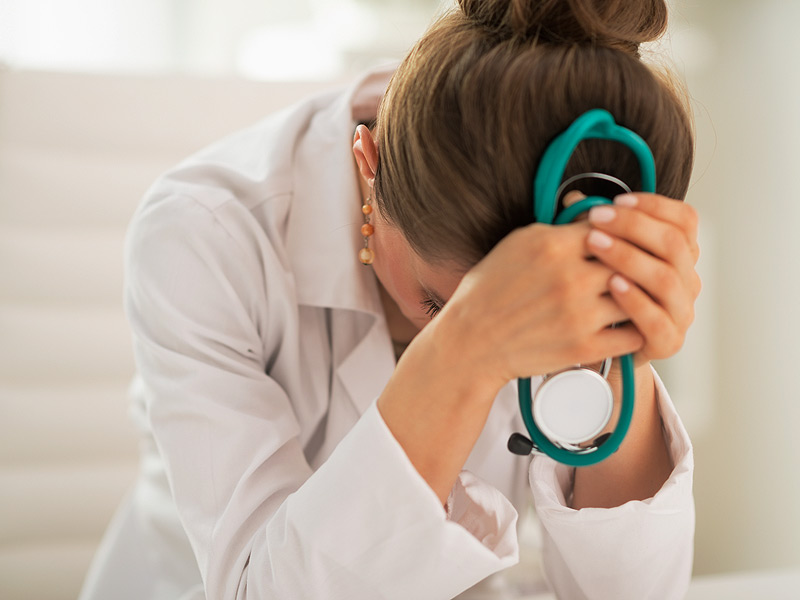
      Unparalleled sacrifice by medical community during pandemic  has not  resulted in any enhancement of  respect or prestige to the medical  profession. It was not enough  to stop physical or verbal assaults, legal or financial  exploitation. It was not sufficient  to alter the course of oppression  by administrators or moral blackmail by society. Sadly it is getting more worse. Doctors and nurse have been reduced to sacrificial lambs, that are easily slayed, when administrators tend  to put  themselves on high moral  pedestals. 

Financial and legal complexities have been the major side effects of modern medicine, especially for doctors. They are facing  complex  environment,  which are beyond their control. Besides financial and legal complexities, moral dilemmas, facing verbal and physical assaults are creating  complex working conditions. But if doctors are not able to work, who will be the sufferer, does not need an Einstein brain  to guess. Criticized  by administrators despite their sacrifice, media insults are adding to their disillusionment and possibly  a withdrawal response.

90 doctors in Maharashtra  resigned  due to harassment by administration

Over 90 gazetted medical officers posted in Yavatmal district of Maharashtra have resigned today from their service allegedly due to consistent harassment by the administration and District Collector MD Singh. 

These doctors have been serving at the civil hospital, sub-district and rural hospitals and primary health centres in various capacities. 

In a letter written to the government today, Dr Rajesh Gaikwad and Dr Pramod Rakshamwar, both office bearers of the Maharashtra Association Of Government Medical Officers, says, “Despite marathon efforts by the doctors throughout the pandemic, administrative officers and DM is mistreating the doctors which has led to resentment among entire fraternity.”

     Such  incidents  are not only  painful to the medical fraternity but also expose the hypocritical  attitude of the administrators as well as  the insensitive approach of society towards health care workers, although everyone expects doctors and nurses to be sensitive towards everyone else. Such indifferent   attitude demoralizes and causes deep discouragement to the front line doctor and nurses, but sadly remains a routine business for administrators. The pain of being  treated like a dispensable disposables remains as  a deep hurt within.

Reel Heroes vs Real Heroes

25 factors, why medical treatments are expensive

Pros-cons of being a doctor

MCI to NMC: Change of Medical Education Regulator


Some drastic regulation is need of the hour, of the  chaotic and non-uniform medical education system of India. Besides an urgent need for  better standards, uniformity in  standards of medical education and  fee structure is desirable. National Medical Commission Act 2019  has been passed. NMC has replaced MCI. But attainment of desired goals will still  depend upon, how well the future plans are implemented. The  mammoth system needs an herculean overall and honest policy changes from the roots.

The National Medical Commission (NMC), a new body, will function as the country’s top regulator of medical education from Friday, a day after the Centre dissolved the Board of Governors—Medical Council of India (BoG-MCI) through a gazette notification.

The setting up of NMC was a government move to bring reforms in the medical education sector, especially aimed at replacing the MCI, which was tainted by corruption.

The government had dissolved the MCI in 2018 following the corruption charges and replaced it with a BoG, which was chaired by Dr VK Paul, member (health), Niti Aayog.

The body was functioning under the Indian Medical Council (IMC) Act, 1956.

“The BoG-MCI has been dissolved and the NMC replaced it with effect from Friday,” said Dr Paul.

The IMC Act stands repealed, and has been replaced by The NMC Act that came into existence on August 8, 2019.

“Indian Medical Council Act, 1956 (102 of 1956) is hereby repealed with effect from September 25. The BoG appointed under section 3A of the Indian Medical Council Act, 1956 (102 of 1956) in supersession of the MCI constituted under sub-section (1) of section 3 of the said Act shall stand dissolved,” stated the gazette notification issued by the Union Ministry of Health and Family Welfare (MoH&FW).

Professor Suresh Chandra Sharma, former head of the ear nose throat (ENT) department at All India Institute of Medical Sciences (AIIMS), New Delhi, has been appointed as the chairman of the NMC.

Dr Sharma had retired from AIIMS in January and was selected by a seven-member search committee for the post from 300-odd applications received from across the country. He was also one of the five short-listed candidates for the post of director, AIIMS, New Delhi, after the then director, Dr MC Misra, had retired in 2017.

Dr Rakesh Kumar Vats, secretary general, BoG-MCI, has been appointed as the secretary of the NMC by the Appointments Committee of Cabinet (ACC).

The NMC will have four separate autonomous boards: under-graduate medical education, post-graduate medical education, medical assessment and rating and ethics and medical registration.

The common final year Bachelor of Medicine and Bachelor of Surgery (MBBS) examination will now be known as the National Exit Test (NEXT), according to the new medical education structure under the NMC.

NEXT will act as licentiate examination to practice medicine, the criteria for admission to post-graduate (PG) medical courses, and also for screening of foreign medical graduates.

Besides, the National Eligibility and Entrance Test (NEET), NEXT will also be applicable to institutes of national importance such as all the AIIMS in a bid to ensure a common standard in the medical education sector in the country.

Expensive medical college seat: is it worth?

Story of Moral slaves: How Doctors bear full brunt #Covid


              Struggling to become a doctor, slogging in wards to learn and earn degrees, work in inhuman conditions, listen to endless abuses, tolerate the false media criticism, dragged in courts for alleged negligence, work with fear of physical assaults, work without proper infrastructure and manpower, endangering their own lives, exploited by medical  industry and administrators, poorly paid and  still not respected.    Arm chair preachers would just say “yes, as a doctor, they should do it as moral duty.”

             The Indian Express has been wise enough and has been able to  express the situation to some extent, which is just tip of the iceberg.

             Low pay and long hours, doctors battle more than just Covid-19.

 Maharashtra estimates it needs 19,752 doctors, nurses and paramedics to fight Covid-19. As on September 15, 12,574 of the posts were vacant. Dr Rajesh Salagare is the only doctor at Raigad rural hospital since March. (Express photo by Tabassum Barnagarwala) Chest physician Dr Pravin Dumne has just done his rounds of the ICU at Osmanabad Civil Hospital and is now fielding queries from anxious relatives. Two hours into the PPE, he is drenched in sweat, with 22 hours more to go in his shift. Dumne has 150 Covid-19 patients under him. Since May, he hasn’t been able to take any break except for 12 days when he himself contracted the virus. Norms mandate one doctor per 10 ICU patients, Dumne is handling five times that. “There are times when multiple patients are critical and I can’t be everywhere. I feel helpless. We are losing lives,” he adds. As another relative complains about the lack of cleanliness in a ward, Dumne says, “I may quit government service once the pandemic is over.” Dumne isn’t the only one feeling the unequal load as coronavirus cases surge in Maharashtra, particularly its rural areas. The state estimates it needs 19,752 doctors, nurses and paramedics to fight Covid-19. As on September 15, 12,574 of the posts were vacant. Of the 1,700 Class I doctor posts (including specialists) the Public Health Department needs to fill, like Dumne’s, only 538 are filled. In May, Maharashtra was forced to ask Kerala for help. Forty specialist doctors came to Mumbai on a bus, to handle critical patient load until July. The shortage is even more intense in rural areas, where urgent advertisements by the government for specialists have yielded little response. In rural Nagpur, as many as 93.6% posts are vacant, followed by Thane at 79%. The last permanent posting in Osmanabad, an aspirational district under NITI Aayog, was three years ago. It needs 150 nurses and 40 doctors. The state government has been deputing Ayush doctors to civil hospitals. “Not all of them can handle serious patients,” Dumne points out. He and Dr Tanaji Lakal are the only two specialist doctors for Covid patients at Osmanabad Civil Hospital. Dumne was moved here from the PHC at Samudrawani village, following the pandemic. Dumne and Lakal alternate working for 24 hours continuously followed by one day off. In July, when Dumne got the coronavirus, he had to join back within 12 days, instead of the minimum 14. The number game In Raigad, 400 km away, Dr Rajesh Salagare has been the only doctor handling the entire rural hospital since March. The three other doctor posts at the hospital have been vacant since 2018. The previous night he was called for a delivery at 2 am; this morning, he was back on OPD duty at 9. “I am just an Ayush doctor. If something goes wrong, I will be held responsible,” he worries. It’s not just the long hours that deter doctors from rural duty. A government MBBS doctor in rural areas is paid Rs 60,000 per month and is expected to be on call 24 hours, their counterparts in Navi Mumbai get Rs 1.25 lakh, and in Mumbai and Thane, Rs 80,000 per month. Navi Mumbai, Thane and Mumbai mandate eight hours on Covid duty at a time, apart from providing hotel accommodation. As a chest physician, Dumne could earn up to Rs 2 lakh in urban areas, instead of the Rs 60,000 he gets now. His August salary came only a few days ago. The 100-bed Covid facility in Ratnagiri depends on Ayush doctors from nearby PHCs. One such doctor, who requested anonymity, says he sees over hundred suspected cases a day. He got his pending salary of Rs 40,000 for four months, till July, only a few days ago. “Everyone calls us corona warriors, but look at how we are treated.” Dr Pravin Dumne (in white) at Osmanabad Civil Hospital. (Express Photo: Tabassum Barnagarwala) An administrative officer at Ratnagiri Civil hospital, who is waiting for his pay since July, shows text messages exchanged with seniors. “If the government doesn’t respect us, why will a doctor want to work here?” he says. Ratnagiri Civil Surgeon Dr Ashok Bolde says the delay in salaries is on the part of the National Health Mission’s state office. Dr Sadhana Tayade, Director of the Directorate of Health Services, however, says, “Salaries are paid on time to doctors.” On why the poor response to advertisements, she says it is because “doctors are scared to work in Covid wards”. The government has begun tele-ICU services to plug the gap of specialists in rural hospitals of Bhiwandi, Aurangabad, Jalna and Solapur. Physicians in another city monitor ICU readings of patients in rural hospitals and call up on-duty doctors to direct treatment protocol. But tele-ICU has not reached every rural hospital, nor can it help everyone.          Next younger generation of aspiring doctors, who is  witnessing to the cruelty shown towards health staff, may be forced to think about their decisions to become doctors.

 Advantage disadvantage of being a doctor

 25 factors why medical treatments are expensive

 REEL HEROES VS REAL HEROES

 Expensive medical college seat: is it worth?

Dead Body swap # Covid; unprecedented stress- Bizarre mistakes


Two incidents of dead body swaps have happened in last few months. Strangely two mistakes out of   correct millions  are enough to label hospitals, doctors  or health systems  as  callous. Covid times are  toughest times for health care staff and hospitals as well.

   Definitely it is sad and  painful  incident. Without doubt, swapping bodies and causing distress to relatives is really shocking.  There will be a  demand for exemplary  punishment to  health  care workers involved. There is a little doubt that they will meet the stringent punishment, as this is regarded as unpardonable, given the involvement of health care staff.

  But is that the right way? Will chopping the hands, that were trying to rescue, is of help?

          No one will like to see, how health workers have been  stressed. Under the unprecedented circumstances, how fewer number of frontline workers have been battling the pandemic.

      Armchair preachers cannot imagine the stress and the hard work, these   warriors are burdened with. There can be multiple ways to look at these unforeseen mistakes.

  1. Punish the health workers, make an example by taking away their jobs. So everyone  will learn.
  2. Check the faults in the system, make the whole system fool-proof by learning from the mistakes, so it becomes more robust with times to come.
  3. Counselling   of the personnel involved along with improving the system.
  4. Understand the stress and circumstances of front line workers and improving their working conditions, so as to reduce their  burden.
  5. Check the past record, if someone has done thousands right things, do not hang him for a single error, especially intoday’s unprecedented circumstances.  

Most desirable  at such crucial times will be encouragement and psychological support to front line workers.

Bodies swapped at private hospital in Delhi,

NEW DELHI: A private hospital in southwest Delhi’s Dwarka committed a grave error by handing over the body of a Christian woman to the family of a Covid-positive Hindu woman. The 69-year-old woman, Garikapati Parisuddam, was not infected with the novel coronavirus and had passed away on Monday morning.

AIIMS sacks one, suspends another for swapping of dead bodies

An ambulance with four corpses – including that of Anjum B – left from the hospital on Tuesday afternoon. Three of the persons who had died were Hindu and were taken to a crematorium before the van left for the ITO burial ground.

  Just  delivering professional death sentence for  single, system errors  or unforeseen mistakes will have  future implications.  It is like chopping the hands,  that were trying to help.

           As Corona has unmasked the real risk to health workers and society has dealt with heath workers shabbily. Next younger generation of aspiring doctors, who is a witness to the cruelty shown towards health staff, may be forced to think about their decisions to become health workers. Possibly the administrators need to ponder now, who will treat people  in next pandemic.

  Advantages-Disadvantage of being a doctor

   25 factors- why health care is expensive

   REEL Heroes Vs Real Heroes

Doctor’s death: saved uncountable lives- still not counted


In an era, where Reel Heroes are worshipped and Real Heroes are not    counted even after sacrificing their lives, is an unfortunate  and disheartening for  the whole community of doctors and nurses. It is surprising that  doctors, who saved uncountable lives, did not move the administrators enough  to get them counted.  Such  incidents  are not only  painful to the medical fraternity but also expose the hypocritical  attitude of the administrators as well as  the insensitive approach of society towards health care workers, although everyone expects doctors and nurses to be sensitive towards everyone else. Such indifferent   attitude demoralizes and causes deep discouragement to the front line doctor and nurses, but sadly remains a routine business for administrators. The pain of being  treated like a dispensable disposable remains as  a deep hurt within.

         But at the same time, mere tokenism as an expression of concern is also not desirable. What is really required is a sincere effort to reduce the mortality of health care workers, to provide them better working conditions. An honest effort to find the cause of mortality among doctors and reducing it, help to the families of the health care workers is required. Due acknowledgement and true  respect to their sacrifice  is expected from civilized society.

“382 Doctors Died Of Covid”: Medical Body Says Centre “Abandoning” Heroes

Indian Medical Association has shown its displeasure over  the Government  statement on coronavirus in parliament, which had no word on the doctors who died in the line of duty, and the  statement that the Centre had no data as health is a state subject.  Accusing the government of “indifference”, “abdication” and “abandonment of heroes”, the country’s top body of medical practitioners said in such a circumstance, the government “loses the moral authority to administer the Epidemic Act 1897 and the Disaster Management Act”.

So far, 382 doctors have died of coronavirus, the IMA said. In the list it released, the youngest doctor to lose his life was 27 years old and the oldest was 85.

But while acknowledging the contribution of healthcare workers during the pandemic, the health minister made no mention of the medical professionals lost to the disease, the IMA said.  

“To feign that this information doesn’t merit the attention of the nation is abominable,” the IMA statement read. “It appears that they are dispensable. No nation has lost as many doctors and health care workers like India,” the statement added.

The IMA pointed to Union minister Ashwini Kumar Choubey’s statement that the Union government does not have any compensation data as public health and hospitals comes under the states.

“This amounts to abdication of duty and abandonment of the national heroes who have stood up for our people. IMA finds it strange that after having formulated an unfriendly partial insurance scheme for the bereaved families to struggle with the ignominy of the Government disowning them altogether stares at them,” the statement read.

Such a circumstance also exposes the “hypocrisy of calling them corona warriors on one hand and denying them and their families the status and benefits of martyrdom,” the IMA said.

Doctors and nurses dispensable disposables

Reel Heroes vs Real Heroes

25 factors, why medical treatments are expensive

Pros-cons of being a doctor

Financial complexity of Modern medicine: 25000 hospitals near closure


Financial and legal complexities have been the major side effects of modern medicine, especially for doctors. They are facing  complex  environments,  which are beyond their control. Besides financial and legal complexities, moral dilemmas, facing verbal and physical assaults are creating  complex working conditions. But if doctors are not able to work, who will be the sufferer, does not need an Einstein brain  to guess. Criticized despite their sacrifice and treating the patients, media insults are adding to their disillusionment and possibly  a withdrawal response.

Rates for Covid hospitals: IMA doctors across Maharashtra threaten to stop work if demands not met in 7 days

Doctors with the Indian Medical Association across Maharashtra have threatened to stop work indefinitely if their demands are not met within the next seven days. On September 15, all IMA members who are hospital owners will submit copies of their hospital registrations to the IMA branch offices at various places. These branches will appeal to the state government that they are unable to manage the hospitals with the new rates. “We will urge the state to take charge of the private hospitals,” said IMA Maharashtra president Dr Avinash Bhondwe.

The IMA is protesting against the “unaffordable rates forced by the state government” for Covid hospitals and said it is increasingly difficult to meet the expenses to run the small and medium-sized private hospitals. It has demanded that the government should run all private hospitals.

Bhondwe said at least 25,000 mid-sector hospitals are on the verge of closure. “The government had accepted the proposal to increase the rates for the ICU and give concessions in biomedical waste disposal charges and electricity bills. The government had also agreed to cap the rates of PPE kits and masks for doctors and the rates of medical oxygen used by hospitals were also to be reduced as per the central government’s regulations. This was to be finalised in a proposed meeting with IMA before September 1,” Bhondwe said.

However, IMA officials said the state unilaterally came out with new rates on August 31 and the IMA decided to start their protest at a meeting on September 4. On September 9, all the 216 IMA branches paid a tribute to doctors in Maharashtra and burnt symbolic copies of medical council registrations

IMA Maharashtra convened a meeting of 14 different medical organisations of all the pathies, including Ayurveda, homeopathy, yunani and dentistry, all the disciplines of modern medicine and specialties on September 12. These organisations have supported the agitation and decided to form a joint action committee to work together.

25 factors- why medical treatment expensive: are doctors responsible

Advantage disadvantage of being a doctor

Expensive medical college Fee

Salary cut for doctors; other paid at home

Aspiring Doctor: Watch the naked administrative oppression


Covid has been treated by doctors at great personal cost. It has resulted in even death of healthy doctors and nurses, thousands of them have stayed away from their families, for the  sake of patients. But does that kind of unparalleled sacrifice has resulted in any enhancement of  respect or prestige to the medical  profession. Has the death of medical professionals, while serving ailing fellow human beings  was enough to halt the oppression of this gentle and humble  community by administrators. Was it enough to stop physical or verbal assaults, legal or financial  exploitation. Was it enough to alter the course of oppression  by medical  industry or moral blackmail by society. Sadly it is getting more worse. Doctors and nurse have been reduced to sacrificial lambs, that are easily slayed, when administrators want to put  themselves on high moral  pedestals.

This order of district collector to arrest a doctor for raising a voice for raising serious administrative issues, for speaking the truth and not for some alleged mistake. one naked example of how medical fraternity is being suppressed.
The young aspiring doctors need to watch these times carefully, to understand completely, what they are getting into. Even while embracing death for welfare of other human beings, does not get them deserved respect, one needs to be careful about the coming times.

The contribution of doctors towards society is not recognized rather defamation of medical profession as a whole continues unabated.Doctor's dignity is sacrificed blatantly to prove greatness of administrators.General behaviour of people is far from the sense of decency towards doctors and nurses. Aspiring doctors need to watch bashing of medical profession and all such factors. There is possibility that earning a medical degree puts them at a lower pedestal in society.


Plasma therapy- life saving for Covid?


  Few months ago, there was a hope and  presumed scientific reason to believe that plasma therapy will be a wonderful option in Covid pandemic. But the said belief needed to be strengthened by robust trials. As trials continue, the belief that plasma therapy will save lives, have not been proved  clear. Now again there is a doubt in the mind of doctors, whether it will save lives or it may not. What ever future may hold, it is clear that it needs more trials, more evidence. Covid virus has again proved to be more smart.

Delhi: Plasma therapy’s life-saving abilities in question, doctors caution on its use (Times of India)

NEW DELHI: A day after TOI reported about an ICMR study that showed administering convalescent plasma to Covid-19 patients did not reduce death risk, top doctors of AIIMS, Institute of Liver and Biliary Sciences (ILBS) and Lok Nayak Hospital stressed the need to rethink who should get the therapy. In the trial by Indian Council of Medical Research, which involved 464 hospitalised, moderately-ill Covid-19 patients, researchers observed that some participants had higher antibody positivity than their plasma donors. “The difference in age and severity of illness, with donors being younger and having milder disease, could have driven this difference. While all Covid-19 survivors were encouraged to donate plasma, an overwhelming majority of the donors were only mildly sick, young survivors. Recovered patients who had moderate or severe disease were generally reluctant to return to hospitals for plasma donation,” the ICMR study noted.  Earlier the institutes  did not check the level of neutralising antibodies in the donor, which led to poorer outcomes. “The ICMR study re-affirms our assessment based on a trial conducted on 29 patients who received plasma therapy at ILBS. It showed no mortality benefit. However, there was significant benefit in terms of clearing of viral load in those who received the therapy in addition to standard care compared to who received only standard care,” he said. The ILBS director added that only patients with mild-to-moderate illness should be given convalescent plasma. “The therapy has to be given within 24 to 48 hours of diagnosis. Also, detailed assessment of presence of sufficient levels of neutralising antibodies in the donor should be mandatory,” Dr Sarin said. At least 100 Covid-19 patients at the state-run Lok Nayak Hospital have been given plasma therapy till date. Dr Suresh Kumar, its medical director, said larger studies might be needed to assess its benefits. “Remdesivir did not show significant benefit in Covid-19 treatment in some studies. Still, the drug is being used in select patients because it has certain benefits and there is no other known cure. Similarly, plasma therapy may not help reduce death risk but our experience shows it does help in faster recovery in a small subset of patients,” he said. ILBS and Lok Nayak Hospital are conducting a study involving 400 Covid patients to assess the benefits of plasma therapy. Rajiv Gandhi Super Specialty Hospital is also taking part in the study. The ICMR study was conducted at 39 tertiary care hospitals — 29 teaching and 10 private — across the country. According to the study, released on MedRXIV, a preprint service for medicine and health sciences, mortality was documented in 13.6% patients who received plasma therapy in addition to standard care and 31 (14.6%) patients who received only standard care. The trial results also indicated that there was no difference in progression to severe disease among moderately ill patients treated with convalescent plasma along with the best standard of care.

Blog at WordPress.com.

Up ↑