High blood pressure (hypertension), symptoms, causes, risk factors, complications, diagnosis๏ฟผ


What is High blood pressure (hypertension)

High blood pressure (hypertension) is a common condition in which the long-term force of the blood against your artery walls is high enough that it may eventually cause health problems, such as heart disease.

Blood pressure is determined both by the amount of blood your heart pumps and the amount of resistance to blood flow in your arteries. The more blood your heart pumps and the narrower your arteries, the higher your blood pressure. A blood pressure reading is given in millimeters of mercury (mm Hg). It has two numbers.

  • Top number (systolic pressure). The first, or upper, number measures the pressure in your arteries when your heart beats.
  • Bottom number (diastolic pressure). The second, or lower, number measures the pressure in your arteries between beats.

You can have high blood pressure for years without any symptoms. Uncontrolled high blood pressure increases your risk of serious health problems, including heart attack and stroke. Fortunately, high blood pressure can be easily detected. And once you know you have high blood pressure, you can work with your doctor to control it.

Symptoms

Symptoms

Most people with high blood pressure have no signs or symptoms, even if blood pressure readings reach dangerously high levels.

A few people with high blood pressure may have headaches, shortness of breath or nosebleeds, but these signs and symptoms aren’t specific and usually don’t occur until high blood pressure has reached a severe or life-threatening stage.

When to see a doctor

You’ll likely have your blood pressure taken as part of a routine doctor’s appointment.

Ask your doctor for a blood pressure reading at least every two years starting at age 18. If you’re age 40 or older, or you’re 18 to 39 with a high risk of high blood pressure, ask your doctor for a blood pressure reading every year.

Blood pressure generally should be checked in both arms to determine if there’s a difference. It’s important to use an appropriate-sized arm cuff.

Your doctor will likely recommend more-frequent readings if you’ve already been diagnosed with high blood pressure or have other risk factors for cardiovascular disease. Children age 3 and older will usually have blood pressure measured as a part of their yearly checkups.

If you don’t regularly see your doctor, you may be able to get a free blood pressure screening at a health resource fair or other locations in your community. You can also find machines in some stores that will measure your blood pressure for free.

Public blood pressure machines, such as those found in pharmacies, may provide helpful information about your blood pressure, but they may have some limitations. The accuracy of these machines depends on several factors, such as a correct cuff size and proper use of the machines. Ask your doctor for advice on using public blood pressure machines.

Causes

There are two types of high blood pressure.

Primary (essential) hypertension

For most adults, there’s no identifiable cause of high blood pressure. This type of high blood pressure, called primary (essential) hypertension, tends to develop gradually over many years.

Secondary hypertension

Some people have high blood pressure caused by an underlying condition. This type of high blood pressure, called secondary hypertension, tends to appear suddenly and cause higher blood pressure than does primary hypertension. Various conditions and medications can lead to secondary hypertension, including:

  • Obstructive sleep apnea
  • Kidney disease
  • Adrenal gland tumors
  • Thyroid problems
  • Certain defects you’re born with (congenital) in blood vessels
  • Certain medications, such as birth control pills, cold remedies, decongestants, over-the-counter pain relievers and some prescription drugs
  • Illegal drugs, such as cocaine and amphetamines

Risk factors

High blood pressure has many risk factors, including:

  • Age. The risk of high blood pressure increases as you age. Until about age 64, high blood pressure is more common in men. Women are more likely to develop high blood pressure after age 65.
  • Race. High blood pressure is particularly common among people of African heritage, often developing at an earlier age than it does in whites. Serious complications, such as stroke, heart attack and kidney failure, also are more common in people of African heritage.
  • Family history. High blood pressure tends to run in families.
  • Being overweight or obese. The more you weigh, the more blood you need to supply oxygen and nutrients to your tissues. As the amount of blood flow through your blood vessels increases, so does the pressure on your artery walls.
  • Not being physically active. People who are inactive tend to have higher heart rates. The higher your heart rate, the harder your heart must work with each contraction and the stronger the force on your arteries. Lack of physical activity also increases the risk of being overweight.
  • Using tobacco. Not only does smoking or chewing tobacco immediately raise your blood pressure temporarily, but the chemicals in tobacco can damage the lining of your artery walls. This can cause your arteries to narrow and increase your risk of heart disease. Secondhand smoke also can increase your heart disease risk.
  • Too much salt (sodium) in your diet. Too much sodium in your diet can cause your body to retain fluid, which increases blood pressure.
  • Too little potassium in your diet. Potassium helps balance the amount of sodium in your cells. A proper balance of potassium is critical for good heart health. If you don’t get enough potassium in your diet, or you lose too much potassium due to dehydration or other health conditions, sodium can build up in your blood.
  • Drinking too much alcohol. Over time, heavy drinking can damage your heart. Having more than one drink a day for women and more than two drinks a day for men may affect your blood pressure.

If you drink alcohol, do so in moderation. For healthy adults, that means up to one drink a day for women and two drinks a day for men. One drink equals 12 ounces of beer, 5 ounces of wine or 1.5 ounces of 80-proof liquor.

  • Stress. High levels of stress can lead to a temporary increase in blood pressure. Stress-related habits such as eating more, using tobacco or drinking alcohol can lead to further increases in blood pressure.
  • Certain chronic conditions. Certain chronic conditions also may increase your risk of high blood pressure, including kidney disease, diabetes and sleep apnea.

Sometimes pregnancy contributes to high blood pressure as well.

Although high blood pressure is most common in adults, children may be at risk, too. For some children, high blood pressure is caused by problems with the kidneys or heart. But for a growing number of kids, poor lifestyle habits โ€” such as an unhealthy diet and lack of exercise โ€” contribute to high blood pressure.

Complications

The excessive pressure on your artery walls caused by high blood pressure can damage your blood vessels as well as your organs. The higher your blood pressure and the longer it goes uncontrolled, the greater the damage.

Uncontrolled high blood pressure can lead to complications including:

  • Heart attack or stroke. High blood pressure can cause hardening and thickening of the arteries (atherosclerosis), which can lead to a heart attack, stroke or other complications.
  • Aneurysm. Increased blood pressure can cause your blood vessels to weaken and bulge, forming an aneurysm. If an aneurysm ruptures, it can be life-threatening.
  • Heart failure. To pump blood against the higher pressure in your vessels, the heart has to work harder. This causes the walls of the heart’s pumping chamber to thicken (left ventricular hypertrophy). Eventually, the thickened muscle may have a hard time pumping enough blood to meet your body’s needs, which can lead to heart failure.
  • Weakened and narrowed blood vessels in your kidneys. This can prevent these organs from functioning normally.
  • Thickened, narrowed or torn blood vessels in the eyes. This can result in vision loss.
  • Metabolic syndrome. This syndrome is a group of disorders of your body’s metabolism, including increased waist size, high triglycerides, decreased high-density lipoprotein (HDL) cholesterol (the “good” cholesterol), high blood pressure and high insulin levels. These conditions make you more likely to develop diabetes, heart disease and stroke.
  • Trouble with memory or understanding. Uncontrolled high blood pressure may also affect your ability to think, remember and learn. Trouble with memory or understanding concepts is more common in people with high blood pressure.
  • Dementia. Narrowed or blocked arteries can limit blood flow to the brain, leading to a certain type of dementia (vascular dementia). A stroke that interrupts blood flow to the brain also can cause vascular dementia. 

Diagnosis

Blood pressure measurement

Your doctor will ask questions about your medical history and do a physical examination. The doctor, nurse or other medical assistant will place an inflatable arm cuff around your arm and measure your blood pressure using a pressure-measuring gauge.

Your blood pressure generally should be measured in both arms to determine if there is a difference. It’s important to use an appropriate-sized arm cuff.

Blood pressure measurements fall into several categories:

  • Normal blood pressure.ย Your blood pressure is normal if it’s below 120/80 mm Hg.
  • Elevated blood pressure.ย Elevated blood pressure is a systolic pressure ranging from 120 to 129 mm Hg and a diastolic pressure below (not above) 80 mm Hg. Elevated blood pressure tends to get worse over time unless steps are taken to control blood pressure. Elevated blood pressure may also be called prehypertension.
  • Stage 1 hypertension.ย Stage 1 hypertension is a systolic pressure ranging from 130 to 139 mm Hg or a diastolic pressure ranging from 80 to 89 mm Hg.
  • Stage 2 hypertension.ย More-severe hypertension, stage 2 hypertension is a systolic pressure of 140 mm Hg or higher or a diastolic pressure of 90 mm Hg or higher.
  • Hypertensive crisis.ย A blood pressure measurement higher than 180/120 mm Hg is an emergency situation that requires urgent medical care. If you get this result when you take your blood pressure at home, wait five minutes and retest. If your blood pressure is still this high, contact your doctor immediately. If you also have chest pain, vision problems, numbness or weakness, breathing difficulty, or any other signs and symptoms of a stroke or heart attack, call local emergency medical number.

Both numbers in a blood pressure reading are important. But after age 50, the systolic reading is even more important. Isolated systolic hypertension is a condition in which the diastolic pressure is normal (less than 80 mm Hg) but systolic pressure is high (greater than or equal to 130 mm Hg). This is a common type of high blood pressure among people older than 65.

Because blood pressure normally varies during the day and may increase during a doctor visit (white coat hypertension), your doctor will likely take several blood pressure readings at three or more separate appointments before diagnosing you with high blood pressure.

     Advantages-Disadvantage of being a doctor

     25 factors- why health care is expensive

REEL Heroes Vs Real Heroes

 21 occupational risks to doctors and nurses

Covid paradox: salary cut for doctors other paid at home

   Medical-Consumer protection Act- Pros and Cons

Expensive Medical College  seat- Is it worth it?

What is Cerebral palsy? Symptoms, Causes, Prevention


Microsoft Corp. said Zain Nadella, son of Chief Executive Officer Satya and his wife Anu, died Monday morning. He was 26 years old and had been born with cerebral palsy. The software maker told its executive staff in an email that Zain had passed away. The message asked executives to hold the family in their thoughts and prayers while giving them space to grieve privately.

Zain Nadella, son of C E O Satya died, suffering from cerebral palsy.

ย What is Cerebral palsy?

Cerebral palsy is a group of disorders that affect movement and muscle tone or posture. It’s caused by damage that occurs to the immature, developing brain, most often before birth.

Signs and symptoms appear during infancy or preschool years. In general, cerebral palsy causes impaired movement associated with exaggerated reflexes, floppiness or spasticity of the limbs and trunk, unusual posture, involuntary movements, unsteady walking, or some combination of these.

People with cerebral palsy can have problems swallowing and commonly have eye muscle imbalance, in which the eyes don’t focus on the same object. They also might have reduced range of motion at various joints of their bodies due to muscle stiffness.

The cause of cerebral palsy and its effect on function vary greatly. Some people with cerebral palsy can walk; others need assistance. Some people have intellectual disabilities, but others do not. Epilepsy, blindness or deafness also might be present. Cerebral palsy is a lifelong disorder. There is no cure, but treatments can help improve function.

Symptoms

Symptoms

Signs and symptoms of cerebral palsy can vary greatly from person to person. Cerebral palsy can affect the whole body, or it might be limited primarily to one or two limbs, or one side of the body. Generally, signs and symptoms include problems with movement and coordination, speech and eating, development, and other problems.

Movement and coordination

  • Stiff muscles and exaggerated reflexes (spasticity), the most common movement disorder
  • Variations in muscle tone, such as being either too stiff or too floppy
  • Stiff muscles with normal reflexes (rigidity)
  • Lack of balance and muscle coordination (ataxia)
  • Tremors or jerky involuntary movements
  • Slow, writhing movements
  • Favoring one side of the body, such as only reaching with one hand or dragging a leg while crawling
  • Difficulty walking, such as walking on toes, a crouched gait, a scissors-like gait with knees crossing, a wide gait or an asymmetrical gait
  • Difficulty with fine motor skills, such as buttoning clothes or picking up utensils

Speech and eating

  • Delays in speech development
  • Difficulty speaking
  • Difficulty with sucking, chewing or eating
  • Excessive drooling or problems with swallowing

Development

  • Delays in reaching motor skills milestones, such as sitting up or crawling
  • Learning difficulties
  • Intellectual disabilities
  • Delayed growth, resulting in smaller size than would be expected

Other problems

Damage to the brain can contribute to other neurological problems, such as:

  • Seizures (epilepsy)
  • Difficulty hearing
  • Problems with vision and abnormal eye movements
  • Abnormal touch or pain sensations
  • Bladder and bowel problems, including constipation and urinary incontinence
  • Mental health conditions, such as emotional disorders and behavioral problems

The brain disorder causing cerebral palsy doesn’t change with time, so the symptoms usually don’t worsen with age. However, as the child gets older, some symptoms might become more or less apparent. And muscle shortening and muscle rigidity can worsen if not treated aggressively.

When to see a doctor

It’s important to get a prompt diagnosis for a movement disorder or delays in your child’s development. See your child’s doctor if you have concerns about episodes of loss of awareness of surroundings or of unusual bodily movements or muscle tone, impaired coordination, swallowing difficulties, eye muscle imbalance, or other developmental issues.

Causes

Cerebral palsy is caused by abnormal brain development or damage to the developing brain. This usually happens before a child is born, but it can occur at birth or in early infancy. In many cases, the cause isn’t known. Many factors can lead to problems with brain development. Some include:

  • Gene mutations that result in genetic disorders or differences in brain development
  • Maternal infections that affect the developing fetus
  • Fetal stroke, a disruption of blood supply to the developing brain
  • Bleeding into the brain in the womb or as a newborn
  • Infant infections that cause inflammation in or around the brain
  • Traumatic head injury to an infant, such as from a motor vehicle accident, fall or physical abuse
  • Lack of oxygen to the brain related to difficult labor or delivery, although birth-related asphyxia is much less commonly a cause than historically thought

Risk factors

A number of factors are associated with an increased risk of cerebral palsy.

Maternal health

Certain infections or toxic exposures during pregnancy can significantly increase cerebral palsy risk to the baby. Inflammation triggered by infection or fever can damage the unborn baby’s developing brain.

  • Cytomegalovirus. This common virus causes flu-like symptoms and can lead to birth defects if a mother has her first active infection during pregnancy.
  • German measles (rubella). This viral infection can be prevented with a vaccine.
  • Herpes. This infection can be passed from mother to child during pregnancy, affecting the womb and placenta.
  • Syphilis. This is a sexually transmitted bacterial infection.
  • Toxoplasmosis. This infection is caused by a parasite found in contaminated food, soil and the feces of infected cats.
  • Zika virus infection. This infection is spread through mosquito bites and can affect fetal brain development.
  • Intrauterine infections. This includes infections of the placenta or fetal membranes.
  • Exposure to toxins. One example is exposure to methyl mercury.
  • Other conditions. Other conditions affecting the mother that can slightly increase the risk of cerebral palsy include thyroid problems, preeclampsia or seizures.

Infant illness

Illnesses in a newborn baby that can greatly increase the risk of cerebral palsy include:

  • Bacterial meningitis. This bacterial infection causes inflammation in the membranes surrounding the brain and spinal cord.
  • Viral encephalitis. This viral infection similarly causes inflammation in the membranes surrounding the brain and spinal cord.
  • Severe or untreated jaundice. Jaundice appears as a yellowing of the skin. The condition occurs when certain byproducts of “used” blood cells aren’t filtered from the bloodstream.
  • Bleeding into the brain. This condition is commonly caused by the baby having a stroke in the womb or in early infancy.

Factors of pregnancy and birth

While the potential contribution from each is limited, additional pregnancy or birth factors associated with increased cerebral palsy risk include:

  • Low birth weight. Babies who weigh less than 5.5 pounds (2.5 kilograms) are at higher risk of developing cerebral palsy. This risk increases as birth weight drops.
  • Multiple babies. Cerebral palsy risk increases with the number of babies sharing the uterus. The risk also can be related to the likelihood of premature birth and low birth weight. If one or more of the babies die, the survivors’ risk of cerebral palsy increases.
  • Premature birth. Babies born prematurely are at higher risk of cerebral palsy. The earlier a baby is born, the greater the cerebral palsy risk.
  • Delivery complications. Problems during labor and delivery may increase the risk of cerebral palsy.

Complications

Muscle weakness, muscle spasticity and coordination problems can contribute to a number of complications either during childhood or in adulthood, including:

  • Contracture. Contracture is muscle tissue shortening due to severe muscle tightening that can be the result of spasticity. Contracture can inhibit bone growth, cause bones to bend, and result in joint deformities, dislocation or partial dislocation. These can include hip dislocation, curvature of the spine (scoliosis) and other orthopedic deformities.
  • Malnutrition. Swallowing or feeding problems can make it difficult for someone who has cerebral palsy, particularly an infant, to get enough nutrition. This can impair growth and weaken bones. Some children or adults need a feeding tube to get enough nutrition.
  • Mental health conditions. People with cerebral palsy might have mental health conditions, such as depression. Social isolation and the challenges of coping with disabilities can contribute to depression. Behavioral problems can also occur.
  • Heart and lung disease. People with cerebral palsy may develop heart disease, lung disease and breathing disorders. Problems with swallowing can result in respiratory problems, such as aspiration pneumonia.
  • Osteoarthritis. Pressure on joints or abnormal alignment of joints from muscle spasticity may lead to the early onset of this painful degenerative bone disease.
  • Osteoporosis. Fractures due to low bone density can result from several factors such as lack of mobility, inadequate nutrition and anti-epileptic drug use.
  • Other complications. These can include sleep disorders, chronic pain, skin breakdown, intestinal problems and issues with oral health.

Prevention

Most cases of cerebral palsy can’t be prevented, but you can reduce risks. If you’re pregnant or planning to become pregnant, you can take these steps to keep healthy and minimize pregnancy complications:

  • Make sure you’re vaccinated. Getting vaccinated against diseases such as rubella, preferably before getting pregnant, might prevent an infection that could cause fetal brain damage.
  • Take care of yourself. The healthier you are heading into a pregnancy, the less likely you’ll be to develop an infection that results in cerebral palsy.
  • Seek early and continuous prenatal care. Regular visits to your doctor during your pregnancy are a good way to reduce health risks to you and your unborn baby. Seeing your doctor regularly can help prevent premature birth, low birth weight and infections.
  • Avoid alcohol, tobacco and illegal drugs. These have been linked to cerebral palsy risk.

Rarely, cerebral palsy can be caused by brain damage that occurs in childhood. Practice good general safety. Prevent head injuries by providing your child with a car seat, bicycle helmet, safety rails on the bed and appropriate supervision.

Advantages-Disadvantage of being a doctor

     25 factors- why health care is expensive

     REEL Heroes Vs Real Heroes

     21 occupational risks to doctors and nurses

     Covid paradox: salary cut for doctors other paid at home

ย ย  Medical-Consumer protection Act- Pros and Cons

Unjustified Profiteering in Medical Education Pushing Indian Students to Ukraine


       The ongoing Russia- Ukraine conflict has generated a discussion about a sub-plot, which links to Indiaโ€™s medical education.  There have been reports that there are 18000 Indian medical students in Ukraine. People are wondering why Medical Students from India need to go to Ukraine for studying medicine. Answer is quite simple and does not need an Einstein Brain.  It is the steep fee that private medical colleges charge from students which is unjustified and beyond any logic. It just needs a sincere โ€˜Government Willโ€™ to implement the justified fee for MBBS seats in private medical colleges in India. Medical colleges in Ukraine, Georgia, Kyrgyzstan, Bangladesh, Philippines and China have been benefitted because of the severe exploitation of medical students in India.

      It needs a sincere and honest assessment of the fee and expenditure of medical college and education rather than a permission for heavy profiteering. If honest calculations are carried out, the fee should not be more than one fifth of present rates, taking into account the hospital services expenditure.

What draws med students to Ukraine? Affordability

What draws med students to Ukraine? Affordability – Times of India

Why do Indian students go to Ukraine to pursue courses, especially MBBS? Because of affordability, says Manjula Naidu, proprietor of a firm that helps send students to Ukraine’s Bukovinian State Medical University. Usha Rani, an Anekal resident whose son is in first-year MBBS at Zaporizhzhia State Medical University, said she wouldn’t have sent him to Ukraine had she been able to pay nearly Rs 80 lakh for an MBBS course in Karnataka. Though Karnataka has more than 9,000 MBBS seats, government quota seats account for not even 40%, forcing many aspirants to opt for countries like Ukraine, Georgia and Kyrgyzstan. What students and their parents find attractive is the Rs 25-30 lakh package for the entire course. Besides there are consulting agencies to help them with loans and the medium of instruction is English.  On the other hand, the first fee slab for an MBBS seat in a government college is Rs 59,000 per year, followed by the second slab of government quota seats in private colleges (Rs 1.4 lakh per annum). The next fee slab is of private seats (management quota) in private colleges that varies from Rs 10 lakh to Rs 25 lakh a year. Even more expensive are the NRI quota seats and those in deemed universities.

     Advantages-Disadvantage of being a doctor

     25 factors- why health care is expensive

     REEL Heroes Vs Real Heroes

     21 occupational risks to doctors and nurses

     Covid paradox: salary cut for doctors other paid at home

ย ย  Medical-Consumer protection Act- Pros and Cons

Expensive Medical Collegeย  seat- Is it worth it?

Medical Consumer Protection Act: A Loss making deal for patients too?


ย ย ย ย  ย ย With the evolving medical science and health care getting intertwined withย business, braided changes inย medicalย regulation and law are not an unexpected development. New models of medical regulation, business and law inย health care have emerged and progressed in last few decades. ย Despite a wish to govern and regulate medical profession strictly, the laws and regulations still have to go aย long way to provide real justice to everyone.ย ย ย No one really knows how to regulate this difficult area,ย  which encompasses life and death, deals with extremes of poverty and riches, mortality and morbidity, pain andย  relief , sadness and happiness, smiles and sorrow and other uncountable emotions, all intertwined with financial aspects.But the wish of administrators to govern medical profession strictly with punishments is not new. ย Hammurabi (5000 years back) at the start of civilization believed that doctors needed to be punished in case there was a poor outcome. Strangely it was at a time, when no one understood the complexity of human body and the limitations of medicalย science; even basic anatomy and physiology of body was not discovered. ย 

      Considering the limitations of medical science along with uncertainties and complexities of human body, regulation of medical profession and system of punishments still remains somewhat unfair to doctors, even after 5000 years.  It is still based on principles of revenge and retributions rather than developing a robust system by learning from mistakes. By application of an average wisdom, doctors can be easily blamed for poor outcomes, as they are always and universal a common visible link between treatment and poor outcome. 

           One of the examples of easy punishments for doctors is Medical consumer protection act that was implemented in 1995 for medical services. Patients were defined as consumers and hence doctors were converted to service providers in lieu of some money.  Consequently the changed definitions altered the doctor-patient relationship in an irreversible way.   

    The reality is that neither doctors, nor patients are ready for such a legal relationship. More-over   the system is not robust enough for such a change.   To work with weak infrastructure, non-uniform medical education, poor numbers of support staff, inept health system along with legal complexities has pushed doctors into a shell and predisposed them to harassment. 

          Rather than   developing a system to promote   good doctor-patient relationship, Medical Consumer Protection Act has created a situation of โ€˜us versus them syndromeโ€™. It caused erosion of doctor-patient relationship and escalated cost of care.   Propagation of stray and occasional incidents about negligence case in court or their outcomes are given disproportionate wide publicity in media. The patients are unable to understand the correct application of such stray incidents to themselves. Such cases may be frivolous,  just one in million or a rarity, but people always try to imagine themselves being in the hospital chaos due to the   scenario projected.  It gives a negative projection about medical services and enhances patientsโ€™ fear to seek treatment at right time.

    There is a growing mutual mistrust; doctors too have started looking at every patient as a potential litigant. Especially while dealing with very sick ones, practice of defensive medicine is a natural consequence. This may manifest as excessive investigations, more use of drugs, antibiotics and even reluctance or refusal to treat very sick patients. 

    With the mandate to practise evidence based medicine, doctors need to document everything and to offer everything possible, leading to skyrocketing medical costs.  To save themselves, doctors have to do mammoth paper work, leading to consumption of time that was meant for real deliberations for the benefit of patients.

           Consequently insurance companies, medical industry and lawyers have become indispensable and have positioned themselves in between doctor and patients. Besides creating a rift between doctor and patient, they charge heavily from both sides; from patients (medical insurance, lawyer fee) and doctors (indemnity insurance, lawyerโ€™s fee) alike. The vicious cycle of rising costs, need for insurance, medicolegal suits, and high lawyer fee (for patients and doctors) goes on unabated. All these contribute significantly to overall inflated cost of health care.

       Not uncommonly doctors are used as scape goats to have a concession on the patientโ€™s treatment from administrators.  

       Medical consumer protection act has increased the anxiety and insecurity among   medical professionals.   Doctors can be dragged to courts for trivial reasons, for example the sense of revenge, simply for non-satisfaction, to extract money or simply for avoiding paying for services.  In an era where family members, brothers and sisters fight for money, it will be naรฏve to think that idea of making money from doctors does not exist. These money-making ideas are further stoked by the much publicized incidents of high compensations granted by courts.

     Medical lawsuits and complaints (right or wrong) are breaking medical professionals from within, not to mention the toll it takes on their confidence and belief, which takes a lifetime to build.

     Whenever there is adverse outcome in any patient, all the doctors involved start looking for whom to blame among themselves. Due to legal pressure they try to pinpoint each otherโ€™s mistakes.  Mutual understanding takes a back seat and the teamwork is spoiled permanently. Administrators in a bid to be safe, encourage putting doctorโ€™s concerns against each other,  creating a strange sense of enmity among medical professionals.

    The ease with which doctors can be harassed has led to rampant misuse of medical consumer protection act and it has instilled a sense of deep fear and insecurity in the mind of medical professionals. The act has been used as a whip against the  doctors by all, including  medical industry, law industry and administrators.  Only doctors are visible as those who deliver care, so they remain at receiving end for poor outcomes and all these industries remain invisible.    The industry has used the protective systems against medicolegal cases to gain  maximum benefits  out of doctorsโ€™ hard work.   

      In court cases, a certain element of doubt always remains in mind of a doctor whether he will get justice in the long run, or will end up being  a victim of sympathy towards patient or clever lawyering.  So taking medical decisions in critical situations is becoming more difficult  in view of the future uncertainty of disease.

             Windfall profits for lawyers is a strong  incentive   for  law industry to promote   instigation  of patients by against doctors .  One can see zero fee and fixed commission advertisements on television by lawyers in health systems even in developed countries. They lure and instigate patients to file law suits and promise them hefty reimbursements on โ€˜sharing and commission basisโ€™. There is no dearth of such relatives and lawyers who are ready to try their luck sometimes in vengeance and sometimes for the lure of money received in compensations. 

       Consequently doctors are now an easily punishable human link for poor outcomes.  Medical professionals work with continuous negative publicity, poor infrastructure, and preoccupied negative beliefs of society and burden of mistrust.

  Strangely  Medical Consumer Protection Act applies  only to doctors, that too selectively. All  other professions and services  are   out of it, not even other constituents of health services. Selective application is what is  demoralizing the doctors.  Considering the uncertainty and kind of work done by  medical professionals, actually it should be other way around.Mistakes are always easy to be picked with retrospective analysis and with lawyers pondering over it for years. In such situations, doctors are sitting ducks for any kind of blackmail.

            Nothing else has ever distracted doctors more than medico-legal cases and punishments. In certain circumstances, saving themselves becomes more important than saving a patient. Decision making also becomes difficult  by uncertainty of prognosis,  grave emergencies, split second lifesaving and risky decisions that may later be proved wrong by retrospective analysis with wisdom of hindsight with luxury of time and fault-finding approach.  The possibility of complex medico-legal situations in doctorโ€™s  mind are enough to distract doctors from their primary point of intentions โ€˜the treatmentโ€™.

          Therefore increasingly, financially secure doctors are staying away from the riskier jobs. No wise person will like to face medicolegal complexities in older age. Taken to court for a genuine decision is enough to spoil and tarnish health, wealth and fame that was earned by  slogging  the  entire  life.     

     Patients can have poor outcomes for many reasons. It can be severe disease, poor prognosis, rare or genuine complications or even unintentional mistake or human errors, system errors or deficiency. Whatever court decides,  while consuming years, the harassment of doctor is full and permanent. Even if court decides in favour of the doctor, there is no compensation possible for the sufferings and agony spanning over years.  Therefore, a single mistake can undo all the good work of past, and the illustrious future work that could have been accomplished.

        If the decision to decide or act or help someone in an emergency situation, puts oneโ€™s own life and career at risk, why would anyone put himself in that difficult  position?  

         Medical Consumer Protection Act  has become a tool to harass doctors and money making tool for lawyers, medical industry or administrators. But  it would be naรฏve to assume that by whipping doctors and regulating them in such a harsh manner will be helpful to patients in long run.  The consequent insecurity among doctors, practise of defensive medicine, enhanced costs, excessive documentation and the distraction from the primary point of intention (treatment)  are few of the  side effects, which will  definitely be passed on to the patients inadvertently.  After all doctors have to save themselves as well. As a result,  now the battle of life and death will be fought with less zeal, with subdued and demoralized soldiers.

ย ย ย ย ย ย ย  ย ย Patients are unable to realize their loss for punishing their saviours. For doctors, no rewards if you win, but sword hanging if one loses. ย Fear factors on doctors and impact of present legal complexities is already at par with that of Hammurabiโ€™s era. Consequently being consumer may be overall a loss making deal for the patients.

     Advantages-Disadvantage of being a doctor

     25 factors- why health care is expensive

     REEL Heroes Vs Real Heroes

     21 occupational risks to doctors and nurses

     Covid paradox: salary cut for doctors other paid at home

   Medical-Consumer protection Act- Pros and Cons

Indiaโ€™s Mounting Plastic Challenge


Many have woken up to Indiaโ€™s plastic waste generation problem after worrying data was presented in Parliament. But alarm bells have been ringing for a long time. According to the Centre, plastic waste generation has more than doubled in the last five years, with an average annual increase of 21.8%. A 2018-2019 Central Pollution Control Board (CPCB) report puts Indiaโ€™s annual plastic waste generation at 3.3 million metric tonnes. This, according to experts, is an underestimation. Seven states โ€” Maharashtra, Delhi, Karnataka, Uttar Pradesh, Gujarat, West Bengal, and Tamil Nadu โ€” contribute to 66% of the countryโ€™s total plastic generation. And, Goa and Delhiโ€™s per capita plastic use is six times higher than the national average. A 2018 study by IIT Kharagpur found that 49% of waste in Delhi drains was plastic.

    There is need for robust national plan, ensure transparency and to involve every stakeholder- from Government and industries to every last citizen.

   Centre Notifies guidelines on plastic packages

   Centre Notifies guidelines on plastic packages

New Delhi [India], February 18 (ANI): Taking forward the commitment to eliminate single-use plastics, the Environment Ministry has notified comprehensive guidelines on Extended Producer Responsibility (EPR) for plastic packaging under Plastic Waste Management Rules, 2016.

According to the Ministry of Environment, Forest and Climate Change, the guidelines on extended producer responsibility coupled with the prohibition of identified single-use plastic items, which have low utility and high littering potential, with effect from July 1, 2022, are important steps for reducing pollution caused by littered plastic waste in the country.

The minister said that the guidelines provide a framework to strengthen the circular economy of plastic packaging waste, promote the development of new alternatives to plastics and provide further next steps for moving towards sustainable plastic packaging by businesses. โ€œReuse of rigid plastic packaging material has been mandated in the guidelines to reduce the use of fresh plastic material for packaging,โ€ Yadav said.

The Ministry said that the enforceable prescription of a minimum level of recycling of plastic packaging waste collected under EPR along with the use of recycled plastic content will further reduce plastic consumption and support the recycling of plastic packaging waste.

The EPR guidelines will give a boost for formalization and further development of the plastic waste management sector. As a significant first, the guidelines allow for the sale and purchase of surplus extended producer responsibility certificates, thus setting up a market mechanism for plastic waste management.

โ€œThe implementation of EPR will be done through a customized online platform which will act as the digital backbone of the system. The online platform will allow tracking and monitoring of EPR obligations and reduce the compliance burden for companies through online registration and filing of annual returns. In order to ensure monitoring on fulfilment of EPR obligations, the guidelines have prescribed a system of verification and audit of enterprises,โ€ it said.

The guidelines prescribe a framework for the levy of environmental compensation based upon the polluter pays principle, with respect to non-fulfilment of extended producer responsibility targets by producers, importers and brand owners, for the purpose of protecting and improving the quality of the environment and preventing, controlling and abating environment pollution, the Ministry added.

It further said that the funds collected shall be utilized for collection, recycling and end of life disposal of uncollected plastic waste in an environmentally sound manner.

Under these producers, importers and brand owners may operate schemes such as deposit-refund system or buy-back or any other model in order to prevent the mixing of plastic packaging waste with solid waste. (ANI)

Advantages-Disadvantage of being a doctor

     25 factors- why health care is expensive

     REEL Heroes Vs Real Heroes

     21 occupational risks to doctors and nurses

     Covid paradox: salary cut for doctors other paid at home

   Medical-Consumer protection Act- Pros and Cons

How to Deal with Online Internet Addiction?


NEW DELHI: Has the Covid-19 pandemic worsened addiction to the internet among children? The footfall at psychiatric out-patient departments in hospitals, especially those offering help to kids hooked to the net, be it for online gaming, chatting with friends or sharing videos, offers a glimpse of the problem. At AIIMS, the number of parents seeking help for their children, among them the most being those addicted to online gaming, has increased significantly after the pandemic. The special clinic was inundated with requests from parents seeking help, nearly 80% of them are related to online gaming, 15% about excessive use of social media and the remaining 5% related to problems like pornographyโ€.

Times of India carries an article about the problem of ย increased online addiction ย during the pandemic.

The parents of a Class XI student โ€” name withheld on request โ€” approached AIIMS because their son was gaming online for hours, and wasnโ€™t willing to give up the habit. The son even hit his father when the latter tried to take away the laptop. In another case, a Class IX student hooked to online gambling spent Rs 75,000 in a single week on his parentโ€™s credit card. ย Children have developed mental and emotional issues due to addiction to online streaming services. The girl would stay awake all night to finish the TV series and sleep during the day. It continued for six to seven months. She developed insomnia and began hallucinating, which is when the parents panicked and brought her to hospital. We had to put her on psychiatric medications and counselling. During the pandemic, however, the problem increased multiple times. The schools were closed and classes were being held online. This increased the childrenโ€™s access to digital technologies. Secondly, social interactions shifted online due to restricted physical movement forced by Covid. ย They Spend more time online led to the addiction. As for online gaming, doctors said these activities were designed to attract young people and were addictive in nature. Online gaming causes the same kind of craving and withdrawal that you see with any other addiction such as substance abuse.

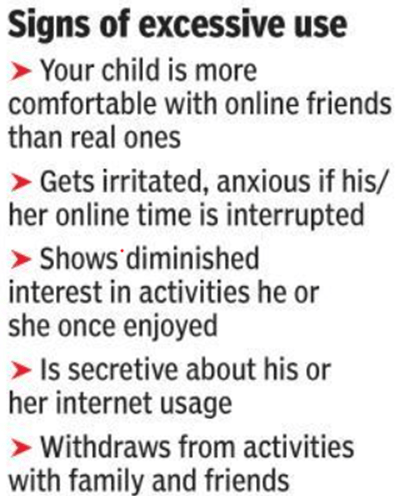
ย ย ย ย ย ย  ย What is the solution to this? ย Internet use is one of the important pillars of learning and growth in todayโ€™s time and, therefore, it may not be advisable to prevent school children from using it. ย It may be prudent to promote safe usage of the internet. Very importantly, parents should be aware of the warning signs in their children, for example behavioural changes, reduced interaction with family members, children spending most of their time in their rooms, irregular sleeping or eating habits and mood changes that may signal troublesome usage of the technologies. If the habit persists and worsens, it may be advisable to seek expert help. The problem of internet addiction isnโ€™t limited to children belonging to particular social strata, the doctors said. โ€œWe need to have more cyber addiction clinics in government hospitals so even those who cannot afford private treatment can seek timely help,โ€ said one senior medico. โ€œIt can help prevent serious mental health issues in children and even save lives.โ€ The doctor added that most children suffering from internet addiction improved with behavioural therapy and counselling. It was only in rare cases that medical management became necessary, he added.

     Advantages-Disadvantage of being a doctor

     25 factors- why health care is expensive

     REEL Heroes Vs Real Heroes

     21 occupational risks to doctors and nurses

     Covid paradox: salary cut for doctors other paid at home

   Medical-Consumer protection Act- Pros and Cons

Moral bankruptcy of administrators #unpaid doctors


     In an era when doctors are being punished for small mistakes or merely perceived negligence, the blunders committed by administrators are not even noticed. Doctors are not paid for four months and for protesting the same, they were given termination letters.  It seems that doctors need to live with blatant injustice all their lives.

 Any punishment for the  administrators for mismanagement? Looks impossible but punishment to the sufferers is on the cards.

     Medical students or aspiring doctors should be carefully watching the behaviour and cruelty by which doctors are governed, regulated and treated by administrators. Mere few words of respect and false lip service during Covid-pandemic  should not mask the real face of administrators, indifference of courts and harshness of Government towards medical profession. Choosing medical careers can land anyone into the situations, which are unimaginable in a civilized world.

    Doctors pleadings even for their rightful issues and routine problems are paid deaf and indifferent ears. It is disheartening to see that they receive apathetic attitude and dealt with stick or false assurances even for the issues which should have been solved automatically in routine even by average application of governance.

             It is discouraging for the whole medical fraternity to see that even the rightful is not being given what to expect the gratitude and respect.

         The indifferent behaviour has also unveiled the approach of  tokenism such as โ€˜mere lip serviceโ€™  showing respect to corona warriors.

      The strong political and legal will is absent to solve Doctorsโ€™ problems.

ย Unpaid doctors; Medical staff protest on- termination order?

New Delhi: Doctors, nurses and paramedical staff of East Delhi Municipal Corporation-run hospitals continued their protest on Thursday as well over non-payment of salaries for four months.
Meanwhile, an order issued by the medical superintendent of Swami Dayanand Hospital, Dr Rajni Khedwal, stated that services of all senior and junior resident doctors would be considered terminated from February 4 and fresh interviews would be conducted accordingly. The order also stated that all Diplomate of National Board (DNB) residents and contractual doctors would be marked absent.

โ€œWe all were there in the protest, none of us went for our duties. We have also asked the administration to speak on our behalf because they are too part of the hospital. Maybe the matter will be resolved tomorrow. Unless we get a concrete statement regarding salary, we will continue the protest,โ€ said Dr Atul Jain, president of the hospitalโ€™s resident doctorsโ€™ association.

Meanwhile, EDMC commissioner Vikas Anand said that no order had been issued regarding the termination/suspension of the striking doctorsโ€™ services so far. The termination order is only for the DNB workers and for the rest of the medical staff, it is based on โ€˜no work no payโ€™ as per the SC rule, he clarified.

โ€œThe salaries will be provided at the earliest. We have a very good team of doctors at Swami Dayanand Hospital. The only request is that they should join back and resume services,โ€ said the commissioner.


Anand also said that the salaries for the months of February and March would be paid on time. โ€œEDMC is going through a financial crisis and even in such difficult times, the corporation is sensitive towards the interests of its employees. Their due arrears will be paid in the month of May as per the availability of the funds,โ€ he added.

     Advantages-Disadvantage of being a doctor

     25 factors- why health care is expensive

     REEL Heroes Vs Real Heroes

     21 occupational risks to doctors and nurses

     Covid paradox: salary cut for doctors other paid at home

   Medical-Consumer protection Act- Pros and Cons


Fact sheet about Bronchial asthma


WHO- Bronchial Asthma

Key facts

  • Asthma is a major noncommunicable disease (NCD), affecting both children and adults.
  • Inflammation and narrowing of the small airways in the lungs cause asthma symptoms, which can be any combination of cough, wheeze, shortness of breath and chest tightness.
  • Asthma affected an estimated 262 million people in 2019 and caused 461000 deaths.
  • Asthma is the most common chronic disease among children.
  • Inhaled medication can control asthma symptoms and allow people with asthma to lead a normal, active life.
  • Avoiding asthma triggers can also help to reduce asthma symptoms.
  • Most asthma-related deaths occur in low- and lower-middle income countries, where under-diagnosis and under-treatment is a challenge.

What is asthma?

Asthma is a long-term condition affecting children and adults. The air passages in the lungs become narrow due to inflammation and tightening of the muscles around the small airways. This causes asthma symptoms: cough, wheeze, shortness of breath and chest tightness. These symptoms are intermittent and are often worse at night or during exercise. Other common โ€œtriggersโ€ can make asthma symptoms worse. Triggers vary from person to person, but can include viral infections (colds), dust, smoke, fumes, changes in the weather, grass and tree pollen, animal fur and feathers, strong soaps, and perfume.

The impact of asthma on daily life

Asthma is often under-diagnosed and under-treated, particularly in low- and middle-income countries.

People with under-treated asthma can suffer sleep disturbance, tiredness during the day, and poor concentration. Asthma sufferers and their families may miss school and work, with financial impact on the family and wider community. If symptoms are severe, people with asthma may need to receive emergency health care and they may be admitted to hospital for treatment and monitoring. In the most severe cases, asthma can lead to death.

Causes of asthma

Many different factors have been linked to an increased risk of developing asthma, although it is often difficult to find a single, direct cause.

  • Asthma is more likely if other family members also have asthma โ€“ particularly a close relative, such as a parent or sibling.
  • Asthma is more likely in people who have other allergic conditions, such as eczema and rhinitis (hay fever).
  • Urbanisation is associated with increased asthma prevalence, probably due to multiple lifestyle factors.
  • Events in early life affect the developing lungs and can increase the risk of asthma. These include low-birth weight, prematurity, exposure to tobacco smoke and other sources of air pollution, as well as viral respiratory infections.
  • Exposure to a range of environmental allergens and irritants are also thought to increase the risk of asthma, including indoor and outdoor air pollution, house dust mites, moulds, and occupational exposure to chemicals, fumes, or dust.
  • Children and adults who are overweight or obese are at a greater risk of asthma.

Reducing the burden of asthma

Asthma cannot be cured, but good management with inhaled medications can control the disease and enable people with asthma to enjoy a normal, active life.

There are two main types of inhaler:

  • bronchodilators (such as salbutamol), that open the air passages and relieve symptoms; and
  • steroids (such as beclometasone), that reduce inflammation in the air passages. This improves asthma symptoms and reduces the risk of severe asthma attacks and death.

People with asthma may need to use their inhaler every day. Their treatment will depend on the frequency of symptoms and the different types of inhalers available.

It can be difficult to coordinate breathing using an inhaler โ€“ especially for children and during emergency situations. Using a โ€œspacerโ€ device makes it easier to use an aerosol inhaler and helps the medicine to reach the lungs more effectively. A spacer is a plastic container with a mouthpiece or mask at one end, and a hole for the inhaler in the other. A homemade spacer, made from a 500-ml plastic bottle, can be as effective as a commercially-manufactured inhaler. 

People with asthma and their families need education to understand more about their asthma, their treatment, triggers to avoid, and how to manage their symptoms at home. It is also important to raise community awareness, to reduce the myths and stigma associated with asthma in some settings.

     Advantages-Disadvantage of being a doctor

     25 factors- why health care is expensive

     REEL Heroes Vs Real Heroes

     21 occupational risks to doctors and nurses

     Covid paradox: salary cut for doctors other paid at home

   Medical-Consumer protection Act- Pros and Cons

Quack Menace: Infant loses glans in botched circumcision


Infant loses glans in botched circumcision done by quack

        In an era, when even licensed and qualified doctors are finding it difficult to practice medicine, it is strange that unqualified and unlicensed are having a field day. Why strict regulations do not apply to them, is beyond any reasoning and logic. If a medical facility or clinic is functional, it is difficult for the patient, especially in emergency, to check or even doubt its credentials. How such facilities are open, functional and thriving. Sadly our regulation is trying to regulate, who are already regulated. It is trying to punish those who are qualified and licensed, but turns a blind eye towards unlicensed and unqualified doctors.

     Such fake doctors own medical set ups, may conduct surgeries, sometimes run hospitals with little help from qualified doctors  and do procedures. Another problem is that they   promote fake rumours about genuinely qualified doctors and create a mist of mistrust to propagate their fake medical business.

A toddler has died Australia after circumcision

Quack Menace: Infant loses glans in botched circumcision

ย The glans of an infantโ€™s penis shrivelled and fell off after a quack tied a horseโ€™s hair around it โ€˜to prevent bleedingโ€™ after a ritual of circumcision. The child was rushed to hospital, where a surgery was performed to ensure that the baby will be able to urinate normally, but the boy has lost his glans.. A quack had conducted the religious ritual of circumcision on November 22, 2021, and tied a horse hair to the childโ€™s penis. He then bandaged it and told the family to go home.

The child was born in October 2021. Ten days later, the family members noticed that the glans had come off along with the dressing. Families choose to get their male infants circumcised by neighbourhood quacks. This is not just unhygienic, but can lead to major complications as well. Other unhealthy practices like sprinkling ash on the wound after circumcision are also prevalent.

A toddler has died in Australia after circumcision

A toddler has died and his baby brother has required life-saving surgery in hospital after a medical procedure, understood to have been a circumcision, went horribly wrong in Perthโ€™s south-east. The brothers were rushed to hospital in Armadale by family Tuesday evening following the surgeries. The West Australian reports a two-year-old boy was pronounced dead at the hospitalโ€™s emergency department. His infant brother – aged between seven and eight months – was rushed to Perth Childrenโ€™s Hospital for emergency surgery.7NEWS reports he has since been discharged from hospital. WA Police have confirmed the toddlerโ€™s death is not being treated as suspicious. โ€œIt can be confirmed the boy underwent a medical procedure at a registered medical centre prior to his death,โ€ a police spokeswoman said.

Circumcision is one of the oldest surgical procedures and one of the most commonly performed surgical procedures in practice today. Descriptions of ritual circumcision span across cultures, and have been described in ancient Egyptian texts as well as the Old Testament.ย In the United States, circumcision is a commonly performed procedure. It is a relatively safe procedure with a low overall complication rate. Most complications are minor and can be managed easily. Though uncommon, complications of circumcision do represent a significant percentage of cases seen by paediatric urologists. Often they require surgical correction that results in a significant cost to the health care system. Severe complications are quite rare, but death has been reported as a result in some cases. A thorough and complete preoperative evaluation, focusing on bleeding history and birth history, is imperative. Proper selection of patients based on age and anatomic considerations as well as proper sterile surgical technique are critical to prevent future circumcision-related adverse events.

Complications of circumcision

Bleeding- Bleeding is the most commonly encountered complication of circumcision.

Infection, Insufficient Foreskin Removed, Excessive foreskin removed, Adhesions / Skin , Bridges, Inclusion Cysts, abnormal Healing

Meatitis, Meatal Stenosis, Urinary Retention, Phimosis, Chordee, Hypospadias, Epispadias

Urethrocutaneous Fistula, Necrosis of the Penis, Amputation of the Glans

Deathโ€”ย ย  ย death is an extremely unlikely complication of neonatal circumcision, but it has been reported.

     Advantages-Disadvantage of being a doctor

     25 factors- why health care is expensive

     REEL Heroes Vs Real Heroes

     21 occupational risks to doctors and nurses

     Covid paradox: salary cut for doctors other paid at home

   Medical-Consumer protection Act- Pros and Cons


Mother blames & sues social media addiction (Instagramย andย Snapchat) forย ย  daughter’s suicide


Social media has helped people communicate more and instantly. The use of social media among children has increased tremendously. But without doubt, it has great addictive potential and one such case as mentioned is reflecting just the tip of the iceberg. ย The side effects can be manifold, like psychiatric illness, loss of education, disconnection from the reality and loss of time are only a few, which are evident. ย 

Connecticut mother sues Meta and Snap, alleging they contributed to suicide of 11-year-old daughter who had ‘extreme addiction’ to social media

  • A woman in Connecticut is suing Meta and Snap, alleging their platforms played a role in her 11-year-old’s suicide.
  • Tammy Rodriguez claims her daughter killed herself in July after “struggling with the harmful effects ofย social media.”

A Connecticut mother is suing Meta, the company formerly known as Facebook, and Snap, alleging their “dangerous and defective social media products” played a role in her 11-year-old daughter’s suicide.

The complaint, filed by Tammy Rodriguez in San Francisco federal court earlier this week, claims Selena Rodriguez suffered from depression, sleep deprivation, eating disorders, and self-harm tied to her use of Instagram and Snapchat.

According to the filing, Selena began using social media roughly two years before her death by suicide in July 2021, during which time she developed “an extreme addiction to Instagram and Snapchat.” The filing also claims the 11-year-old missed school multiple times because of her social media use and that she was asked to send sexually explicit content by male users on both platforms.

Rodriguez wrote in the filing that she attempted to get her daughter mental health treatment several times, with one outpatient therapist saying she had “never seen a patient as addicted to social media as Selena.” At one point, Selena was hospitalized for emergency psychiatric care, according to the complaint.

In a statement, Snap said it couldn’t comment on the specifics of an active case but told Insider “nothing is more important to us than the wellbeing of our community.”

“We are devastated to hear of Selena’s passing and our hearts go out to her family,” a Snap spokesperson told Insider. “Snapchat helps people communicate with their real friends, without some of the public pressure and social comparison features of traditional social media platforms, and intentionally makes it hard for strangers to contact young people.”

The spokesperson continued: “We work closely with many mental health organizations to provide in-app tools and resources for Snapchatters as part of our ongoing work to keep our community safe.”

Meta and lawyers for Rodriguez did not respond to requests for comment.

Internal Facebook documents leaked to The Wall Street Journal last year revealed the company is aware Instagram can be harmful to the mental health of teenagers, with one document stating that “32% of teen girls said that when they felt bad about their bodies, Instagram made them feel worse.”

Karina Newton, Instagram’s head of public policy, wrote in a September blog post that the Journal’s story “focuses on a limited set of findings and casts them in a negative light.”

In other documents retrieved by Facebook whistleblower Frances Haugen, the company found 13.5% of teen girls said Instagram makes thoughts of suicide worse, while 17% of teen girls said Instagram exacerbates eating disorders.

After Haugen gave an interview with “60 Minutes” about the findings, Facebook previously issued this response: “It is not accurate that leaked internal research demonstrates Instagram is ‘toxic’ for teen girls. The research actually demonstrated that many teens we heard from feel that using Instagram helps them when they are struggling with the kinds of hard moments and issues teenagers have always faced. This research, like external research on these issues, found teens report having both positive and negative experiences with social media.”

Earlier this month, Angela Underwood Jacobs, the sister of a federal officer killed last year, sued Meta,ย alleging the company “knowingly promoting extremist content” that contributed to her brother’s death.

     Advantages-Disadvantage of being a doctor

     25 factors- why health care is expensive

     REEL Heroes Vs Real Heroes

     21 occupational risks to doctors and nurses

     Covid paradox: salary cut for doctors other paid at home

   Medical-Consumer protection Act- Pros and Cons

Blog at WordPress.com.

Up ↑