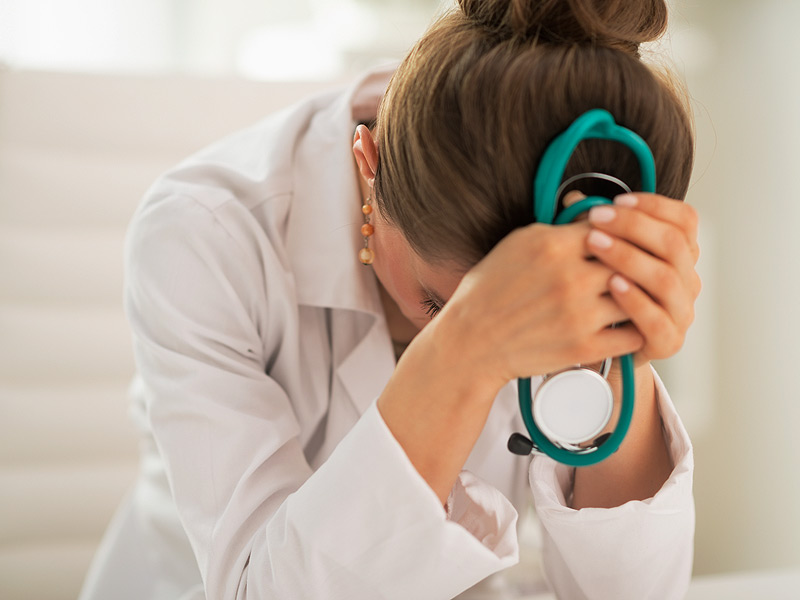
Violence at #NMMC HOSPITAL VASHI Mumbai- shame on law and order agencies


Attacks and assaults on doctors appears to be  one of the indicators of  a lawless and uncivilized society and  poor governance.  Doctors  have become punching bags for all the malaise prevalent in the  health system. A failing and inept system, which is unable to provide health to people and  security to doctors. The system  hides behind their working  doctors and presents them as punching bags. The  impunity with which attendant easily and brutally assault doctors and vandalize hospitals  is really appalling. Similar violent incidents all over  should be  shameful  to law enforcing agencies. Are we a lawless society? More problematic is the government apathy and silence of human right commission and similar organizations.

     Unwillingness or failure of government to prevent such attacks on doctors will have deep ramifications on future of medical profession. Silence of authorities, human right commission is really appalling. 

 Media, celebrities, film stars in spreading the hatred against the medical profession and creating an environment of mistrust is unpardonable, where stray incidents were portrayed as generalization, just to earn money and fame.

    Empathy, sympathy, compassion and trust  of the doctor towards the patient, will definitely get a hit after these incidents. Everyday  the news of assaults on doctors, court cases against doctors, negative projection of the medical profession   in the media are viewed  by doctor’s community anxiously..

      Merely taking some token  action and showing  protest will not solve the problem. It does not compensate for the  damage done to medical profession. Sympathy, compassion and trust of the doctors towards patients will definitely reduce. Who will be  the ultimate sufferer, does not need a Einstein brain to predict.

                    This insecurity or fear of the uncertainty tends to affect the thinking process of doctors and the way they practice medicine or deal with the patients. Many will like to be defensive in practice, or try not to treat very sick patients.  Why would someone try complex surgeries, if there is greater  risk involved? Few will limit themselves to follow protocols. Going extra mile  along with risk, which not everyone will like to take. Many will become health managers or do something else than do active clinical work. Who should risk his life while doing routine work?

     Patients might get their revenge for the  naturally occurring disease, but they will lose compassion and trust of doctors in the long run. If that is the way to impart justice in this era, doctors will have to find some way to save themselves.

Patient relatives vandalized NMMC Hospital Vashi, Mumbai

Relatives were booked for vandalising the Navi Mumbai Municipal Corporation (NMMC) hospital in Vashi following the death of a 50-year-old man. Of the seven, the four men were arrested. The patient, Venkatesh Suryavanshi, a resident of Juhu gaon, was shifted from a private hospital in Koparkhairane to the NMMC hospital on Tuesday afternoon. At the time of admission, Suryavanshi, who had tuberculosis, was in a critical condition and had very low oxygen levels. An antigen test had declared him negative for COVID-19.“At the time of admission, after checking his condition, vitals and the history papers, we had said that his chances of survival are very less. He was admitted to the ICU ward,” Prashant Jawade, medical superintendent, NMMC hospital, said.Suryavanshi died during treatment around 3.45 a.m. on Wednesday. After getting to know about the death, his sons Rupesh (22) and Sandesh (20), along with their friends Pankaj Jadhav (22) and Rohit Namwad (32) entered the ICU ward and started vandalising the department. Three women who followed them assaulted security guard Satish Dere.“I was told that they also carried a few sharp weapons with them. The security guard has received injuries. Our engineers are analysing the damage and finding the losses that we incurred,” Mr. Jawade said. Chief Medical Officer Majur Shaikh and a few other hospital staff were also allegedly attacked.

According to the police, the seven had vandalised three ventilators, one dialysis machine, two fans, one table fan, and two nurse stations.

     Advantages-Disadvantage of being a doctor

     25 factors- why health care is expensive

     REEL Heroes Vs Real Heroes

    21 occupational risks to doctors and nurses

     Covid paradox: salary cut for doctors other paid at home

TRUMP BLAMES DOCTORS FOR COVID


Unparalleled sacrifice by medical community during pandemic  has not  resulted in any enhancement of  respect or prestige to the medical  profession. It was not enough  to stop physical or verbal assaults, legal or financial  exploitation. It was sufficient  to alter the course of oppression  by administrators or moral blackmail by society.

    Sadly it is getting more worse. Doctors and nurse have been reduced to sacrificial lambs, that are easily slayed, when administrators tend  to put  themselves on high moral  pedestals.

      Financial and legal complexities have been the major side effects of modern medicine, especially for doctors. They are facing  complex  environment,  which are beyond their control. Besides financial and legal complexities, moral dilemmas, facing verbal and physical assaults are creating  complex working conditions. Criticized  by administrators despite their sacrifice, media insults are adding to their disillusionment and possibly  a withdrawal response.

    Arm chair preachers would just say “yes, as a doctor, they should do it as moral duty.”

         Media and celebrities usually   have proudly   projected on screen and television that it is right to be disrespectful towards doctors. They have made it appear correct to masses  to be disrespectful to doctors. But such  news is viewed by medical community anxiously and is definitely a poor advertisement for younger generation to take medicine as profession.

     As incidents are widely publicized and masses following their “Reel Heroes” and celebrities  to insult medical profession.

    Disrespect and media insult by celebrities towards a profession as a normal  routine  and perceived as an   easily do-able  adventure  to gather populism.

On the night of October 24th, President Trump addressed his supporters at a Wisconsin rally, located just minutes from a temporary COVID-19 field hospital, making the argument that doctors at the pandemic’s front lines are falsely capturing COVID-19 cases in order to profit from the pandemic. Undermining his own scientific experts was not enough to dispute the severity of the crisis. Now, he desperately suggests — “I don’t know, some people say…” — that America’s most trusted professionals are fabricating the rising coronavirus case numbers of the current “third spike” for personal financial gain.  

Trump’s wrong insinuations

As doctors we are outraged by Trump’s gutless insinuations. We’re not alone. The American Medical Association, American College of Physicians, and the Council of Medical Specialty Societies, leveraging the voices of over 800,000 American physicians, have each castigated Trump for his callous allegations.

The mere implication that health care professionals would be incentivized by profit to alter the true rate of this public health pandemic is reprehensible. Here’s why:

We struggle to contain the losses — and we continue to lose our own. For months, we have worked tirelessly to contain the spread of COVID-19. As we approach a quarter of a million deaths nationwide, we cannot forget the 1,700 of our own health care colleagues among that number. We are the teams that care for everyone, day and night, as we risk our own lives for the benefit of our communities. Unsurprisingly, we are burnt out. These last seven months have been a marathon in resilience, frustration, and fear. 

Here’s the truth: We label patients with COVID-19 because accurate identification of this disease is essential so we can track cases to take the quick action necessary to prevent further spread. If a patient has a history of heart disease or other medical problems, and dies in the hospital with COVID-19, we know that coronavirus exacerbated that underlying condition — and their demise. It is accurate and in line with public health principles to list it as a cause of death.

We face historic furloughs, layoffs and pay cuts. 

Here’s what’s worse: the assertions that doctors are profiting off of the pandemic are completely baseless and could not be further from the truth. Physician practices are not immune to the economic losses Americans are experiencing. One in five American physicians, whether salaried or in independent practice, have experienced pay cuts during the pandemic. Hospitals and physician practices have had to implement furloughs and layoffs to stay afloat, including furloughs at 35% of all primary care offices. More than 16,000 — or 9% — of independent physician practices have had to close entirely. 

More recent estimates suggest that hospitals, thanks to the loss of elective surgeries during pandemic spikes, will face over $300 billion in lost revenue this year alone. And this is all happening while physicians report working more hours this year — amid more uncertainty about the future of their profession.

Doctor: My Sept. 11 fear of flying made a comeback with COVID-19. Was I wrong to worry?

We still work in unsafe conditions, without the equipment needed to protect us — and you. In the spring, the images were indelible: N95 masks being reused for days on end, while nurses were covered in trash bags as a proxy for PPE. Across the country, hospitals, clinics and state agencies bid against each other for what few PPE supplies existed. All the while, President Trump accused health care workers of hoarding PPE and other medical equipment. He blamed health care workers for shortages across the nation, when the root cause of that unfolding tragedy was his administration’s unwillingness to enact a national and comprehensive strategy.

Fast forward to today, where many healthcare workers still do not have adequate PPE and continue to reuse masks, gowns and gloves meant for one-time use. This could have been easily addressed by now, had President Trump fully activated the Defense Production Act to speed up and nationalize PPE production, a request he consistently refused. 

The long road of COVID ahead

We see no end in sight. White House Chief of Staff Mark Meadows made it clear: the Trump administration has given up trying to control this pandemic. While they wave the white flag in hopes of therapeutics and vaccines becoming available in sufficient quantities for all Americans, hundreds of thousands more are projected to die. 

COVID immunity:COVID-19 herd immunity strategy fits Donald Trump’s failures in coronavirus war

The new “medical swamp” narrative emerging from the White House, while deeply disturbing, is not out of character for this administration. Since the first U.S. coronavirus case was reported in January 2020, the president has undermined his own health experts and denied the scientific evidence at every turn. 

The coming weeks and months will be dark as we continue to experience the repercussions of Trump’s callous inaction, but you have the ability to shape how this story ends. We urge all Americans to elect leadership that is morally responsible, unwilling to allow the political manipulation of science. The lives of the American people depend on it.

advantages disadvantages of medical profession

25 factors why health care is expensive

Covid-Warriors or Beggars: Doctors without pay


    Imagine a highly skilled professional community, which can be harassed, assaulted, dragged to courts and subjected to cruelty beyond imagination. Ironically, the despise to this community  comes from the  very people, whom they are trying to save.      

     Even the rightful is denied in a shameless manner, as if their lives don’t matter. During pandemic, doctor and nurses treated as dispensable disposables. A mere lip service to call them Covid-warriors  was performed, but real treatment  to these selfless health workers was akin to sacrificial lambs. 

    The plight of doctors of Hindu Rao Hospital is just an indication of the real thought process and apathy of administrators. If doctors are forced to beg for  basic fundamental rights, their situation is worse than beggars. The current unfortunate situation is enough to  convey  a message to the medical profession, the nation and is  demoralizing the entire doctor community, more so to the aspiring doctors.

Doctors at Hindu Rao Hospital unpaid for months

    Irked over non-payment of salaries, doctors and staff members of North Delhi Municipal Corporation’s Hindu Rao Hospital have decided to sit on indefinite agitation from Monday onwards. The emergency services will, however, operate smoothly.

The doctors and staff members of the hospitals have not been paid since June. Last week, the staffers were on a ‘Pen Down Strike’ from 9 a.m. to 12 p.m. to display their ordeal. According to the civic body, the matter is being looked into.

The letter written by the Resident Doctor Association to the hospital administration stated, “We apologise to announce that we are forced to go for an indefinite agitation w.e.f. October 5, 2020 considering strictly ‘No pay, No work’, while operating the emergency services smoothly.”

It added, “The chronic sufferings of the staff have been too agonizing and intractable where it is distressing to one’s mental and physical well-being, We strongly plea to you for releasing 3 months’ pay and giving us an immediate permanent solution. We also demand a formal notice regarding the same.”

The association rued that despite the High Court Order and repetitive intimations in the past, the salaries of North MCD doctors and staff are long overdue for three months and its ongoing four months.

Besides Hindu Rao hospital, doctors and nurses of other hospitals like Maharishi Valmiki Infectious Diseases, Kasturba Hospital, Girdhari Lal Maternity Hospital and Rajan Babu Institute of Pulmonary Medicine and Tuberculosis have also been protesting over non-payment of dues.

   Advantages-Disadvantage of being a doctor

   25 factors- why health care is expensive

   REEL Heroes Vs Real Heroes

   21 occupational risks to doctors and nurses

   Covid paradox: salary cut for doctors other paid at home

#NEET: Paying Irrational Fee for Medical College Seat: An Unwise Idea


At a time when medical students and even doctors are uncertain whether opting for medical college along with the vulnerability and risk associated with   becoming a doctor is worth it or not, some are naive enough to pay millions as fee for medical education and for securing a seat of MBBS.

     A famous axiom “as you sow so shall you reap” has an application to health system. One is convinced that industry selling medical college seats has been quite powerful and practically, every technique to sell seats is prevalent to bypass the merit and deny seat to deserving candidates. These meritorious children, who are denied seats could have been   good doctors and   real custodian for the health of people.  But if for some reason, business prevails and government fails to prevent this cruel and corrupt selling of medical seats, an Einstein brain is not required to guess the whole malaise prevalent in health system

         Truth cannot remain hidden for long.  It has to be realized that getting into medical college is a minuscule component of the process of becoming a good doctor.  Once they opt for this profession, the real tough and prolonged battle begins. Quite a few successful candidates may eventually feel that the money spent and the hard work may not be worth it, especially those who may have invested in heavy fees and in debt.

   Although the whole effort and huge expenditure to become doctors in this way may be really worthless in today’s scenario, considering the difficult times and vulnerability of medical profession

Paying the irrational fee of medical colleges may be an unwise idea for the candidates, who are not from strong financial backgrounds. But at the same time unfortunately, it may be a compulsion and entrapment for students, who have entered the profession and there is no way forward or fail to get residency.

The government should regulate these fees and also ensure that if a heavy fee is charged, then it should be spent on medical education of students only. It should not take a form of just any another money minting industry to be used for other purposes.

        Going by selection criteria  of candidates as doctors, if given a choice, by whom a patient will like to get treated? A candidate who scored 20% – 30 % marks or a person getting 60% or 80% marks. NEET eligibility getting lower and  candidates getting around 30 % of marks  may be able to secure a degree to treat patients.  What will be the deciding factor? So in the end, seats remain unfilled and may be a kind of auction, whosoever can pay millions, takes the seat.

    Ironically, that strange equation is acceptable in lieu of money paid!

It is ironical that the medical profession is regulated, but medical business or medical education is not.  Such business of producing doctors based on their paying capacity should be clearly trounced for the benefit of public. Foundations of healthcare should be on touchstone of merit, ethics and character and not based on business deals.

       Therefore meritorious students, especially from average backgrounds, who opt to become doctors feel cheated when they pay massive fee to buy a seat. It is an insult to the very virtue of merit which should have been the sole criteria for these admissions.

     It is the people and society, who will be the real sufferers in future. Therefore resentment to such system should come from the society.  If the society continues to accept such below par practices, it has to introspect, whether it actually deserves to get good doctors.

   Advantages-Disadvantage of being a doctor

   25 factors- why health care is expensive

   REEL Heroes Vs Real Heroes

   21 occupational risks to doctors and nurses

   Covid paradox: salary cut for doctors other paid at home

Dr Deben Dutta Mob Lynching & Murder: Lesson for Doctors


Dr Deben Dutta   lynching and murder by mob in Assam last year, was a new low in the current era of deteriorating doctor- patient relationship. In the era, where consumerism was imposed on doctors in most crude form, media and law industry taking advantage of the situation for their benefit.  Complexity of medical science has taken a back seat. The consequences and the brunt of resultant negativism were borne by doctors. Dr Deben Dutta was victim of venomous negativism spread by media against doctors in general.

     Every incidence of verbal, legal, and physical assault is a trust breaker. It is not only erosion of patient’s trust on doctors but the vice versa is also true.  As a rule of nature, as violence increases, compassion decreases. Patients might get their revenge for one stray incident, but they will lose compassion and trust of doctors in the long run. Millions of lives saved everyday by medical professionals were of no consequence.

   GUWAHATI: An Assam court on Tuesday awarded death sentence to a tea garden worker and life imprisonment to 24 others in connection with last year’s lynching of a 73-year-old doctor. Dr. Deben Dutta, a senior medical officer of the Teok Tea Estate hospital in Jorhat district, was lynched by a mob on August 31 last year for his alleged delay in treating a worker, Somra Majhi. Dutta was attacked with sharp weapons and he succumbed to his injuries on the way to a hospital. He had served at the tea garden for over four decades. His killing had triggered widespread outrage.

   The impunity   with which attendant easily and brutally assault doctors is really appalling.  Should  such incidents  be shameful to law enforcing agencies? Are we a lawless society? More problematic is the government apathy and silence of bodies like human right commission.

          In this case, at least the culprits have been brought to book and punished by the court. But still the root cause for such gruesome incident is not addressed. The danger for the medical fraternity is still lurking due to many factors. Risk to the doctor not only comes from the infectious diseases, but can be there because of physical and legal assaults. It can be just consequent  to  venting out  emotions of angry relatives, resulting from a  natural  poor prognosis, but blaming the doctor. Doctors who are universal common link present at the time of death of patients, become victims and punching bag.

       There are lessons to be learnt by doctors from such episodes. As patients are turning into   consumers, health providers cannot remain simply doctors as before. They need to develop skills to anticipate danger and save themselves.  They need to assess their place of work for their own and their family’s safety.

      Aspiring doctors should choose this profession carefully and take a well informed decision.  Such incidents are warning signs for the young generation, who are oblivious   and ignorant to the risks faced by doctors in present era.

   Advantages-Disadvantage of being a doctor

   25 factors- why health care is expensive

   REEL Heroes Vs Real Heroes

   21 occupational risks to doctors and nurses

   Covid paradox: salary cut for doctors other paid at home

Admin Apathy- Kerala Doctors to Protest State’s ‘lack of concern’


         Doctors and nurses are now  getting out of their own self-imposed moral enslavement. Rather they are now forced to do so, as their lives and deteriorating working environment are becoming impossible to be in. One cannot burn himself in a furnace for eternity, for the well-being of others, especially if others are not concerned.

      The incidents at few places are just a tip of the iceberg. Covid has helped doctors to bring forth their plight. Doctors and nurses not paid for months in some Delhi Hospitals.  Doctors openly ridiculed and scolded by Administrators for no fault of theirs. Even a doctor lynched by mob in Assam and many assaulted at other places. Hospitals vandalized indicate that there is danger lurking for doctors everywhere. Most sad part is that, there are no firm administrative hands to deal with the menace.

     Clearly Well being of doctors and nurses is not being taken care of. They are being used as dispensable disposables. Such system, which is based on exploitation of the health workers, is becoming fast unsustainable. If apathy towards their genuine problems continues, negative attitude towards doctor and nurses persists,  it will kill the empathy towards patients as well.

 Overall, a complex scenario for doctors: There is increasing discontentment amongst doctors because of this complex and punishing system. They are bound by so many factors that they finally end up at the receiving end all the time. They are under Hippocratic oath and therefore expected to work with very high morality, goodwill and kindness for the sufferings of mankind and dying patients.  They are also supposed to maintain meticulous documentation and also supposed to work under norms of  medical industry. They are supposed to see large number of patients with fewer staff and nursing support while still giving excellent care in these circumstances. And if these were not enough, the fear of courts and medico-legal cases, verbal threats, abuses, and physical assaults and show of distrust by patient and relatives further makes working difficult. Additionally there may be bullying by certain administrative systems at places, who use pressure tactics to get their own way.

Government doctors in Kerala to boycott additional duties

    The Kerala Government Medical Officers’ Association (KGMOA) has declared that government doctors will stay away from all additional duties from Thursday, in protest against the government’s apparent lack of concern about the plight of health-care workers who are overworked and fatigued, fighting on the front lines for the past nine months.

  The KGMOA has, however, made it clear that while declaring non-cooperation, COVID-19 care and disease containment activities will not be disrupted.

In a statement issued here, the KGMOA said that apart from ignoring the KGMOA’s repeated demand for deploying additional human resources in COVID-19 care activities, the government’s decision to take away the leave given to health-care workers after continuous COVID-19 duty was something that defied all principles of fairness. This was totally unacceptable, the KGMOA said here.

   Advantages-Disadvantage of being a doctor

   25 factors- why health care is expensive

   REEL Heroes Vs Real Heroes

   21 occupational risks to doctors and nurses

   Covid paradox: salary cut for doctors other paid at home

Penal Servitude for Doctors, Nurses- Administrators Delight


                         Life for health care professionals like  doctors and nurses is hard in present era, right from getting into medical college, passing the exams, gaining experience, work under new imposed legal environment, with  over-regulation and under the moral burden of over-expectations of society. The benefit of these difficult situation is reaped to the maximum by administrators and overpowering medical industry.

            Despite working amid of a national emergency in Covid-times, the meagre salaries of hundreds of doctor and nurses are not paid for months in Hindu Rao Hospital, Delhi

         Ironically where doctors are punished for small genuine mistakes or even poor prognosis during  medical treatment, the blunders of health  administrators are taken as trivial issues.  More ruthlessness, cunningness or cruelty towards health care workers is possibly becoming an appreciated quality of health administrators.  Why no punishment for the administrators for such blunders?

     Consequently, with no support from society, to whom they serve, doctor and nurses gradually are pushed to a penal servitude. If this is regarded as normal in present era, anyone would wonder, what does slavery constitute?

   No salaries  for doctors for four months

The doctors alleged negligence and apathy on part of the government and said that they were unable to run their basic errands and accomplish their daily routine due to non-payment of salaries.

  Irked over non-payment of salaries for over four months in a row, doctors at Delhi’s Hindu Rao Hospital announced that beginning Saturday, October 10, they would stop attending to patients including those suffering from Covid-19. Hindu Rao Hospital, the largest municipal hospital in Delhi with 900 beds, is currently a dedicated Covid-19 facility.The doctors alleged negligence and apathy on part of the government and said that they were unable to run their basic errands and accomplish their daily routine due to being unpaid for months.Abhimanyu Sardana, President of the Resident Doctors’ Association (RDA) of the hospital, said that several letters and reminders had been sent to Delhi Chief Minister Arvind Kejriwal regarding the issue faced by the doctors, who are frontline warriors at the Covid-19 dedicated facility. “Don’t ignore the basic needs and rights of doctors,” wrote the RDA-Hindu Rao.

            Be it any circumstances like working without any facilities, poor infrastructure, non-availability of drugs, inhuman duties hours over 48-72 hours or poor pay, the administrators would say, “you are a doctor, it is your moral responsibility.”  Armchair preachers and administrators will always remind them of moral duties, but easily forget their own.

   25 factors- why health care is expensive

   REEL Heroes Vs Real Heroes

   21 occupational risks to doctors and nurses

   Covid paradox: salary cut for doctors other paid at home

advantages disadvantages of being a doctor

Moral Dilemma: Should Doctors Stop Work-if unpaid?


         From the very beginning of medical career, certain phrases are repeated to doctors and become ingrained in their memory. Be it any circumstances like working without any facilities, poor infrastructure, non-availability of drugs, inhuman duties hours over 48-72 hours or poor pay, the administrators would say, “you are a doctor, it is your moral responsibility.”  Slowly doctors will adjust, keep on working and take hardship as part of their life. Armchair preachers and administrators will always remind them of moral duties, but easily forget their own.

        Humbled by the nature of profession and blunted  retaliation reflexes due to hard training and enormous studies, gradually they become moral slaves to themselves. Enlightened people will understand the situation as attaining higher  level of hierarchy.

      All the problems are taken as  part of “Routine Life of a Doctor.”   The long  Struggle to become a doctor, slogging in wards to learn and earn degrees, work in inhuman conditions, listen to endless abuses, tolerate the false media criticism, dragged in courts for alleged negligence, work with fear of physical assaults, work without proper infrastructure and manpower, endangering their own lives, exploited by medical  industry and administrators, poorly paid and  still not respected.   

          As doctors have not retaliated to deterioration, adapted  well to the slavery, situation is worsening. A  large hospital has not paid salaries to doctors for three months. Now  there is a moral dilemma for doctors: whether to continue work  or not?

Till society understands the concealed sense of enslavement that remains hidden, while performing these duties, the suffering of the profession will not end.  A problem that is clearly visible to every one,  but not admitted till now,  is in itself an evidence for a difficult scenario to be implemented. 

     Apart from moral dilemma, doctors will worry about legal implications. In present era,  amid maze of legal complexities, dilemmas are  unending. Among all such complexities, they have to worry about patients also.

    A strange situation, where thousands are being paid sitting at home,  The real warriors are unpaid.   Covid paradox: salary cut for doctors other paid at home

The resident doctors of Hindu Rao Hospital: indefinite strike from October 5 considering strictly ‘no pay no work’ 

NEW DELHI:  The resident doctors of Hindu Rao Hospital, the biggest medical facility under the North Delhi Municipal Corporation, will be staging an agitation against the administration due to their failure of paying the salaries of the healthcare workers over the past three months, said the president of the doctor’s body Abhimanyu Sardana.

The RDA of the hospital, which is also a dedicated Covid-19 facility, has decided to go on an indefinite strike from October 5 considering strictly ‘no pay no work’. However, essential services won’t be affected.


   Disadvantage of being a doctor

   25 factors- why health care is expensive

   REEL Heroes Vs Real Heroes

   21 occupational risks to doctors and nurses

   Covid paradox: salary cut for doctors other paid at home

Chilling Story: Surgery that Killed the Surgeon Himself


Doctor' suicide or murder by media trial

        Aspiring doctors, especially those who spend millions and golden years of life to become doctors, should know the reality of present era. How cruel the society has become towards doctors.

      Struggling to become a doctor, slogging in wards to learn and earn degrees, work in inhuman conditions, listen to endless abuses, tolerate the false media criticism, dragged in courts for alleged negligence, work with fear of physical assaults, work without proper infrastructure and manpower, endangering their own lives, exploited by medical  industry and administrators, poorly paid and  still not respected.    Arm chair preachers would just say “yes, as a doctor, they should do it as moral duty.”

         Not only corona virus, but society may also drive doctors to death.

    The consequence and reverberations of the poor prognosis landed on the doctor, subsequent to the death of the patient.  Media and celebrities usually   have proudly   projected on screen and television that it is right to be disrespectful towards doctors. They have made it appear correct to masses that doctors  be beaten and assaulted, in case there are unexpected results or in case of dissatisfaction. But such  news is viewed by medical community anxiously and is definitely a poor advertisement for younger generation to take medicine as profession. As incidents are widely publicized and masses following their “Reel Heroes” depicting violence against the doctor is seen as a routine and looked as an   easily do-able  adventure  due to  non-willingness of  authorities to take stringent action.

Kerala: Doctor ends life, medical fraternity blames ‘social media trial’

In a tragic incident, a young doctor from Kerala has died by suicide, reportedly after facing allegations of negligence following the death of a patient in his clinic.

Dr Anoop Krishnan, an Orthopedic Surgeon who used to run Anoop Ortho Care Hospital in Kollam was found hanging inside his house on Thursday. He had also cut his vein before hanging himself. The young medic had also inscribed the word ‘sorry’ with his blood inside the bathroom before he took the extreme step.

The 35-year-old was reportedly under stress for days after a 7-year-old girl who he had operated in his clinic died due to some complications.

The girl who also had a heart condition was admitted to Anoop Ortho Care Hospital for a surgery to fix a bent on her leg. Due to the girl’s heart condition, many others had reportedly declined to perform the surgical procedure.

Following the death of the patient, her relatives had filed a complaint against Dr. Anoop for negligence, alleging that an error in giving anesthesia caused the death. There were also protests outside the hospital by the relatives of the girl and an alleged smear campaign online against Dr. Anoop and his family. This, according to people who knew him had affected the young doctor who had made a reputation as one of the best orthopedic surgeons in the city.

Police said they are yet to ascertain whether the suicide was directly linked to the patient’s death.

  Advantages Disadvantage of being a doctor

   25 factors- why health care is expensive

   REEL Heroes Vs Real Heroes

Covid effect: Reasons for costly oxygen


Oxygen has been a essential lifesaving therapy for covid patients. As large numbers require oxygen for prolonged periods because of post covid lung damage, the requirement has increased manifold. So it is in short supply and there is no dearth of people want to monetize the need. There are multiple reasons of shortage.

 The Indian express explains

   The delay in transportation of oxygen to dealers, conversion into cylinders and supply to hospitals can get long if even a tiny link in the supply chain falters.  

As Covid-19 sweeps across the country, urban and rural areas alike face an unprecedented spike in oxygen use. Around 3-5 per cent (over 50,000) of active Covid-19 cases in India have lung tissues damaged enough by the virus to require external oxygen support.

Since March, medical oxygen demand has grown from 750-800 to over 2,500 metric tonnes, and now, hospitals are struggling.

The supply 

In an ideal scenario, it takes 3-5 days for oxygen to journey from a manufacturer to a patient’s bed. But delay in transportation to dealers, conversion into cylinders and supply to hospitals can take longer if even a tiny link in the supply chain falters.

India’s big oxygen manufacturers, such as Inox Air Products, Linde India, Goyal MG Gases, National oxygen, use cryogenic distillation technique to compress air, feed it into distillation columns and get liquid oxygen. It has 99.5 per cent purity. This process, an official from Inox said, can take two-and-half-days.

The liquid oxygen is filled into special cryogenic transport tankers that maintain -180 degree centigrade temperature to travel to smaller plants in hinterlands, where liquid oxygen is converted into gaseous form, fed into cylinders and transported to the final destination – hospitals.

India has the capacity to produce 6,900 metric ton of liquid oxygen daily, health secretary Rajesh Bhushan said in a media interaction. According to the All India Industrial Gases Manufacturers’ Association (AIIGMA), over 2,500 tonne is being directed towards hospitals, most consumed by coronavirus patients, and another 2,000-2,300 tonne is industrial requirement each day. So if India is not exhausting its capacity of 6,900 metric tonnes, why is oxygen suddenly a concern?

Logistics

Medical oxygen demand has grown threefold in six months. “The issue is not of supply, it is of transportation and storage,” says health secretary Dr Pradeep Vyas, Maharashtra, which produces one-fifth of India’s oxygen capacity.

As demand surges, logistics are falling short. India has roughly 1,200-1,500 tankers for transport. Before the pandemic, the tankers were enough, but now they are difficult to hire and cost more.

Inox is the biggest manufacturer of liquid oxygen in India, with capacity of 1,911 metric tonnes per day. It currently supplies 1,400 tonnes, and has 550 transport tanks and 600 drivers to supply to 800 hospitals across India. But this may soon fall short.

It can take 5-6 days, for instance, for oxygen to travel from Inox Pune plant to Osmanabad, where a dearth of oxygen has emerged. The Centre is now working to utilise nitrogen tankers to transport oxygen. In just Maharashtra, 10 more tankers have been roped in.

Then there is the problem of storing this huge quantity of oxygen, says Saket Tiku, president of AIIGMA. Most rural hospitals do not have oxygen tanks as the need never arose before. A critical Covid-19 patient can need 30-60 litres of oxygen in a minute. One cylinder can run out in 15 minutes to an hour, depending on oxygen directed to patients.

States are looking at alternatives, from buying extra dura and jumbo cylinders to installing oxygen tanks as buffer stock. Inox has got the contract to fix 64 jumbo tanks across Covid hospitals to store 4 lakh litres.

Several states have also begun construction of oxygen generation plants that convert air into oxygen, and provide 93.5 per cent purity. But this construction will take months. The AIIGMA states that across India, 500 oxygen plants are in the process of construction, of which two major ones will be in Pune (Maharashtra) and Modinagar (Gujarat).

The price rise

Oxygen is generally quite cheap, but suddenly it has become expensive. A cylinder that would earlier cost Rs 100-150 now costs Rs 500-700 for refilling. With this, hoarding has begun. Fearful of not getting a Covid bed in hospital, people are keeping oxygen cylinders at home.

Before the pandemic, it would cost Rs 1.5-2 to refill a cubic metre of oxygen. But the cost of logistics has risen, so now Delhi will find refilling costs Rs 10-15 per cubic metre, and Mumbai Rs 15 per cubic metre. The government has fixed the cost of refilling at Rs 17.49 per cubic metre.

Several private hospitals charge patients Rs 1,500-3,000 for oxygen per day. “Based on our analysis, oxygen cost cannot exceed Rs 300-400 per patient per day in a hospital,” said Dr Sudhakar Shinde, IAS officer in-charge of fixing price cap for hospitals.

The industrial sector is bearing the brunt too. Requirement for oxygen had dipped to 250 metric tonne per day in March after lockdown. As restrictions were lifted, industries restarted work. Now, the industrial requirement is at 2,00-2,500 metric tonne. But there is limited supply.

Madhya Pradesh relied on Maharashtra and Gujarat for oxygen – as supplies from these states reduced, it has turned to Chhattisgarh for supply. In some states like Maharashtra, only 20 per cent oxygen produced can be directed for industrial purposes, rest are reserved for medical use.

What government is doing

There is also the wastage of oxygen – mild cases who don’t need it are put on oxygen support, sometimes leakages are reported from oxygen pipelines. An expert committee under MoHFW has fixed oxygen supply to 40 litres in intensive care units and 15 litre per minute in normal ward per patient per minute.

It has advised to monitor patients on oxygen support daily, and only put those with oxygen saturation levels below 94 on oxygen support. As per the committee, 20 out of 100 patients turn symptomatic and three of them critical. This is the pool that may require oxygen.

In Numbers 

India’s per day oxygen production capacity: 6,900 metric tonne

Current requirement: Over 2,500 metric tonne

Oxygen Transport tankers: 1,200-1,500

Active Covid cases: 9.75 lakh

On oxygen: 5.8%

25 factors why medical treatment are expensive

Blog at WordPress.com.

Up ↑