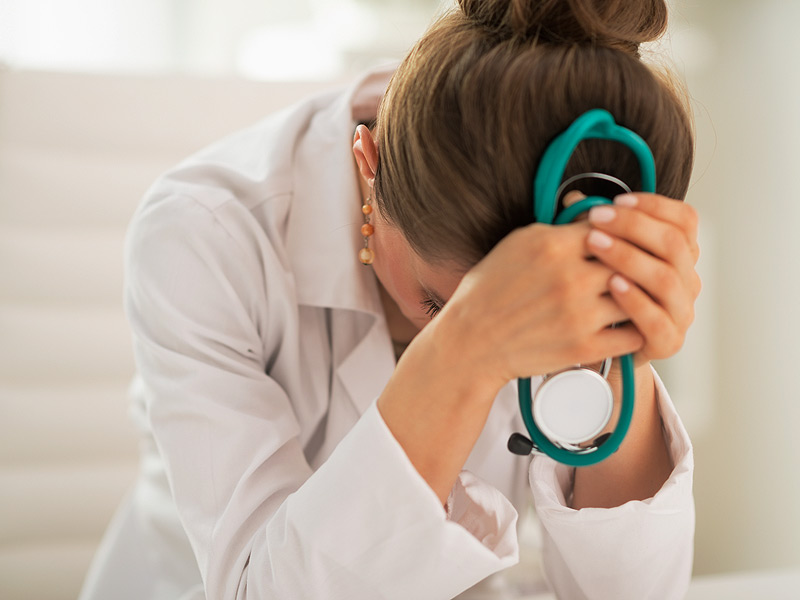
Quack menace: Patient killed by quack (Delhi): qualified doctors regulated strictly but not unqualified?


In an era, when even licensed and qualified doctors are finding it  difficult to practice medicine, it is strange that unqualified and unlicensed are having a field day. Why a strict regulation does not apply to them, is beyond any reasoning and logic. If a medical facility or clinic is functional, it is difficult for the patient, specially in emergency, to check or even doubt its credentials. How such facilities are open, functional and thriving, which does not have a qualified medical person is beyond logic. Sadly our regulation is trying to regulate, who are already regulated. It is trying to punish those who are qualified and licensed, but turns a blind eye towards unlicensed and unqualified doctors.

Such fake doctors own medical set ups, may conduct surgeries,  sometimes run with little help from qualified doctors,  and do procedures. Another problem is that they   promote fake rumours about genuinely qualified doctors and create a mist of mistrust to propagate their fake medical business.

If this is state of medical affairs prevalent in heart of capital and such facilities are functional and thriving, what will be state of affairs in peripheral or remote areas. Again it does not need an Einstein brain to guess.

The Delhi Medical Council (DMC) on Wednesday ordered criminal action against a quack whose “treatment” resulted in the death of a patient in November last year.

The hospital in which the patient was treated was also not registered with the Directorate of Health Services, Delhi. The patient was treated by an unqualified person in an unregistered hospital and did not receive proper treatment, which led to his death. The man, who had pretended to be a doctor, had been practising medicine for almost 12 years in Delhi and was a member of the Indian Medical Association (IMA), a pan-india representative organisation of doctors, and the Indian Academy of Paediatrics (IAP), a renowned association of paediatricians.

The 45 years old patient  had an undiagnosed liver disease. He went to a private hospital in Munirka ( New Delhi) around 2 pm on noticing blood in his vomit and stool. Within nine hours, the condition of the patient deteriorated and he was taken to Safdarjung hospital New Delhi , where he was declared dead on arrival at 2 am.

The patient was just put on a saline and given some antibiotics and pain medication. No diagnostic test was done to find the source of the bleeding, neither was any blood given to the patient. Any doctor can tell you the treatment was wrong. First he gave a DMC number, but the number corresponded to someone else. So, he provided  a registration number of the Goa Medical Council, again it belonged to someone else.


This is an  example of  how modern medicine is detrimental in unsafe hands, that are functional without proper training. How these fake doctors openly call themselves doctors, use prefix of Dr and register themselves somehow.   It is no less than fraud with lives of innocent public.

Neglect towards this sad reality  is akin to playing with health of innocent people. Medical organizations and media  has either  not taken it seriously or not able to take any constructive step  in curbing this menace by quacks.

Although genuine doctors face many problems from system of quackery. Misuse of antibiotics, local goonism and nuisance, all kinds of malpractice, misguiding the patient are few examples. But ultimately it is the society who is  the sufferer. Therefore resistance to such practices and  a wish to have good health system is  actually need of society. Unless people themselves make a true effort towards a robust health system, this menace of quackery is likely to persist, due  to prevalence  of  vested interests.

“NEET – NOT So NEAT” : Courtesy switch to Percentile system?


Imagine, an opportunity is available to a patient, to decide the doctor as based on his route or marks for entry into medical college. Whether patient will like to get treated by a doctor, who   secured 20% marks, 30 % marks or 60% marks or 80% marks for medical college.  Even   an illiterate person can answer that well. But strangely for selection of doctors, rules were framed so as to dilute the merit to the minimum possible. So that a candidate who scores 20 -25 % marks also becomes eligible to become a doctor. What is the need to dilute and shortlist around half a million for few thousand seats. Answer to that is simple.  To select and find only those students from millions, who can pay millions to become doctors.  

      Although the whole effort and huge expenditure to become doctors in this way may be really worthless in today’s scenario, considering the difficult times and vulnerability of medical profession. By allowing a intentional dilution of quality  can be advantageous only to  few and detrimental to others.

  • Beneficiaries are rich candidates, medical colleges who collecting fee and may be public who will get numbers of doctors. Surplus of doctors is thought to be an advantage to society. But here quality is least of the consideration.
  • Disadvantage to students, who are meritorious but can’t pay, and possibly society in long run, who is deprived of good quality doctors.


  •      A lower eligibility cut-off would mean that students with even lower percentage       of    marks will be eligible for MBBS
  • Last year, 11,114 students who scored 270 or less out of 720 got admission into medical colleges, mostly in private colleges
  • By the percentile system, last year, a student scoring 270 was within the 80th percentile

NEW DELHI: The results of the National Eligibility cum Entrance Test (NEET) for MBBS admissions for 2018 announced on Monday showed even lower cut-offs than last year. The cut-off for the unreserved category is down from 131 out of 720 marks last year to 119 this year, while the one for the reserved categories has dropped by a similar margin from 107 to 96. Over 7 lakh students from the 13 lakh plus who appeared for the exam have qualified to join medical college.

A lower eligibility cut-off for NEET would mean that students with even lower percentage of marks will be eligible to get admission for MBBS. In case you thought just being eligible would not allow those with poor scores to get admission, here’s what happened last year. Over 4,300 students who scored 180 or less in NEET actually got admission to MBBS. The overwhelming majority of them in private colleges, where high fees make it difficult for those with meagre means to join even if they have the marks.

A score of 180 out of 720 is the minimum mark a student would get if they got 40% of the answers right, even if they got all the rest wrong, with the negative marking scheme in place in NEET. Of course, 40% is the pass percentage in most exams. In terms of percentage, 180 out of 720 is a mere 25%. But going by the percentile system of NEET, 180 in 2017 meant the student was within the 64th percentile, well above the 50th percentile cut-off for the unreserved category.

Last year, 11,114 students who scored 270 or less out of 720 got admission into medical colleges, once again mostly in private colleges. If a student got half the answers right, he could not have got less than 270. Before NEET, the minimum eligibility criteria for MBBS admission was 50% through various entrance exams though the quality of some of the exams conducted by colleges themselves was dubious. By the percentile system, last year, a student scoring 270 was within the 80th percentile.
Incidentally, because there are no cut-offs specified for individual subjects within NEET, there were several cases last year of people who qualified and got admission into medical colleges with scores of zero or even negative marks in chemistry or physics. With the cut-offs dropping further this year in terms of percentage marks (though remaining the same in percentile terms), chances are we will see a repeat of worse this year.

If the society continues to accept such below par practices, it has to introspect, whether it actually deserves to get good doctors. Paying the irrational fee of medical colleges may be unwise idea for the candidates, who are not from strong financial backgrounds. But at the same time unfortunately, it may be a compulsion and entrapment for students, who have entered the profession and there is no way  forward.  So children have to be careful while choosing medical careers from the beginning.

A famous axiom “as you sow so shall you reap” has an application to health system in this scenario, so people should not rue scarcity of good doctors.  

Advantages-Disadvantage of being a doctor

25 factors- why health care is expensive

     REEL Heroes Vs Real Heroes

     21 occupational risks to doctors and nurses

     Covid paradox: salary cut for doctors other paid at home

   Medical-Consumer protection Act- Pros and Cons

Expensive Medical College  seat- Is it worth it?

Lawlessness strike docs: doctor attacked by mob SGM Hospital, Delhi


In reality violence against doctors is a law and order problem. But cleverly blame is put on doctors. Doctors can not treat mobs. That too with limited resources. Recent attack on doctors at  hospital is another example of lawless and uncivilized society.  Doctors have become punching bags for  all the malaise and inadequacy of prevalent health system. It is really appalling to see the impunity with which these incidents are happening.

Resident doctors of Sanjay Gandhi Memorial hospital in Mangolpuri   Delhi  are on  strike  for the second day. The doctors went on a flash strike on Monday after one of the  doctors  was attacked by a mob. They were  carrying  knives  and wanted to kill the doctor.

Government ‘s unwillingness or failure  to assure doctor’s protection will have deep ramifications on future of medical profession.  Role of organizations like Human right commission and other right’s bodies is also questionable.  Doctor bodies have also failed to take some concrete action other than showing some concern.  Role of media, celebrities, film stars in spreading the hatred against medical profession as a whole is unpardonable.

Every incident of verbal, legal, physical assault is a trust breaker.  It will hit  trust  and empathy of doctors  towards patients. Patients will get their revenge for naturally occurring disease, but society will be looser in the long run. Since the authorities, who matter have chosen to remain silent on the issue, doctors will have to find some way to save themselves.

Doctors at J J Hospital Mumbai assaulted: Indicator of lawless and uncivilized society


           Attacks and assaults on doctors appears to be  one of the indicators of  a lawless,uncivilized society, poor governance and  health system. Doctor have become punching bags for all the malaise prevalent in the system. A failing system which is unable to provide health to people and security to doctors. The system  hides behind their working children and doctors and presents them as punching bags. The  impunity with which attendant easily and brutally assault doctors is really appalling, that too  all over the country should be  shameful  to law enforcing agencies. Are we a lawless society? More problematic is the government apathy and silence of human right commission. Here comes the point that what is the role of our doctor’s organizations and parent hospital and institute.

         Why  in each and every case of doctor’ s assault, doctor’s bodies and organization do not file a case in the court against the  responsible  authority for security. Non action by Doctor’s Associations, bodies and organizations, not able to take a stand for their children is  most disappointing.

                                unwillingness or failure of government  to prevent such attacks on doctors will have deep ramifications on future of medical profession. Silence of authorities, human right commission is really appalling.  Role of doctor associations, parent institutes have been spineless and not encouraging.  Role of media, celebrities, film stars in spreading the hatred against the medical profession and creating an environment of mistrust is unpardonable, where stray incidents were portrayed as normal routine just to earn money and fame. Ultimately doctors have been left to fend for themselves individually or with friend groups.

 Discussion always revolves around the trust of the patients on the doctor. But in reality, situation is getting opposite gradually. Empathy, sympathy, compassion and trust  of the doctor towards the patient, will definitely get a hit after these incidents. Everyday  the news of assaults on doctors, court cases against doctors, negative projection of the medical profession   in the media are viewed  by doctor’s community anxiously.  Attack  on doctor  at  J J Hospital Mumbai is just another shameful incident today. 

        Merely taking some token  action and showing  protest will not solve the problem. It does not compensate for the  damage done to medical profession. Sympathy, compassion and trust of the doctors towards patients will definitely reduce. Who will be  the ultimate sufferer, does not need a Einstein brain to predict.

          Formal and informal discussions among medical professional at various forums  have taken a centre stage about the changing scenario. It  gives a perception that patients are loosing faith in doctors. That perception is not incorrect. But what remains hidden is that every incidence of verbal, legal, and physical assault  brings some kind of feeling of insecurity in minds of all doctors, who deal with patients.

                    This insecurity or fear of the uncertainty tends to affect the thinking process of doctors and the way they practice medicine or deal with the patients. Many will like to be defensive in practice, or try not to treat very sick patients.  Why would someone try complex surgeries with risk involved? Few will limit themselves to follow protocols. Going extra mile with risk, which not everyone will like to take. Many will become health managers or  do something else than do active clinical work. Who should risk his life while doing routine work?

  Every incidence of verbal, legal, and physical assault is a trust breaker. It is not only erosion of patient’s trust on doctors but the vice versa is also true.  As  a rule of nature, as violence increases, compassion decreases.

    Patients might get their revenge for the  naturally occurring disease, but they will lose compassion and trust of doctors in the long run. If that is the way to impart justice in this era, doctors will have to find some way to save themselves.

Tragedy at Varanasi: comparison of multiple healthy deaths due to civic negligence vs one in hospital due to disease


                There is a stark  difference in  the kind of  media  projection, burden of negligence and accountability of preventable multiple healthy deaths by civic negligence   as compared to one hospital death by disease. In fact the burden of   negligence here in healthy deaths is massive and  these deaths are unpardonable. But reality is opposite.  Strangely   “alleged and perceived negligence” ( with no proof and no investigation )  in death of someone already having disease  and death in hospital  during treatment attracts more scrutiny and   stringent  punishment   a naked “negligence  in deaths of healthy people” in such cases  of civic negligence.  

In an unfortunate incident at Varanasi , at least 19 people were crushed to death and more than a dozen injured after two concrete beams fell off 40 foot-high pillars at an under construction flyover in Varanasi on Tuesday evening. Massive civic negligence  again leading to  entirely preventable loss of lives. These incidents bring fore to my mind the misplaced priorities of media and society  which too have  contributed to  some extent to these unabated ongoing preventable   deaths  of  hundreds of  healthy people.

Multiple  Deaths  in healthy people by civic negligence :

Large numbers of death and morbidity happen amongst absolutely healthy population due to preventable causes like open manholes, drains, live electric wires, water contamination, dengue, malaria, recurring floods  etc. These deaths  of people are in thousands, and are almost entirely of healthy people, who otherwise were not at risk of death. In fact the burden of   negligence here is massive and  these deaths are unpardonable.  It’s time media took it upon itself to bring to fore these issues before accidents, so that many innocent lives. Timely action can prevent these deaths. 

       Single  Death in Hospital due to disease:

The  media has always, instead, focused on the stray  and occasional incidents of perceived alleged negligence  in hospital deaths which could have occurred due to critical medical condition of patient. However an impression is created as if the doctors have killed a healthy person. It is assumed without any investigation that it was doctor’s fault.  Media has been responsible for  creating a misunderstanding about the whole process of treatment. They have ignored other important things like civic negligence and has instead trained their entire energy in  blaming the doctors  in an effort  to get something sensational out of nothing.

The whole blame  is cleverly put  on doctors. Even after doing everything possible, doctor may be running for his life, trying to save himself from goons. He may be an object for revenge. He may be running after lawyers, if a medical lawsuit is filed. Even if court give the judgement after decades in favour of doctor, harassment of the doctor is permanent and irreversible damage is  done  to doctor. He is already punished.

Here it will be seen later, whether some one can be punished or not.

Point to ponder-Misplaced priorities:

Who is to be  blamed for  the deaths of healthy people which occur because of civic negligence? Here relatives may be helpless and  the vital questions  may go unanswered or taken as a routine.  There are no punching bags like doctor  for revenge. Any stray incident of death of an already ill patient is blown out of proportion by media forgetting the fact that thousands of patients are saved everyday by  doctors. But media instead chose to defame medical profession by igniting the emotions of people by sensationalising death of diseased and ill,  who probably were already at risk of death and did not give due importance to highlighting prevention of healthy  and absolutely 100% preventable deaths.

Right issues raised at right time will save thousands of healthy preventable deaths. Multiple  healthy deaths should carry more burden of negligence than  one death due to disease.


Pharma- Malaise may get treatment: unique IDs of drugs soon to check fakes


Usually every problem related to health is called medical malaise, but that is a misnomer.  In fact health care comprises tens of different industries. Collective malaise of all these is conveniently projected as medical malaise, related to doctors. Rest remain invisible, earn money and  doctors are blamed. As doctor is a common universal link that is visible with patient. By an average application of wisdom, it is easy to blame doctors for everything,    that goes wrong with patient.

One such problem is presence of fake medicines.  If patient gets fake or low quality medicines and does not get well or gets side effects, doctor will face harassment. Whereas people involved and industry will be sitting pretty and  make money.

Therefore any such step  to correct Pharma –malaise should be a welcome step for  doctors. Although it will be a complex issue, because of complexity involved in implementation and execution of policies. But recognition and beginning to think of the problem is also an important step.

May be a time to treat Pharma- malaise.

India’s highest advisory body on drugs will discuss a mechanism to end the menace of counterfeit medicines at a meeting on 16 May.

According to the proposal to be discussed at the Drug Technical Advisory Board meeting, consumers will be able to check whether the medicines that they have purchased are genuine by texting a unique code to be printed on the medicine’s package to a number, said two people aware of the matter, both of whom requested anonymity.

The government plans to initially build a data bank of 300 medicine brands and their consumption pattern in various parts of the country.

Drug companies will then be asked to print a unique 14-digit alphanumeric code on the package of the drug. Consumers buying the medicine can then inquire via a text message whether the code—and therefore the medicine—is genuine or not.

Pharma firms may be asked to print a unique 14-digit code on drugs’ packaging; consumers can send a text message to find out if the code is genuine or not

A government survey conducted between 2014 and 2016 had found 3.16% of drug samples it tested to be sub-standard, while 0.02% were spurious

A WHO report in 2017 revealed approximately 10.5% of medicines in low- and middle-income countries including India are sub-standard or fake


The unique identification code will help consumers avoid buying fake products. The idea is that within seconds, the person should receive a reply indicating whether the drug is legitimate.


Fake medicines lead to drug resistance in humans and cause a significant number of deaths, according to public health experts. A government survey

conducted between 2014 and 2016 to check the proportion of substandard drugs in India had found 3.16% of the samples it tested to be substandard, while 0.02% were spurious.

Significantly, even samples from big drug makers were found to be not of standard quality during the survey carried out through the National Institute of Biologicals, according to regulator Central Drugs Standard Control Organization.

Clean chit to Max doctors in baby death : media reverse news, but mistrust generated in medical profession irreversible


After five months of the incidence, media has now decided to place the correct picture before public. A fact which was very clear to medical fraternity  at the onset, was presented by section of media in a twisted form.  Venomous propaganda and unilateral versions  by media were  projected as doctor’s error, maligning the profession fully. Now the media has to give the correct picture to public after DMC inquiry. But due to wrong information propagated at that time, an environment of mistrust has been generated. Media jumped to wrong  and premature conclusions,   which  created a sense of uncertainties in the minds of patients.  Untrue assertions  about medical profession and maligning of doctors  were propagated just to  create a sensation.  Projection of true picture  by media is   of  great importance and need of hour. If media propagates a stray incidence  and makes sensational news out of nothing, it will further erode trust of public in medical profession. Media people will earn fame and money at the cost of people lives. Mistrust thus generated is definitely detrimental to medical profession as a whole, but in the long run it  will cause  irreversible harm to society.

The Delhi Medical Council (DMC) has given a clean chit to the doctors at Max Shalimar Bagh in a case where a new born was allegedly wrongly declared dead. His parents discovered that the baby was still alive when they were going to cremate him.
The state medical council, in its report to Delhi Police’s crime branch which is probing the case, has stated that the parents of the new born, delivered at 23 weeks of pregnancy, had signed the Do Not Resuscitate (DNR) document.

“International medical literature clearly suggests that fetus less than 24 weeks, if born, is not viable and not likely to survive. The Delhi Registration of Birth and Death Rules, 1999, prescribe that 28 weeks is period of gestation for it to be viable,” said Dr Girish Tyagi, registrar of DMC.  He added that there were procedural lapses and inadequate documentation, which was probably due to absence of standard operating guidelines when managing such cases. “We have written to the Centre and the state to develop protocol for dealing with them in the future,” Tyagi said.

Media should be  show responsibility and refrain from making early conclusions specially in cases involving medical complexities. Defaming the medical profession just on unilateral version of the story may help  media make some money but can be highly detrimental for the society in future.   Damage to doctor patient relationship and trust is irreversible. Can now media undo the damage done to medical profession and mistrust generated between patient and doctor?

Death of radio executive TANIA: result of misplaced priorities of media in civic negligence: hundreds healthy deaths vs one in hospital due to disease


        Just Compare the media  projection, burden of negligence and accountability of  hundreds of healthy deaths by civic negligence   with one hospital death by disease. In fact the burden of   negligence here in healthy deaths is massive and  these deaths are unpardonable. But reality is opposite. It is just to compare how  a naked “negligence  in deaths of healthy people” in such cases   to the  “alleged and perceived negligence ( with no proof and no investigation )  in death of someone already having disease  and death in hospital”  during treatment  is projected by our society and  media. 

An unfortunate incident   of untimely death of a young and talented person happened yesterday due to civic negligence.  The family lost their dear daughter due to an incident which was totally preventable . Another recent incident was of unlicensed school vans being driven rashly, again leading to  entirely preventable loss of lives. These incidents bring fore to my mind the misplaced priorities of media and society  which too have  contributed to  some extent to these unabated ongoing preventable   deaths  of  hundreds of  healthy people.

An open drain and a poorly lit road claimed the life of a young executive in Noida in the early hours of Wednesday. The victim, Tania Khanna was driving  car that plunged into the eight-foot-wide drain. Such a huge drain has been left uncovered and there is no proper mechanism of streets lights in the area. There is also no CCTV camera installed there. Noida Authority officials did not respond to requests for a comment.

An open drain next to a road with no barrier or signage and not even street lighting is a recipe for disaster. No civilized part of the world would allow such a situation to exist. That this particular area is still in the process of being developed is beside the point. Whether an area is fully developed or is being developed, there should either be no open drain or if there is one that has not yet been covered, it must be clearly separated from the road and pavements by barriers. There should also be clear signs warning people of the potential danger and lighting to ensure they can see it. That this is not done amounts to negligence by the civic authorities, for which individual accountability must be fixed and action taken.

Multiple  Deaths  in healthy people by civic negligence :

Large numbers of death and morbidity happen amongst absolutely healthy population due to preventable causes like open manholes, drains, live electric wires, water contamination, dengue, malaria, recurring floods  etc. Which somehow are never made as headlines or breaking news by media due to lack of sensational substance. These deaths  of people are in thousands, and are almost entirely of healthy people, who otherwise were not at risk of death. In fact the burden of   negligence here is massive and  these deaths are unpardonable.  It’s time media took it upon itself to bring to fore these issues so that many innocent lives of  many more healthy people like Tania can be saved.


       Single  Death in Hospital due to disease:

The  media has always, instead, focused on the stray  and occasional incidents of perceived alleged negligence  in hospital deaths which could have occurred due to critical medical condition of patient. However an impression is created as if the doctors have killed a healthy person. It is assumed without any investigation that it was doctor’s fault.  Media has been responsible for  creating a misunderstanding about the whole process of treatment . The patient coming to hospital already is diseased and some are critical and have a finite percent chance of death. The doctor tries his best to treat him but  may not always succeed. Making an issue out of a hospital death of a sick patient despite the doctors’ best efforts may get some high viewership to the paper but is it right?  No. They have ignored other important things like civic negligence and has instead trained their entire energy in  blaming the doctors  in an effort  to get something sensational out of nothing.

The whole blame  is cleverly put  on doctors. Even after doing everything possible, doctor may be running for his life, trying to save himself from goons. He may be an object for revenge. He may be running after lawyers, if a medical lawsuit is filed. He may have to stand like a culprit in front of relatives of deceased, who can abuse or threaten him in the language they choose, in garb of emotional outburst. Doctors are advised in such situations to be calm and suffer silently or just apologize, as it is thought to be correct in front of relatives stuck with grief. Even if court give the judgement after decades in favor of doctor, harassment of the doctor is permanent and irreversible damage is  done  to doctor. He is already punished.

Here it will be seen later, whether some one can be punished or not.

Point to ponder-Misplaced priorities:

Who is to be  blamed for  the deaths of healthy people which occur because of civic negligence? Here relatives may be helpless and  the vital questions  may go unanswered or taken as a routine.  There are no punching bags like doctor  for revenge. Any stray incident of death of an already ill patient is blown out of proportion by media forgetting the fact that thousands of patients are saved everyday by  doctors. But media instead chose to defame medical profession by igniting the emotions of people by sensationalising death of diseased and ill,  who probably were already at risk of death and did not give due importance to highlighting prevention of healthy  and absolutely 100% preventable deaths.

      Is  it due to a misplaced priorities of  the media or in an effort to create sensational news? Had media made an appropriate noise about right  issues and scratched the right pole for  preventing  death of healthy people , Tania might have been alive today and thousands more.

Hospital, Doctors fined for unfair trade practices: Doctors “ be clinically and legally correct so as to save themselves”


Since Hannurabi times  1750BC, medical profession or health care has been regulated. For thousands of years, attempts  have  been made, laws enacted  to regulate or control medical treatments or doctors. It has never been perfect.  In today’s time, where medico-legal issues have become as important as much as treatment, it is strange to find such practices, where transplant was done without valid license. More importantly, it was done in a well known hospital in Delhi and not in unknown location.

Going by the news item,  Jaipur Golden Hospital New Delhi conducted renal transplant without having a valid license for the same in 2006. It could have gone unnoticed, in case  everything had gone well. But  in today’s scenario, no one accepts even small and routine  complications. So doing a procedure like transplant without license  is asking for trouble.

Medical fraternity is clear that there are no treatments without complications.  Even simple procedures can get complicated. Therefore, doing anything which is   legally not correct, can be a blunder.  Consequences of even little mistakes can be disastrous in current environment, which is not very supportive to doctors.  Temptation  for  doing procedures without being legally correct  can be many, like holding  a license previously, or just to maintain a continuity of performing a special surgery. Money generated may  or may not be a great incentive in such circumstances . Reason can be as simple as to continue doing procedure while license is awaited and take  temporary invalidity of licensing requirements lightly.

Legalities should be taken in correct perspective always.  Doctors can save themselves by just following well laid protocols and  legal requirements. This is not right  for doctors   doing  procedures against the law or without legal permissions. Because  no one, including patient will not support the doctor in adverse circumstances.

Doctors  can save themselves by   doing procedures, which are clinically and legally correct.

Expensive Medical college education (NEET) & poor health system: systematic root rot


Imagine, an opportunity is available to a patient, to decide the doctor as based on his route or marks for entry into medical college. Whether patient will like to get treated by a doctor, who   secured 20% marks, 30 % marks or 60% marks or 80% marks for medical college.  Even   an illiterate person can answer that well. But strangely for selection of doctors, rules were framed so as to dilute the merit to the minimum possible. So that a candidate who scores 20 -25 % marks also becomes eligible to become a doctor. What is the need to dilute and shortlist around half a million for few thousand seats. Answer to that is simple.  To select and find only those students from millions, who can pay millions to become doctors.  

      Although the whole effort and huge expenditure to become doctors in this way may be really worthless in today’s scenario, considering the difficult times and vulnerability of medical profession. By allowing a intentional dilution of quality  can be advantageous only to  few and detrimental to others.

  • Beneficiaries are rich candidates, medical colleges who collecting fee and may be public who will get numbers of doctors. Surplus of doctors is thought to be an advantage to society. But here quality is least of the consideration.
  • Disadvantage to students, who are meritorious but can’t pay, and possibly society in long run, who is deprived of good quality doctors.


Dilution of Merit :

  • Before NEET was made mandatory in 2016, the cut-offs for admission were 50% marks for the general category, and 40% for the reserved categories. From the 2016 admission year, these were changed to 50th and 40th percentile, respectively, opening the doors to candidates with just 18-20% marks in the NEET aggregate. Thereby candidates securing 5% marks (physics) and 20% in  biology are also eligible to be doctors (times of India).
  • The student with the highest NEET marks among those admitted into the private university had lower marks than the last student admitted to the open category in each of the government colleges.
  • In the private university, the fees for the MBBS course are Rs 64 lakh compared to just Rs 4 lakh in the government colleges.
  • when NEET was introduced, many private colleges increased their tuition fees many fold.  This  ensured that meritorious students without money would never get admission. The tuition fee is fixed arbitrarily to cater to only rich or super rich students. (times of India)         System of medical business and  medical education is created based on willful dilution of merit.   Quite a few successful candidates may eventually feel that the money spent and the hard work may not be worth it especially those candidates who may have invested in heavy fees or bought a seat in medical colleges with hefty amount. Some of them, who invested millions for becoming doctors, will be even probably unable to recover their investments. The students with strong financial backgrounds may be more benefited as they can become health  investors or health managers. But for others, it could be a dream turning into a nightmare.

    If the society continues to accept such below par practices, it has to introspect, whether it actually deserves to get good doctors. Paying the irrational fee of medical colleges may be unwise idea for the candidates, who are not from strong financial backgrounds. But at the same time unfortunately, it may be a compulsion and entrapment for students, who have entered the profession and there is no way  forward.  So children have to be careful while choosing medical careers from the beginning.

    A famous axiom “as you sow so shall you reap” has an application to health system in this scenario, so people should not rue scarcity of good doctors.  

Blog at WordPress.com.

Up ↑