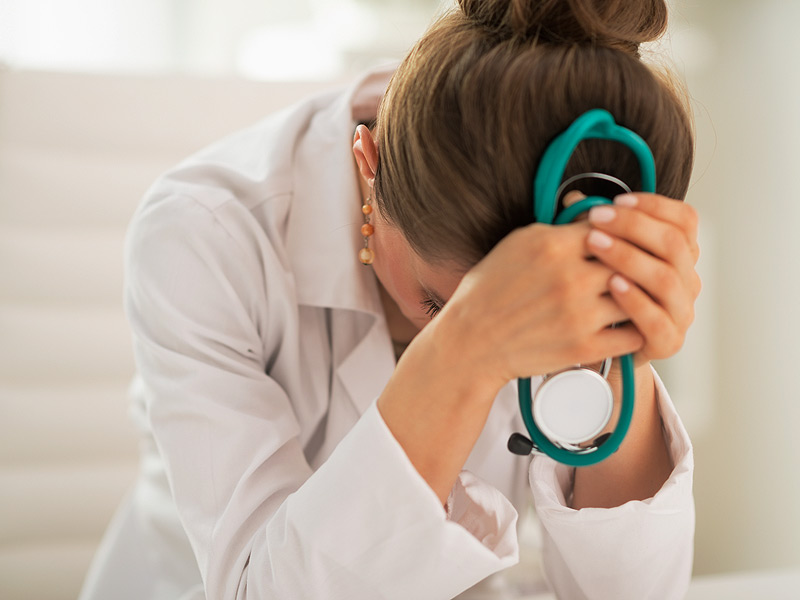
“Doctor, why to risk yourself for petty gains?” Telephonic treatment is negligence: Bombay High Court


“Doctor, save the patient, but save yourself also”.

In medicine, any small or big disease or  procedure can have complications.  Frequently, dangerous complications have a subtle and insidious onset with very little symptoms. DVT and pulmonary thrombo- embolism is a known and life threatening complication associated with pregnancy.  This complication and the unfortunate  scenario that  happened  is not unknown and has a potential to recur. So doctors need to learn from such incidences to save themselves.

Since the overall scenario of medical complication and consumerism have undergone a sea change, doctors need to  be careful and change their approach to save from legal issues arising from these. They have to make sure that each small problem  has to be seen carefully in person, as it may harbour a serious threat.

Observing that prescribing medicines to patients without diagnosis amounted to culpable negligence, the Bombay High Court has turned down the anticipatory bail pleas of a doctor couple booked for the death of a woman patient. The doctors have been booked by the Ratnagiri Police under section 304 of Indian Penal Code (culpable homicide not amounting to murder) after the patient died earlier this year. According to the police, the woman was admitted to the accused couple’s hospital in Ratnagiri in February this year where she underwent caesarean operation and gave birth to a baby. The court order said the woman and the child were normal and were discharged two days later. The doctor spoke with the chemist who then gave some medicines to the relatives of the woman. However, even after taking the medicines, the woman did not feel better and was taken to the same hospital, it said. When the woman’s condition deteriorated the next day, the doctors at the hospital shifted her to another hospital, where she died, it said.

   Question arises, why  doctors commonly   need to prescribe by telephonic advice,  specially as in this case, if the doctor themselves were not available.  what made them  to enter into such a dangerous situation? Do  really there are substantial gains to risk so much and everything in life? The reasons:

  1. Most of the time, to retain the patient. As they already treated the patient, It is a natural tendency to  continue the treatment. Factors here are loyalty issues and loosing patient to other physicians.
  2. Sometimes patient request, to avoid coming to hospital or to avoid visiting unknown hospital or other doctors. It is not uncommon that patients request some advice on phone.
  3. Symptoms do not look dangerous or alarming. Patient interpretation is not appropriate. Even myocardial infarction ( heart attack) is taken  as due to “wind problem.”  Main problem here is that doctor is relying on patient’s interpretation, which is likely to be incorrect.
  4. Most dangerous is a friendly advice or relatives. Where it is mistake of both doctor and patient.
  5. Patient is far off and for convenience


So  “Gains” in such situations are nil or petty.

Rarely it is done for earning money. It is just done for the sake of convenience. But doctors should  wake up in  the era of consumerism, where no one is going to pardon them for  mistakes.  Retrospective analysis gained with wisdom of hindsight makes them repent many times more than petty gains.

Doctor need to forgo petty gains in order to save themselves. Do not take chances. No one will realize later, what were the causes and intentions behind the mistake.

“Doctor, save the patient, but save yourself also”.


Zero marks & still can be doctor (#NEET). Society deserves the doctors, it chooses and nurtures.


Rot of exorbitantly expensive medical education and lowered merit  has been systematic. Aspiring doctors are now forced to pay exorbitant fee,  in millions. Many go under heavy debt to pay medical colleges fee. Children with lower ranks in merit pay millions and can  become doctors. The real problem here is that real deserving will be left out.

Medical students from the very onset are victim and witness to  these practices and   exploitation. They see their parents pay this unreasonable fee through their noses or take loans. Such blatant injustice  will have an everlasting effect on the young impressionable minds. Society gives them lessons of corruption and exploitation.

Our society fails to develops a robust system of choosing and  nurturing  good doctors and therefore  itself responsible for decline in standards of medical profession.

Some MBBS students got zero or less in NEET papers

With no cut-off for individual subjects – physics, chemistry and biology—in the NEET entrance exam, at least 400 students with single-digit marks in physics and chemistry and 110 students with zero or negative marks in them have been admitted for MBBS in 2017, mostly in private colleges. This raises a question. If getting zero in these subjects doesn’t make a person ineligible for admission, why bother to test in that subject at all? Interestingly, the original notification to adopt a common entrance examination had stipulated that students should score at least 50% in individual subjects. However, the subsequent notification, which brought in the percentile system, dropped the stipulation on marks in individual subjects. TOI analysed the subject marks of 1,990 students who got admitted to MBBS with NEET scores of less than 150 out of 720 in 2017. it was found that 530 with single-digit marks, zero or less in physics or chemistry or even both.


Doctors are just as offshoots of a tree called as society. They essentially are the same as rest of the society.  It is a specialized branch of tree which helps other offshoots of tree to save others.  As  part of same tree, they resemble the parent society, of which they are part.  Society needs to choose and nurture a force of doctors carefully with an aim to combat for  safety of its own people.  

       Apple tree will have apples and musk melons plant will  grow muskmelons only.  One should not expect apples to grow on muskmelon stem. If society has failed to demand for a good and robust system, failed to save them, it should not  rue scarcity of good doctors. Merit based cheap good medical education system is the need of the society. This is in interest of society to nurture good doctors for its own safety.

What is the need to dilute and shortlist around half a million for few thousand seats. Answer to that is simple.  To select and find only those students from millions, who can pay millions to become doctors.  

      Although the whole effort and huge expenditure to become doctors in this way may be really worthless in today’s scenario, considering the difficult times and vulnerability of medical profession. By allowing a intentional dilution of quality  can be advantageous only to  few and detrimental to others. 

If the society continues to accept such below par practices, it has to introspect, whether it actually deserves to get good doctors. Paying the irrational fee of medical colleges may be unwise idea for the candidates, who are not from strong financial backgrounds. But at the same time unfortunately, it may be a compulsion and entrapment for students, who have entered the profession and there is no way  forward.  So children have to be careful while choosing medical careers from the beginning.

A famous axiom “as you sow so shall you reap” has an application to health system in this scenario, so people should not rue scarcity of good doctors.     Therefore the quality of doctors who survive and flourish in such system will be a natural consequence of  how society chooses and nurtures the best for themselves.


#NEET:Society deserves the doctors, it chooses and nurtures. Musk-melon stem will not grow apples


Doctors are just as offshoots of a tree called as society. They essentially are the same as rest of the society. It is a specialized branch of tree which helps other offshoots of tree to save others. As part of same tree, they resemble the parent society, of which they are part. Society needs to choose and nurture a force of doctors carefully with an aim to combat for safety of its own people.

Since it is a difficult path to be a good doctor, there has to be some reason why someone will choose to be a doctor. The path will require sacrificing golden years of his life in studies and working hard for the benefit of others thereafter.

Our society fails to develops a robust system of choosing and nurturing good doctors and therefore itself responsible for decline in standards of medical profession.

  1. Exorbitantly expensive medical education and lowered merit: aspiring doctors are now forced to pay exorbitant fee, in millions. Many go under heavy debt to pay medical colleges fee. Children with lower ranks in merit pay millions and can become doctors. The real problem here is that real deserving will be left out.

Medical students from the very onset are victim and witness to these practices and exploitation. They see their parents pay this unreasonable fee through their noses or take loans. Such blatant injustice will have an everlasting effect on the young impressionable minds. Society gives them lessons of corruption and exploitation.

  1. Discouragement of medical fraternity: The adage “To err is human” probably does not apply to the doctors anymore. Hence they are harassed often for any adverse clinical outcome even though it may be because of poor prognosis of patient. They work under continuous fear and stress and are punished and assaulted for each small or big error. Society has failed to support them in their difficult times. Best and talented may try to shun away from the profession.
  2. Industry earns, but blames doctor: Till now, doctor patient interaction was the central point of the health industry, a core around which medical industry revolved. But now this interaction, treatment and almost everything is controlled by industry. By provoking controversy about doctors for varied reasons, medical industry and law has positioned themselves between the doctor and patient and taken a center stage in health care. Every one associated with industry like medical education, pharmaceutical, suppliers, insurance, administrators, managers, equipment industry, insurance earn from the medical sector, but remain invisible. Blame for all the cost and sufferings is conveniently put on the doctor hence causing diminution of respect. Loss of respect for the profession is a bad advertisement for good talent to the profession.
  3. Overzealous regulation of medical profession: because of falling standards, every one is feels a need for stricter punishing regulation of medical profession. Time and resources which should have been utilized for treatment of patients, has to be used for complex documentation, frivolous medical lawsuits and communication. It is not uncommon to use doctors as scapegoats to save the weak health system causing further oppression of medical profession.
  4. Exploitation by law industry: Even in few advanced countries, one can see instigating advertisement of lawyers on zero percent fee. While doctor is paid miniscule amount of money by patients, he will be sued for millions. And lawyers change in lakhs. Money earned by medical lawsuit is divided between client (so called patient) and lawyer. Doctor will definitely divert their energies to save themselves from such practices rather than focusing on treatment of patient. In an era, where brothers and sisters fight for money, doctors are easiest target to extract money.
  5. Defining the patient as consumer has created fear in mind of doctors and deterioration of doctor patient relationship.
  6. Wrong projections by media: Painful retrospective analysis of work of doctor by media, courts and public continue. One stray incidence of even alleged or perceived negligence is projected as generalization. Whole profession is painted in poor light. Whole community looses respect because of irresponsible behavior of some people in media to earn quick money and fame. Ultimately it will help everyone except doctor and patient and discourage the excellence in medical care.
  7. Doctor’s assault: the inability and lack of support of society to prevent assault against their savior will hit the enthusiasm of doctors towards patients. It will propagate children’s unwillingness to enter the profession amidst chaotic conditions.

Apple tree will have apples and musk melons plant will grow muskmelons only. One should not expect apples to grow on muskmelon stem. If society has failed to demand for a good and robust system, failed to save them, it should not rue scarcity of good doctors. Merit based cheap good medical education system is the need of the society. This is in interest of society to nurture good doctors for its own safety.

Therefore the quality of doctors who survive and flourish in such system will be a natural consequence of how society chooses and nurtures the best for themselves.

Digital Gaming addiction defined as a mental disorder by World Health Organisation


  • WHO described the addiction as a “pattern of persistent or recurrent gaming behaviour” that becomes so extensive it “takes precedence over other life interests”
  • Gaming disorder can lead to disturbed sleep patterns, diet problems and deficiency in physical activities


Digital Gaming  Addiction

Although   substance addiction with  drugs or alcohol is well recognized, newer  addictive behaviors are now being realized as well. As  digital and vedio gaming has been quite popular now, compulsive gaming and  severe withdrawal symptoms in game addicts are getting commoner. A child/ adult needs more of a  game  to keep him going. If the child does not get more of the game, he becomes irritable and miserable.

If parent try to prohibit gaming, children exhibit  anger, violence, or depression. The children cry, sit in the corner and cries, refuses meals or sleep.

For  compulsive gamers, it is  the fantasy world that makes them feel better.

The lure of a fantasy world is especially pertinent to online role-playing games. These are games in which a player assumes the role of a fictional character and interacts with other players in a virtual world. As  A child can  show his dominance in the game. There fore virtual life becomes more appealing than real life.

possibility of harm: gaming addiction can ruin lives. Children who play few hours per day have  no time left for socializing, studies, or sports. Social development is poor.

In older people or adults  it can have effect on professional life and relationships.


Warning signs for  gaming  addiction include:  The important  issue here is  whether one is  able to control  gaming activity or not:

  • Playing for increasing amounts of time
  • Thinking about gaming during other activities
  • to choose gaming to escape from real-life problems, anxiety,  depression
  • Lying to friends and family to conceal gaming
  • Feeling irritable when trying to cut down on gaming

Gaming addicts tend to become isolated, giving up other hobbies and  withdrawn from other activities.

Parents need to be careful

Parents need to be careful and not take it as another routine phase of childhood.  Keep  track of  child’s gaming behavior, including:

  • for how long and frequently  the child plays.
  • Problems resulting from gaming
  • How the child reacts to time limits

to get rid of the game addiction, these children need to be taught about the advantages of real life excitement as opposed to online achievements.

Addiction to digital and video gaming has been classified as a mental health disorder by the World Health Organisation (WHO) in its new International Classification of Diseases (ICD).

The agency described the addiction as a “pattern of persistent or recurrent gaming behaviour” that becomes so extensive it “takes precedence over other life interests

The classification is aimed at alerting health professionals and systems to the existence of this condition and ensuring that people suffering from these conditions can get appropriate help.

Gaming disorder” has three main characteristics. One, that the gaming behaviour takes precedence over other activities to the extent that other activities are pushed to the periphery.


If the condition leads to significant distress and impairment in personal, familial, social, educational or occupational functioning.

Gaming disorder can lead to disturbed sleep patterns, diet problems and deficiency in physical activities.

The 11th edition of ICD covers 55,000 injuries, diseases and causes of death. Researchers across the world use it as reference for data, whereas doctors and other medical practitioners use it to diagnose disease and other conditions. The ICD is also used by health insurers in some countries to claim reimbursements based on ICD coding.

Besides, the classification is used by national health program managers; data collection specialists; and others. The new ICD-11 also reflects progress in medicine and advances in scientific understanding.

Quack menace: Patient killed by quack (Delhi): qualified doctors regulated strictly but not unqualified?


In an era, when even licensed and qualified doctors are finding it  difficult to practice medicine, it is strange that unqualified and unlicensed are having a field day. Why a strict regulation does not apply to them, is beyond any reasoning and logic. If a medical facility or clinic is functional, it is difficult for the patient, specially in emergency, to check or even doubt its credentials. How such facilities are open, functional and thriving, which does not have a qualified medical person is beyond logic. Sadly our regulation is trying to regulate, who are already regulated. It is trying to punish those who are qualified and licensed, but turns a blind eye towards unlicensed and unqualified doctors.

Such fake doctors own medical set ups, may conduct surgeries,  sometimes run with little help from qualified doctors,  and do procedures. Another problem is that they   promote fake rumours about genuinely qualified doctors and create a mist of mistrust to propagate their fake medical business.

If this is state of medical affairs prevalent in heart of capital and such facilities are functional and thriving, what will be state of affairs in peripheral or remote areas. Again it does not need an Einstein brain to guess.

The Delhi Medical Council (DMC) on Wednesday ordered criminal action against a quack whose “treatment” resulted in the death of a patient in November last year.

The hospital in which the patient was treated was also not registered with the Directorate of Health Services, Delhi. The patient was treated by an unqualified person in an unregistered hospital and did not receive proper treatment, which led to his death. The man, who had pretended to be a doctor, had been practising medicine for almost 12 years in Delhi and was a member of the Indian Medical Association (IMA), a pan-india representative organisation of doctors, and the Indian Academy of Paediatrics (IAP), a renowned association of paediatricians.

The 45 years old patient  had an undiagnosed liver disease. He went to a private hospital in Munirka ( New Delhi) around 2 pm on noticing blood in his vomit and stool. Within nine hours, the condition of the patient deteriorated and he was taken to Safdarjung hospital New Delhi , where he was declared dead on arrival at 2 am.

The patient was just put on a saline and given some antibiotics and pain medication. No diagnostic test was done to find the source of the bleeding, neither was any blood given to the patient. Any doctor can tell you the treatment was wrong. First he gave a DMC number, but the number corresponded to someone else. So, he provided  a registration number of the Goa Medical Council, again it belonged to someone else.


This is an  example of  how modern medicine is detrimental in unsafe hands, that are functional without proper training. How these fake doctors openly call themselves doctors, use prefix of Dr and register themselves somehow.   It is no less than fraud with lives of innocent public.

Neglect towards this sad reality  is akin to playing with health of innocent people. Medical organizations and media  has either  not taken it seriously or not able to take any constructive step  in curbing this menace by quacks.

Although genuine doctors face many problems from system of quackery. Misuse of antibiotics, local goonism and nuisance, all kinds of malpractice, misguiding the patient are few examples. But ultimately it is the society who is  the sufferer. Therefore resistance to such practices and  a wish to have good health system is  actually need of society. Unless people themselves make a true effort towards a robust health system, this menace of quackery is likely to persist, due  to prevalence  of  vested interests.

Eating alone is Important cause of sadness?


As part of Sainsbury’s Living Well Index, developed in partnership with leading researchers Oxford Economics and the National Centre for Social Research, the retailer surveyed more than 8,000 British adults to investigate how people can live better day-to-day.

However, the data gathered inadvertently revealed that the mood of the nation has declined over the last six months with a drop of 0.5 points to an average of 60.7. While much of the drop appears to be linked to seasonal factors such as extreme weather and public transport chaos, the index discovered more surprising reasons for people’s unhappiness.

Interestingly, it found that eating meals alone is strongly associated with unhappiness  other  than having a mental illness. In this case, people who ate by themselves scored 7.9 points lower than the national average, compared with someone who always eats in company.
Mental health was found to have the strongest negative association with wellbeing, with those who reported conditions such as anxiety, depression, panic attacks or compulsive behaviour scoring 8.5 points below the average figure. Other issues associated with unhappiness included limited physical mobility where participants scored 5.4 points lower, while people with a learning disability scored 3.7 points lower.
Conversely, eating with others had one of the highest positive associations with wellbeing with a score 0.22 points higher, alongside having enough time to do enough time to things (0.36),a satisfactory sex life (0.44 higher) and sleeping well (0.93 points higher).
As such, the researchers say their findings highlight the importance of face-to-face contact with improved happiness. This is because other forms of social contact, including talking to neighbors and meeting with friends, were associated with higher happiness scores, while digital interactions such as social media, showed no association at all.


Nipah virus scare: prevention and control of deadly virus


The National Virology Institute, Pune, confirmed that the contagious fever that has killed several people in Kozhikode and Malappuram districts over the last fortnight is due to Nipah virus ( NiV). Six more people succumbed to symptoms suspected to be that of Nipah virus on Sunday.
    It is the first detection in Kerala of the Nipah virus which has a high fatality rate and spreads mainly through bats, pigs and other animals. Its symptoms include fever, vomiting, headache, drowsiness, coma and respiratory problems.
Virus has an incubation period of 4 to 18 days. Health workers  need to  take the highest level of protection while handling patients. No specific treatment is available but intensive care support is required.

Origion and History of initial identification:

Nipah virus (NiV) is a member of the family Paramyxoviridae, genus Henipavirus. NiV was initially isolated and identified in 1999 during an outbreak of encephalitis and respiratory illness among pig farmers and people with close contact with pigs in Malaysia and Singapore. Its name originated from Sungai Nipah, a village in the Malaysian Peninsula where pig farmers became ill with encephalitis. Given the relatedness of NiV to Hendra virus,  bat species were quickly singled out for investigation and flying foxes of the genus Pteropus were subsequently identified as the reservoir for NiV .

In the 1999 outbreak, Nipah virus caused a relatively mild disease in pigs, but nearly 300 human cases with over 100 deaths were reported. In order to stop the outbreak, more than a million pigs were euthanized, causing tremendous trade loss for Malaysia. Since this outbreak, no subsequent cases (in neither swine nor human) have been reported in either Malaysia or Singapore.

In 2001, NiV was again identified as the causative agent in an outbreak of human disease occurring in Bangladesh. Genetic sequencing confirmed this virus as Nipah virus, but a strain different from the one identified in 1999. In the same year, another outbreak was identified retrospectively in Siliguri, India with reports of person-to-person transmission in hospital settings (nosocomial transmission). Unlike the Malaysian NiV outbreak, outbreaks occur almost annually in Bangladesh and have been reported several times in India.

Symptoms and investigation

Nipah virus’s (NiV) symptoms in humans are similar to viral fever such as fever, headache and muscle pain. Perhaps, these symptoms should be taken seriously as they were a part of rare viral fever – identified as the Nipah virus (NiV) – that claimed lives in Kerala.

NiV infection is associated with encephalitis (inflammation of the brain) and can lead to disorientation and mental confusion, or coma in some cases – encephalitis may present as acute or late onset. While the later may be difficult to diagnose, those who may have recovered from an acute episode may also have a relapse.

Since the symptoms of Nipah virus are similar to that of influenza, it can be difficult to determine whether the person is affected by NiV based on symptoms alone. According to WHO, procedures for laboratory diagnosis of Nipah virus include a series of tests – serology, histopathology, PCR and virus isolation. Serum Neutralization Test, ELISA, RT-PCR are used for laboratory confirmation. Also, magnetic resonance of the brain can help differentiate Nipah encephalitis from other encephalitis as well as in defining between acute and late-onset or a relapsed form of the disease.

Prevention and control

Till date, there is no effective vaccine for Nipah virus disease, treatment is mostly focused on managing fever and the neurological symptoms. Ribavarin may help alleviate the symptoms of nausea, vomiting, and convulsions. Severely ill patients require hospitalisation and may require the use of a ventilator. Therapeutics and vaccine are said to be under development.

Adopting standard infection control practices is vital in preventing the spread of person-to-person transmission of the disease. As the main strategy is to prevent NiV in humans, establishing appropriate surveillance systems is necessary to detect the disease outbreaks quickly so that appropriate control measures are initiated in time.

Research is needed to better understand the ecology of bats and Nipah virus, investigating questions such as the seasonality of disease within reproductive cycles of bats. Surveillance tools should include reliable laboratory assays for early detection of disease in communities and livestock, and raising awareness of transmission and symptoms is important in reinforcing standard infection control practices to avoid human-to-human infections in hospital settings (nosocomial infection).

A subunit vaccine, using the Hendra G protein, produces cross-protective antibodies against HENV and NIPV has been recently used in Australia to protect horses against Hendra virus. This vaccine offers great potential for henipavirus protection in humans as well.

https://www.cdc.gov/vhf/nipah/prevention/index.html

Doctors at J J Hospital Mumbai assaulted: Indicator of lawless and uncivilized society


           Attacks and assaults on doctors appears to be  one of the indicators of  a lawless,uncivilized society, poor governance and  health system. Doctor have become punching bags for all the malaise prevalent in the system. A failing system which is unable to provide health to people and security to doctors. The system  hides behind their working children and doctors and presents them as punching bags. The  impunity with which attendant easily and brutally assault doctors is really appalling, that too  all over the country should be  shameful  to law enforcing agencies. Are we a lawless society? More problematic is the government apathy and silence of human right commission. Here comes the point that what is the role of our doctor’s organizations and parent hospital and institute.

         Why  in each and every case of doctor’ s assault, doctor’s bodies and organization do not file a case in the court against the  responsible  authority for security. Non action by Doctor’s Associations, bodies and organizations, not able to take a stand for their children is  most disappointing.

                                unwillingness or failure of government  to prevent such attacks on doctors will have deep ramifications on future of medical profession. Silence of authorities, human right commission is really appalling.  Role of doctor associations, parent institutes have been spineless and not encouraging.  Role of media, celebrities, film stars in spreading the hatred against the medical profession and creating an environment of mistrust is unpardonable, where stray incidents were portrayed as normal routine just to earn money and fame. Ultimately doctors have been left to fend for themselves individually or with friend groups.

 Discussion always revolves around the trust of the patients on the doctor. But in reality, situation is getting opposite gradually. Empathy, sympathy, compassion and trust  of the doctor towards the patient, will definitely get a hit after these incidents. Everyday  the news of assaults on doctors, court cases against doctors, negative projection of the medical profession   in the media are viewed  by doctor’s community anxiously.  Attack  on doctor  at  J J Hospital Mumbai is just another shameful incident today. 

        Merely taking some token  action and showing  protest will not solve the problem. It does not compensate for the  damage done to medical profession. Sympathy, compassion and trust of the doctors towards patients will definitely reduce. Who will be  the ultimate sufferer, does not need a Einstein brain to predict.

          Formal and informal discussions among medical professional at various forums  have taken a centre stage about the changing scenario. It  gives a perception that patients are loosing faith in doctors. That perception is not incorrect. But what remains hidden is that every incidence of verbal, legal, and physical assault  brings some kind of feeling of insecurity in minds of all doctors, who deal with patients.

                    This insecurity or fear of the uncertainty tends to affect the thinking process of doctors and the way they practice medicine or deal with the patients. Many will like to be defensive in practice, or try not to treat very sick patients.  Why would someone try complex surgeries with risk involved? Few will limit themselves to follow protocols. Going extra mile with risk, which not everyone will like to take. Many will become health managers or  do something else than do active clinical work. Who should risk his life while doing routine work?

  Every incidence of verbal, legal, and physical assault is a trust breaker. It is not only erosion of patient’s trust on doctors but the vice versa is also true.  As  a rule of nature, as violence increases, compassion decreases.

    Patients might get their revenge for the  naturally occurring disease, but they will lose compassion and trust of doctors in the long run. If that is the way to impart justice in this era, doctors will have to find some way to save themselves.

Tragedy at Varanasi: comparison of multiple healthy deaths due to civic negligence vs one in hospital due to disease


                There is a stark  difference in  the kind of  media  projection, burden of negligence and accountability of preventable multiple healthy deaths by civic negligence   as compared to one hospital death by disease. In fact the burden of   negligence here in healthy deaths is massive and  these deaths are unpardonable. But reality is opposite.  Strangely   “alleged and perceived negligence” ( with no proof and no investigation )  in death of someone already having disease  and death in hospital  during treatment attracts more scrutiny and   stringent  punishment   a naked “negligence  in deaths of healthy people” in such cases  of civic negligence.  

In an unfortunate incident at Varanasi , at least 19 people were crushed to death and more than a dozen injured after two concrete beams fell off 40 foot-high pillars at an under construction flyover in Varanasi on Tuesday evening. Massive civic negligence  again leading to  entirely preventable loss of lives. These incidents bring fore to my mind the misplaced priorities of media and society  which too have  contributed to  some extent to these unabated ongoing preventable   deaths  of  hundreds of  healthy people.

Multiple  Deaths  in healthy people by civic negligence :

Large numbers of death and morbidity happen amongst absolutely healthy population due to preventable causes like open manholes, drains, live electric wires, water contamination, dengue, malaria, recurring floods  etc. These deaths  of people are in thousands, and are almost entirely of healthy people, who otherwise were not at risk of death. In fact the burden of   negligence here is massive and  these deaths are unpardonable.  It’s time media took it upon itself to bring to fore these issues before accidents, so that many innocent lives. Timely action can prevent these deaths. 

       Single  Death in Hospital due to disease:

The  media has always, instead, focused on the stray  and occasional incidents of perceived alleged negligence  in hospital deaths which could have occurred due to critical medical condition of patient. However an impression is created as if the doctors have killed a healthy person. It is assumed without any investigation that it was doctor’s fault.  Media has been responsible for  creating a misunderstanding about the whole process of treatment. They have ignored other important things like civic negligence and has instead trained their entire energy in  blaming the doctors  in an effort  to get something sensational out of nothing.

The whole blame  is cleverly put  on doctors. Even after doing everything possible, doctor may be running for his life, trying to save himself from goons. He may be an object for revenge. He may be running after lawyers, if a medical lawsuit is filed. Even if court give the judgement after decades in favour of doctor, harassment of the doctor is permanent and irreversible damage is  done  to doctor. He is already punished.

Here it will be seen later, whether some one can be punished or not.

Point to ponder-Misplaced priorities:

Who is to be  blamed for  the deaths of healthy people which occur because of civic negligence? Here relatives may be helpless and  the vital questions  may go unanswered or taken as a routine.  There are no punching bags like doctor  for revenge. Any stray incident of death of an already ill patient is blown out of proportion by media forgetting the fact that thousands of patients are saved everyday by  doctors. But media instead chose to defame medical profession by igniting the emotions of people by sensationalising death of diseased and ill,  who probably were already at risk of death and did not give due importance to highlighting prevention of healthy  and absolutely 100% preventable deaths.

Right issues raised at right time will save thousands of healthy preventable deaths. Multiple  healthy deaths should carry more burden of negligence than  one death due to disease.


“Himalayan Viagra” or ‘yarsagumba’ (Ophiocordyceps sinensis)


It’s the time of the year that the mushroom called ‘yarsagumba’ (Ophiocordyceps sinensis), also known locally as ‘keerajari’, appears in the meadows when the snow starts melting.  it is also known as Himalayan Viagra.

The mushroom, which has a long history of use in traditional Chinese medicine (thousands of years), fetches a price of Rs 2 to 5 lakhs per kilogram or much  above locally, depending on quality. It plays a vital role in the local economy, that’s largely pastoral.

It is also called Yart Swa Gun Bu, which in Tibetan means ‘herb in the summer and insect in the winter’. In Nepali it is referred to by the colloquial term Yachagumbu or Yaxagumbu while the Chinese call it Dong cong xia cao.

Usually, as the month of May approaches, villagers from Dasholi, Ghat, Urgam valley, Niti valley, Deval and Joshimath blocks of Chamoli district start start moving into the the higher ranges, armed with essentials and rations. They camp there for at least two months while hunting for the prized mushroom, yarsagumba or Himalayan Viagra.

The heavy snowfall in the higher ranges of Himalayas earlier this week has disrupted the hunt for a prized aphrodisiac fungus popularly referred to as Himalayan viagra. There’s a lot at stake.

Heavy snowfall  has forced villagers to call off the hunt for yarsagumba and climb down from the higher reaches of Chamoli district in Uttarakhand. They will have to wait till the snow melts and that may leave only a handful days left in the Yarsagumba season.

Usually, as the month of May approaches, villagers from Dasholi, Ghat, Urgam valley, Niti valley, Deval and Joshimath blocks of Chamoli district start  moving into the higher ranges, armed with essentials and rations. They camp there for at least two months while hunting for the prized mushroom.

source

Blog at WordPress.com.

Up ↑