Allopathy-Ayurveda debate: Media’s Misplaced priorities


The doctors, nurses and healthcare system have been relentlessly hauled over the coals for last one year and further battered emotionally by the cruel adverse media insinuations and taunts. At the peak of pandemic, when the powerful media should be discussing the core issues to control pandemic; issues like oxygen supply, vaccination and improving the health infrastructure, it has found more interest in a futile Allopathic-Ayurveda debate. Even if someone wants to start this kind of discussion, media should have shown more wisdom not to make it a dominant issue. There are more important, urgent and pressing issues where media can play a vital role.

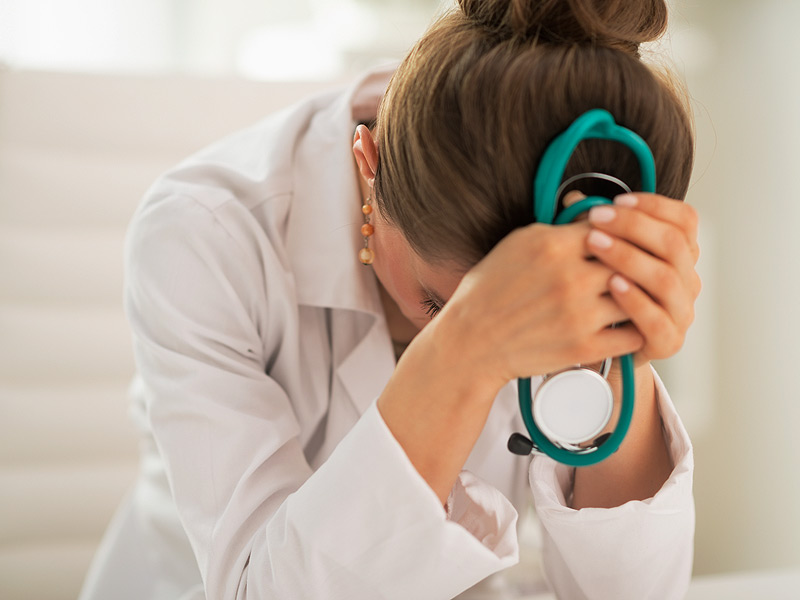
By many media narratives, an impression is being fostered that doctors have made a mess and forfeited their moral right to treat. Suggestions of ineptitude were gleefully aired, causing demoralization of the warriors, who were immersed in the pool of Covid patients, trying to save them.


         Their role should be as facilitators to help doctors to save more lives. One hospital death of out of millions saved, is projected as failure of doctors. They are so distant from the ground reality.  To control the health system, media has a tendency to pretend that shortcomings in the patient care can be rectified by punishing the doctors and nurses.

 Hence by selective projection the blame for deficiencies of inept system, powerful industry, inadequate infrastructure and poor outcomes of serious diseases is shifted conveniently to doctors, who were unable to retaliate to the powerful media machinery.   

        The demonstration of the cleft that separated doctors from the actual overpowering controlling medical industry and administrators is not given, in order to maintain the prejudice with its dangerous bias towards doctors, who are in forefront and are visible to public.

      Media people, who have never treated a patient in their lifetime, sway opinion and treatments of the millions just by game of projection and perception. The news items and the content are guided by idea of creating sensation in a quest to sell news, be it a selective negativity. Such  negative and selective projections are causing discouragement and demonization of the medical profession. It is the biggest  tragedy to the medical profession in present era.

      Normal treatment of the sick patients is being projected as gruesome atrocity, inflicted by doctors. Media could have done better in helping to take off spectacles fogged with bias against doctors and recognizing them as real saviours, just as deserving of justice.

       National Media could have helped, had they fueled the right and constructive discussions. The TV channels  could have countered the pandemic with better imagination, sobriety, and exemplary performance rather than creating sensation by cynical and futile debates, which are absolutely inappropriate at this time.  

     Advantages-Disadvantage of being a doctor

     25 factors- why health care is expensive

     REEL Heroes Vs Real Heroes

     21 occupational risks to doctors and nurses

     Covid paradox: salary cut for doctors other paid at home

Facilitators turn administrators: Biggest tragedy to medical profession in present era


14 Doctors in rural Unnao resign alleging mental harassment and misbehaviour by administrative officers over COVID-19 work.

       Administrators, who have never treated  a patient in their lifetimes, but control treatment of thousands of patients. The  biggest tragedy to the medical profession in present era, causing discouragement and demoralization of medical profession.
         Their role should not have been more than facilitators, but they have become medical  administrators. They are so distant from the ground reality.  To control the health system, administrators have a tendency to pretend that shortcomings in the patient care can be rectified by punishing the doctors and nurses.
The vulnerability that is  intrinsic to the  doctors’ working makes them sitting ducks, an easy target for harassment and punishments and  is exploited by everyone to  their advantage. Administrators use this vulnerability to  suppress them. It is used by  media and   celebrities who projected  themselves as Messiah for the cause of patients, and  sell their news and shows by labeling the whole community of doctors as dystopian community based on just one stray incident.

     The blame for deficiencies of inept system, powerful industry, inadequate infrastructure and poor outcomes of serious diseases is shifted conveniently to doctors, who were unable to retaliate to the powerful administrative machinery.   

        The demonstration of the cleft that separated doctors from the actual overpowering controlling medical industry  and administrators is  not given, in order to maintain the prejudice  with its dangerous bias towards doctors, who are in forefront and are visible to public. Clearly separating the role of health workers and the hidden administrators would not only settle the matter, but is actually essential to project the reality. The correct perception of two fundamentally different components would reveal a real gulf and would help to address the core issues.

    A wish to govern, regulate and punish the medical professional by administrators is not new. Hammurabi 4000 years back had initiated to write the cruel rules of the game, which possibly initiated a change in the global perception and regulatory system and formed the basis for cruel regulation in radical and unprecedented ways.

      In  a quest to control  this difficult area,  which encompasses life and death, deals with extremes of poverty and riches, mortality and morbidity, pain and relief, sadness and happiness, smiles and sorrows and uncountable emotions, intertwines with financial aspects and  the  amalgamation of intricacies of science with legal complexity, doctors are burdened with over-regulation and administrative pressures.

               Consequently the  doctors are the sufferers, as they feel enslaved and suffocated. But ultimately who would be the sufferer, does not need an Einstein brain to guess.

14 doctors resigned, alleging harassment and misbehaviour by administrative officials.

More than a dozen doctors posted in rural hospitals in Unnao district of Uttar Pradesh collectively resigned, alleging harassment and misbehaviour by administrative officials.

The doctors, numbering 14, posted at community health centres and primary health centres submitted their resignation letters to the chief medical officer (CMO) of the district on Wednesday. Speaking to the media, one them said that while their teams would work on the field from noon to 4-5 p.m., isolating COVID-19 positive cases in their home, distributing medicine and carrying out sampling, the local SDM would summon them after that seeking a report of their work. The doctors would have to drive back several km to the tehsil from their place of work just to “prove that they are working,” said the doctor. “Despite continuously working, it has been made to appear like we are not working and that due to this, the COVID-19 situation is going out of control,” he said. The doctors also alleged that they were not provided sufficient drug supply from the government and often faced verbal harassment at the hands of the CMO and the CMS. If the field teams were unable to trace down patients because of submission of wrong phone numbers and addresses, they should not be held responsible for it, said the doctors.

     Advantages-Disadvantage of being a doctor

     25 factors- why health care is expensive

     REEL Heroes Vs Real Heroes

     21 occupational risks to doctors and nurses

     Covid paradox: salary cut for doctors other paid at home
Financial complexity of MIDDLE-MAN in Medical Industry # Insurance pays 45 -80 % of Covid bills


 Medical care  intertwined with health business, further braided with changes in medical law presents a more complex problem rather than   just treating a patient well. In present era, many kinds of organizations have positioned themselves between doctor and the patient.

      This era  belongs to a transitional phase, when  gradual  conversion of doctor-patient interaction to a business transaction  is being controlled by industry’s middlemen .  One such middle industry is Insurance industry. The medical industry, insurance, law industry and administrative machinery remain hidden in the background and enormously benefitted at the cost of doctors and nurses, who suffered at the front, as face of the veiled colossal medical business and remain the only visible components.  Insurance industry is in a position to extract business from doctor as well as patients.  One such example is published in Times of India, where insurance company  has paid bills between 45-80%.  Each one of the medical industrial component trying to have their pound of flesh, will not only push  the cost of health care upwards, but would leave  both the main stakeholders, doctors and patients feel dissatisfied.

Policy holders get only  45 -80 % of Covid bills TIMES OF INDIA

As the number of people hospitalised due to Covid rise, many find that they have to settle a big chunk of the bill out of their own pockets despite having health insurance. Policyholders are again caught in the crossfire between hospitals and insurers over the treatment of consumables like personal protection equipment (PPE) kits resulting in only 45% to 80% of hospital bills being recoverable by customers. For 81-year-old diabetic and hip fracture patient K Saraswathi, who was treated for Covid-19 for eight days got only Rs 56,500 reimbursed of the total Rs 1.18 lakh bill from third-party administrator Raksha. Among other things that were disallowed included Rs 17,600 for PPE claims. While insurers cite General Insurance Council (GIC) norms their argument may not hold water as IRDA has not approved any norms. “How can a hospital treat a patient without PPEs?” asked an official at the Insurance Ombudsman office which is snowed under with complaints for short-settlement. “We used to get a few cases last year, now we have 88 pending cases, 70% to 80% of which are short settlements,” the official said.


For some insurers, the exclusions amount to a third of hospital bills. Liberty General officials said around 35% of the bill does not fall under the ambit of insurance coverage. Its VP and national claims manager for accident & health, Amol Sawai said, “On the industry level, the average Covid claim severity is Rs 1,40,000, the settlement severity is about Rs 95,000 of the claimed amount. We have seen almost 20% of the total bill is attributed to PPE costs.” India’s largest health insurer Star Health settles nearly 80% to 90% of claims under cashless settlement within two hours of receiving claims. S Prakash, MD of Star Health said, “One doctor who takes a round in the same PPE kit, cannot charge for each of ten patients he visits. The controversy is not in the reimbursement for PPEs, but in the number of PPEs covered. One cannot claim for ten PPEs per day. For ICUs, we allow a higher number of PPE kits compared to the ward,” he said.


According to the GIC officials, the referral rate for PPE kits is Rs 1,200 per day for moderate sickness and Rs 2,000 per day for severe sickness.


“We also see a spike in claims made for CT scans per person. We allow maximum two CT scans per patient,” he added. Officials at the GI Council blamed the hospitals for this situation. “Why are no directions given to hospitals on billing?” asks a council official. He points out an instance where a Tamil Nadu hospital charged Rs 14,000 for medicines, Rs 55,000 for diagnostics and Rs 50,000 for PPE besides room rent. When the insurer raised a red flag, the bill was halved to Rs 1.5 lakh.


“Is it okay for hospitals to loot with such high bills, whose money are we paying? It is the public’s money. If the premium doubles next year, will anyone even think of medical insurance. If we raise our hands and give up covering medical insurance, can anyone force us to provide a cover,” the official asked. The short settlement by insurance companies is resulting in a rise in complaints at the office of Insurance Ombudsman in Chennai.


“Insurers are citing some GI Council norms for claims settlement. Whatever they are saying does not hold water as IRDA has not approved any norms. How can a hospital treat a patient without PPEs?,” an official at the Insurance Ombudsman office said. Hospitals on their part blame the westernization of healthcare where insurance companies call the shots. “How can an insurance company decide on medication? A Dolo works for some while a Combiflam works for another, both these have a price differential. Now to say I will pay Dolo charges for a Combiflam or vice versa is plain stupidity. We need someone who looks at the bill and the patient and not one size fits all,” a MD and head of infectious diseases in a private hospital said. “The need is a regulator who understands medicine,” he said.

     Advantages-Disadvantage of being a doctor

     25 factors- why health care is expensive

     REEL Heroes Vs Real Heroes

     21 occupational risks to doctors and nurses

     Covid paradox: salary cut for doctors other paid at home

Blog at WordPress.com.

Up ↑